

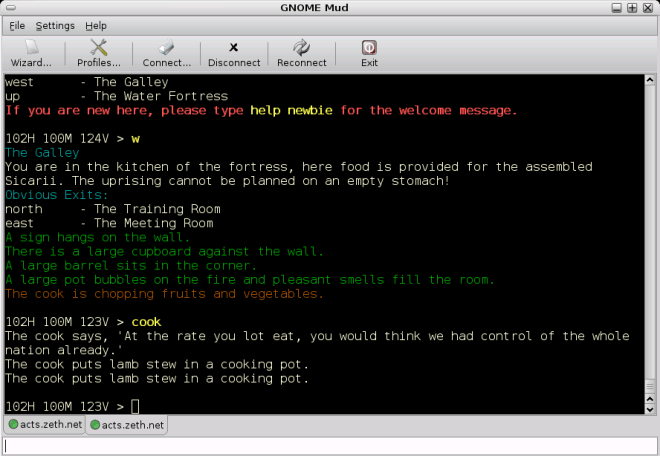
Yesterday, Labour Day, marks the traditional end of summer here in Canada. While my research and study leave commenced July 1st, 2026, almost all of my first two months were taken up with two monumental tasks: grieving the loss of my mother in late June, and decluttering and cleaning up my apartment. I needed to take my time and energy to work through the pain, and (literally) to throw out the crap in my life.
Now that that necessary work is (mostly) done, I can focus on my research and study leave. I know that I am a fortunate man, to be able to take the next ten months and do a deep-dive on a topic that already interests and excites me: virtual worlds, social VR/AR, and the metaverse.
Here’s just a teaser:

(And no, I am not going to commit to anything until I have settled a few key issues, such as what publishing platform I am going to use for my Open Educational Resource textbook; it would appear that the province-wide consortium using Pressbooks has shut down while I was grieving my mother, so for now all my writing is in Microsoft Word. Wish me luck!)
For those of you using screen readers, the text in the above image reads as follows:
CHAPTER 1: Before the Headsets: Text Worlds, MUDs, and the Dream of Cyberspace
While countless popular articles, books, and websites, and hundreds of academic papers, have been published about the metaverse (including those published before Neal Stephenson coined the term metaverse in his 1992 science-fiction novel Snow Crash, works which described the concept under other names), the nebulous and ever-evolving usage of the term has muddied rather than clarified things. What is the metaverse?
I think it’s best that we start with some back story. A little history lesson, explaining where this compelling but elusive idea(l) came from. Key components of the metaverse—avatars, virtual communities, and virtual economies—date back further than you might think.
(Please note; while I will be liberally sprinkling this text with my own experiences and opinions, this first chapter relies more on my research and reading, instead than my own personal experience. The real world/virtual world duality I mentioned in my preface to this book only began in March of 2007, when I first encountered Second Life, which will be the focus of the next chapter.)
In the Beginning Was the Word: Text-Based Virtual Worlds
Yep, you got it; I will doing a deep dive into MUDs and MOOs and other pre-graphical virtual worlds of the 1980s and 1990s! You gotta know where you came from before you know where you are now, and figure out where you’re going. So, I have a lot of reading ahead of me (not that I’ve ever minded that).
After that, I will be looking at the very first graphical virtual worlds that pre-dated Second Life (which will be the focus of chapter 2 of my book). Among these almost-forgotten early virtual worlds was Lucasfilms Habitat, which demonstrated a working avatar economy 17 years before Second Life came along.

Check out this eight-minute ad for Habitat from 1986, the year the platform launched in beta test, connecting users on their Commodore 64 microcomputers:
I figure all this research is probably going to take me most of the month, but I plan to have fun doing it!
UPDATE 7:00 p.m.: While searching my university library system’s online catalogue for an old 2003 book on virtual world design, I was overjoyed to discover that the author, Dr. Richard A. Bartle, has recently published a brand-new, completely revised and updated second edition of Designing Virtual Worlds! I’ve just started reading it and it is well-written, witty, and absolutely bang on for my research (he even includes several chapters on virtual world history). Perfect timing!
Here’s the citation if you want to buy it or obtain it from your local library:
Bartle, R. A. (2026). Designing Virtual Worlds: Volume I (Second edition). CRC Press. https://doi.org/10.1201/9781003689638
I suspect that I will be quoting Bartle’s book often in my own work, and making good use of his extensive bibliography. Here’s a particularly pertinent quote from the aforementioned history of virtual worlds:
Another reason that virtual world designers should appreciate the history of their art and profession is to counter the misguided belief that everything done in the past must be irrelevant because today’s virtual worlds are “different”. This is a surprisingly frequent but predictably monumental error. Brash designers coming in “to shake things up” may indeed shake things up – but not until they’ve repeated all the well‐known‐for‐decades errors that they didn’t think applied to their ideas because they gave virtual worlds a different label (“the Metaverse”) or a different interface (“VR”) or a different purpose (“education”).
—Bartle, R. A. (2026). Designing Virtual Worlds: Volume I (Second edition), p. 14

While Muds, Moos and Mush(es) are ancient in Internet terms, they are still around. There are quite a number of Discord servers dedicated to various Mushes or Moos. I’m in Harper’s Tale right now. CrystalMU is back, based on Anne McCaffrey’s Crystal Singer. Harper’s Tale is based on Dragonriders of Pern. I have played Mu’s on/off since 1994, so if you have any questions, let me know.
Thanks, John! Good to know.
@ryanschultz Can't wait to see your work! I run a site specializing in documenting and archiving Habitat and all of the related worlds it spawned (Club Caribe, Fujitsu Habitat, WorldsAway and EC Habitats).
If you want extra material I've got stuff over at https://renoproject.org, https://wiki.renoproject.org and https://renoproject.org/imagearchive that may be of use.
I also work with @frandallfarmer on NeoHabitat, the open source re-implementation of Habitat if you need any help with that too.
Thank you! I will have to take a look at your work.
Oh, thank you! I haven’t started looking at Habitat yet, so this is VERY timely!!
@ryanschultz no problem! Here’s some video footage from Habitat you might find interesting (I recommend speeding it up a little because it’s slow):
https://youtu.be/iB3VFbEMPi8?is=4Tb-N9d5qJxhZfmI
https://youtu.be/9E3J7T9enww?is=TjsPRYMxLz0gatzJ
https://youtu.be/BzI9umLRVVk?is=Fuz1gBVFUjJ73YRt