Editorial: Lessons Decentraland Can Learn from the 15-Year History of Second Life

Have you joined the RyanSchultz.com Discord yet? More details here. 


Decentraland narrower.png

Carl Fravel (whom I first met in Sansar, but who has since moved on to become a sort of unofficial ambassador for Decentraland), responded to me when I commented on the Cryptovoxels Discord this week that the creators behind Decentraland have not really paid attention to the history of Second Life, and the problems and scandals that SL has encountered in its 15-year history.

He asked me to give him some more details, which he has promised to pass on to the founders of Decentraland. Instead of a direct message to Carl, I decided to make this blogpost, in case other people were interested in my opinions. As you know, I have written extensively, and with a critical eye, about the Decentraland project in the past.

So, what can the folks building Decentraland learn from Second Life?

First, casinos. Linden Lab shut down the casinos in Second Life in 2007 after an FBI investigation into gambling in SL. I have already written about this on my blog:

I posted a comment to the busy Decentraland Reddit channel, reminding them that the FBI investigated gambling in Second Life, which had led to them shutting down online gambling a decade ago, and asking if anyone had stopped to think about whether the U.S. federal government would step in to stop Americans from gambling using cryptocurrency in Decentraland’s Vegas City district. That Reddit post was taken down by the moderators less than an hour after I posted it. I can only assume I was censored because they didn’t want to spook investors in their platform. I’m not impressed.

Now, Decentraland may be able to skirt around this by setting up in a jurisdiction where online gambling is allowed. However, you can bet that the FBI will get involved again if it is found that American citizens are gambling in Decentraland. They’re probably going to have to set up some sort of system to block users from certain countries; have the developers (and the people who contributed virtual land to the Vegas City district) stopped to consider this?

Second, “banks” and get-rich-quick schemes. Linden Lab was forced to ban “banks” in Second Life after reports of scammers making off with people’s investments (for more details, see number 10 on this list). Originally, Linden Lab’s excuse was: hey, we just host the software, and residents should avoid deals that sound too good to be true. But then, they were essentially forced to implement a ban after a story appeared in the MIT Technology Review. And, if Decentraland does not take steps to ban financial get-rich-quick schemes on its platform, it is likely that scammers with lofty promises will also descend upon it and set up shop. The world of blockchain/cryptocurrency is full of stories of people taking advantage of other people’s greed and ignorance. Remember what happened with BitConnect?

Third, ageplay. Linden Lab was forced to confront a public relations disaster when the news media reported that pedophiles were using the platform to engage in sexual roleplay with child avatars (see number 4 on this list for more details). The resulting scandal led Linden Lab to enact and enforce a strict ageplay ban.

To this day, when “Second Life” is mentioned, sexual roleplay tends to be the first thing that the general public thinks of; Second Life’s reputation has been pretty much tainted by that association ever since. Decentraland needs to think about this before a scandal hits, and set up similar bans, and a means of enforcing them.

Fourth, intellectual property and copyright issues. I have already written about this at length here and here. Go read those blogposts. I suggest that Decentraland put a report mechanism in place, as well as a procedure for dealing with DMCA filings. It will happen.

This is just a start. I suggest that the Decentraland founders and investors read through my list of the top 20 controversies in Second Life, and see what else they can learn from it.

Progress, far from consisting in change, depends on retentiveness. When change is absolute there remains no being to improve and no direction is set for possible improvement: and when experience is not retained, as among savages, infancy is perpetual. Those who cannot remember the past are condemned to repeat it.

George Santayana, The Life of Reason, Volume 1

UPDATED! The BBC Covers Decentraland: Virtually Making a Fortune?

I will hand it to the folks at Decentraland: for a virtual world that you can’t even visit yet, they are certainly attracting an awful lot of press attention (mostly for their expensive land prices). Today BBC decided to cover the platform on their Trending program.

Titled Virtually Making a Fortune?, the 23-minute BBC World Service radio program offers a good overall introduction to the Decentraland project, especially if you’re new to it.

BBC Decentraland.png

I am amused to note that the BBC used a still from the rather misleading “artistic concept” promotional video for Decentraland to illustrate their radio program. (You currently can’t do anything like what is pictured in the YouTube video on the platform.)

The program also failed to mention that you can already use platforms such as Sansar and High Fidelity to build VR-capable, fully-functional, visitable experiences at a much lower cost than Decentraland. As I have said before, spending a small fortune on 10 m-by-10 m plots of virtual land makes absolutely no sense when you can now build up to twenty 4 km-by-4 km experiences for free in Sansar, to cite just one example!

The program also goes into the whole idea that the company plans to build its virtual world and then withdraw, leaving Decentraland’s governance up to the resident landowners themselves. This is a somewhat fascinating but still-untested idea, which may not work out as intended.

UPDATE Aug. 27th: If you want to see some video with your audio, the story has now been placed on the BBC News website: The virtual land selling for millions.

Here’s a direct link to the six-and-a-half-minute news video (press F11 to see it full-screen on your monitor): https://www.bbc.com/news/av/embed/p06j77zq/45275461

Are Bounty Programs the Future of Virtual World Promotion?

Dog-dog-the-bounty-hunter-1852385-1280-10241-640x512.jpg
You can be a Bounty Hunter like Dog!

As many of you already know, I am a participant in the Virtual Universe (VU) Initial Coin Offering Partner Program. In exchange for writing regular blogposts about VU and cross-posting them to different social media, I get paid in VU tokens. (It’s currently the only way I can earn tokens before VU launches later this year.) This is a good example of a bounty program, in which volunteers get paid in in-world currency for undertaking various tasks.

I just recently learned that Decentraland also has a bounty program in place through Gitcoin, in which they pay users in MANA for such tasks as creating video tutorials, writing blogposts, and talking about the Decentraland project at game developer events.

And Linden Lab is now participating in Twitch’s new Bounty Board program in order to further promote the Sansar platform:

Bounty Board is a way for creators to browse and accept paid sponsorship opportunities (AKA bounties) directly from their Twitch dashboard. With Bounty Board, Twitch handles the relationship with the brand and finds sponsorship opportunities for you. Twitch will also handle your payments, so you can concentrate on streaming and growing your community.

We’re kicking things off with a closed beta with Partners in the U.S., where we’ll be experimenting with bounties from Twitch and select game developers. Every few weeks, we’ll be onboarding groups of randomly-selected Partners from the waitlist as well as some targeted Partners based on the specific bounties available.

And of course, High Fidelity has been paying participants in their monthly stress testing of the platform. In two months, I have already earned two $20 VISA cards I am planning to use on Amazon to buy some books for myself!

Bounty programs seem to be popping up all over! We might be seeing the start of a trend here. If you’re interested in promoting your favourite virtual world, check to see if your preferred platform has a bounty program in place. You may as well earn some in-world (or even real-world) currency while you’re at it!

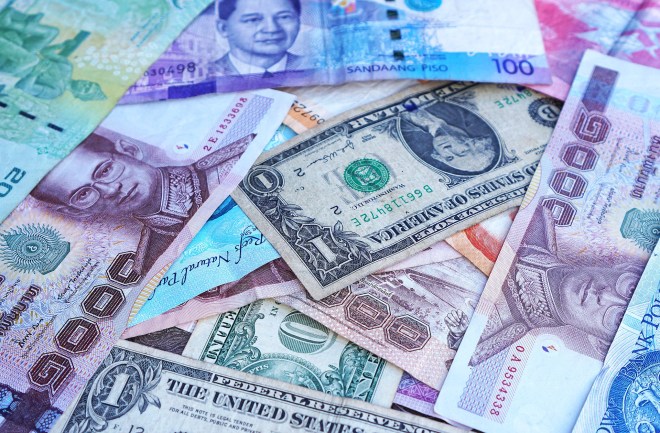
Money in the Newer Virtual Worlds

money-1578510_1920.jpg

Image by TheDigitalWay on Pixabay

The best things in life are free
But you can give them to the birds and bees
I want money
That’s what I want
That’s what I want
That’s what I want

Your love gives me such a thrill
But your love won’t pay my bills
I want money
That’s what I want
That’s what I want
That’s what I want

—Money, the Flying Lizards


In-world currency systems are an integral part of many social VR/virtual world platforms. Second Life can be seen as the perfect example of a virtual world whose popularity exploded once people realized that they could make money on the platform, inspired by a 2006 Businessweek cover story on Second Life entrepreneur Anshe Chung:

Anshe Chung.jpg

This blogpost is an attempt to provide a comprehensive overview of how the newer virtual world platforms have implemented in-world currencies and set up systems for commerce.

Sansar

Linden Lab has, of course, 15 years of experience working with Second Life‘s economy and in-game currency, and they have applied that expertise in the setup and operation of the economy for their new virtual world, Sansar. You can buy Sansar dollars in two ways, directly in bundles or via the Sansar Dollar Exchange (SandeX), a currency exchange. There are more details on the SandeX in this document:

 The SandeX is the official virtual exchange of Sansar, run by Linden Lab, where you can:

  • Buy Sansar dollars at the current market rate.
  • Make limit buy offers at a requested exchange rate.
  • Sell Sansar dollars at the current market rate.
  • Make limit sell offers at a requested exchange rate.

All SandeX transactions are subject to transaction fees.

Market buy and sell

Market buys and market sells are the quickest ways to purchase or sell Sansar dollars on the SandeX. The SandeX automatically matches your order with the best exchange rate. The quoted exchange rate includes transaction fees associated with buying and selling on the exchange.

…

Limit buy and sell

Limit buys and sells allow you to specify the amount of Sansar dollars and the exchange rate you are willing to accept. The SandeX automatically matches up buy and sell offers as they come in. If you are buying, you must have sufficient funds in your US$ wallet to pay for the buy order.

Creators can sell their creations on the Sansar Store, and can also receive statistics on how well their items are selling. There is as yet no in-world commerce like they have in Second Life.

Sinespace

Sinespace has two in-world currencies, called silver and gold. According to their wiki:

Gold

Gold credits can only be purchased for real money by spending users and can be converted back to real money by Sine Wave virtual goods partners.

Gold credits trade at 100 / 1 fixed ratio with USD$

Silver

Silver credits are free promotional credits given to users as rewards for participating in the community.

Silver credits cannot be converted to real money but can be used by creators to promote their content to new platform users who have not yet purchased gold.

Sinespace has a Marketplace built into its client software, and a few vendors like BlakOpal have also set up in-world stores.

High Fidelity

High Fidelity has attracted a lot of recent media attention due to the fact that they have decided to set up a blockchain-based in-world currency, called High Fidelity Coins (HFC):

  • Blockchain Technology: Our new currency, High Fidelity Coins (HFC), will be a public blockchain with a consensus group of multiple parties. A blockchain is essentially a digital ledger of transactions. We are using blockchain technology to track and record transactions made using HFC. All information on a blockchain exists as a shared database, which means the records are public and verifiable. It is not centralized. We are also using the blockchain to store information about digital asset ownership in High Fidelity. This enables us to protect intellectual property by embedding certification in items in the blockchain. HFC will eventually be convertible to local currencies or other cryptocurrencies at popular exchanges.
  • Cryptographically-secured Wallet: Users will be able to participate in transactions using their Wallet, which will be an app on their tablet in High Fidelity. Your Wallet is secured using a security picture and a passphrase which includes ECDSA public-private keys pairs. These key pairs are used to sign each transaction.
  • Proof of Provenance (PoP) certificate: This certificate is generated for every transaction between a user’s Wallet and the Markeplace. This certificate’s ID is stored on the blockchain. The certificate contains static properties that can help in identifying the item and the owner. These properties cannot be altered, except by transfer of the PoP Certificate. Currently, we only support objects that contain a file type .JSON. Support for avatars and other file types will be coming soon.

Currently, the only way to get some HFC (a free one-time grant) is to go to the Bank of High Fidelity domain at their open times and meet with the banker. Here’s some more information of HFC from the High Fidelity website:

We are currently giving out the currency for anyone interested in participating in the closed beta for High Fidelity Commerce. If you want to get your inital HFC grant, you first need to set up your Wallet.

These coins are to be used as currency for any commerce transactions in the Marketplace. Since we are using blockchain technology, all transactions with HFCs will be publically recorded and stored.

Your Wallet will be secured using ECDSA public-private key pairs, security picture and passphrase. Learn more about your Wallet here.

HFC is not intended for speculators to hold and should be used in transactions in High Fidelity. HFC is intended to be a stable currency and used to support a healthy and vibrant virtual economy for digital goods and assets.\

High Fidelity has an online Marketplace where vendors can sell their products (users can also access the Marketplace listings using their tablets in-world). Avatar Island is the first domain set up in HiFi where you can try on and purchase items for your avatar in-world.

VRChat

VRChat currently does not have any sort of commerce or in-game currency, although there is a thriving real-world business for people designing and rigging custom avatars for VRChat users. It will be interesting to see what happens when/if the company decides to implement an in-world economy on the most popular of the social VR platforms.

AltspaceVR

As I recently reported, AltspaceVR seems to be gearing up for commerce, but at the moment, there is no commerce or in-game currency system in place.

OpenSim

Different OpenSim grids have different solutions to the problem of an in-world currency. Every grid has in-world stores which offer merchandise for sale. Some grids issue their own currencies; others use the Gloebit system, which has the advantage of being one standard currency which is transferable and usable across a large number of participating OpenSim grids. The Kitely Marketplace is a popular shopping mall for the many OpenSim virtual worlds:

Kitely Market can deliver items to all Kitely avatars, as well as to avatars on all other OpenSim grids that support the Hypergrid. Our marketplace also delivers items to avatars on several non-Hypergrid grids that have been set up to receive deliveries from our system.

Kitely Market has been used to deliver items to thousands of OpenSim users on more than 100 different OpenSim grids.

Virtual Universe, Decentraland and the Other Blockchain-Based Virtual Worlds

Virtual Universe, Decentraland, Mark Space, Staramba Spaces, VIBEHub, Ceek, and Terra Virtua (among many other products in this increasingly crowded marketplace) are issuing their own blockchain-based cryptocurrencies or tokens for future use on their platforms. all of which are still in development. The product closest to a launch date appears to be Virtual Universe, which plans to start a closed beta sometime in the fourth quarter of 2018.

I’ve already strongly warned potential investors to do every. single. scrap. of their homework before investing a penny in any of these blockchain/cryptocurrency ventures (link). Caveat Emptor!

Other Social VR/Virtual World Platforms

I can’t think of any other metaverse products which have in-world currencies at the moment, besides the adult virtual worlds like Oasis and Utherverse/The Red Light Center (these links are safe for work). If I’ve missed one, please let me know in the comments, thank you!