UPDATED Editorial: Some Thoughts on the Facebookening of Oculus

PLEASE NOTE THAT AN EARLIER VERSION OF THIS BLOGPOST CONTAINED INCORRECT INFORMATION. Please see the paragraphs in red below, thank you. I would also like to apologise to Ben Egliston.

A lot has been written recently about what some are calling the “Facebookening” of Oculus (a term used by Ars Technica in its coverage here and here): renaming Oculus as Facebook Reality Labs, and replacing the annual Oculus Connect event with last week’s Facebook Connect (where, of course, you had to have a Facebook account in order to view this year’s presentations).

Yelena Ratichsky, executive producer of AR/VR media at what is now called Facebook Reality Labs, tweeted:

What are you most excited about for tomorrow’s Connect?

To which I rather boldly replied:

I’m sorry, but I’m not excited. In response to the requirement that I have to set up a Facebook account to use my Oculus devices, I will be selling or giving away my Rift and Quest within the two-year window, and personally boycotting Facebook products and services from now on.

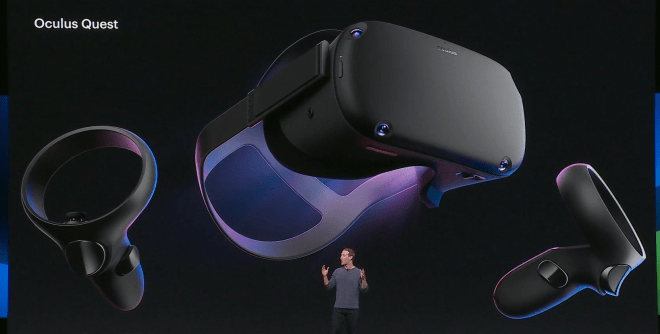
As part of my personal boycott of Facebook products and services, I have been trying to give away my Oculus Quest wireless VR headset to someone else in my family. I asked five of my relatives—and nobody wants it. One of my adult nephews specifically cited not wanting to set up a Facebook account in order to use it. (It looks like it will be donated to my sister-in-law’s workplace; she works at a program for adults with developmental disabilities.)

I have found that so, so much has changed from a year ago, when the first Oculus Quest was released, a product I eagerly bought and reviewed on this blog. I even went so far as to purchase a cable to try out Oculus Link, a PCVR solution for the Quest which worked flawlessly with programs like Sansar that were too graphics-intensive for the standalone headset.

At the time I was so excited by the possibilities of this new technology, and happy that Facebook was working to bring virtual reality to the average consumer. A rising tide lifts all boats, as I like to say. I used to naively think that what benefitted Facebook would benefit us all.

Now, today, I feel zero sense of excitement. Instead I feel a sense of despair, even dread—a deep, foreboding feeling about the future.

Stop and ask yourself why Facebook would decide to forcibly yoke together the Facebook social network with Oculus devices (something Oculus founder Palmer Luckey was promised would never happen when Facebook bought his company):

Oculus founder and Rift inventor Palmer Luckey says he “really believed” Oculus headsets would never need a Facebook sign-in to operate, based on promises made during his time at the company.

Yesterday, Facebook announced that, from October, first-time sign-ins to Oculus headsets would require a Facebook account. Pre-existing Oculus accounts will continue to function as normal until 2023, when Facebook will end support and users will lose unspecified features. When Facebook first bought Oculus in 2014, Oculus executives — including Luckey — gave multiple assurances that users would not need a Facebook account to use their headset.

Following yesterday’s news, Luckey took to Reddit, claiming that he “really believed” Facebook wouldn’t enforce such a requirement and that the company promised him as much on multiple occasions. “I want to make clear that those promises were approved by Facebook in that moment and on an ongoing basis,” Luckey said, “and I really believed it would continue to be the case for a variety of reasons. In hindsight, the downvotes from people with more real-world experience than me were definitely justified.”

While Palmer could hardly be faulted for being young and naive enough to believe promises by Facebook executives that nothing would change (only to be later shown the door), it has now become clear what Mark Zuckerberg’s grand strategy is, and why he spent 3 billion dollars to purchase Oculus in the first place.

It’s all about hopping on what Mark dearly hopes will be the next iPhone, the next big thing, the next must-have device. It’s all about power. It’s all about control. And it’s all about making ridiculous amounts of profit off your personal data.

And I believe that Facebook’s strategy is: to utterly dominate the nascent virtual reality market, to create a lucrative but ultimately limiting walled ecosystem, to crush potential competitors, and to strip-mine your personal data to build an ever more detailed and intrusive personal profile of you—your likes and dislikes, your network of friends, family and coworkers, even biometric data from your Oculus device usage, such as your eye movements—in order to strip-mine it and sell access to that precious data to corporations and campaigns. All with very little oversight.


UPDATE Sept. 21st, 2020 (PLEASE ALSO READ THE MARCH 17th, 2021 UPDATE AT THE END OF THIS BLOGPOST!)

As Ben Egliston and Marcus Carter have writen has written in an editorial for The Conversation, titled Facebook’s virtual reality push is about data, not gaming:

A VR headset collects data about the user, but also about the outside world. This is one of the key ethical issues of emerging “mixed reality” technologies.

As American VR researcher Jeremy Bailenson has written:

“…commercial VR systems typically track body movements 90 times per second to display the scene appropriately, and high-end systems record 18 types of movements across the head and hands. Consequently, spending 20 minutes in a VR simulation leaves just under 2 million unique recordings of body language.”

The way you move your body can be used to identify you, like a fingerprint, so everything you do in VR could be traced back to your individual identity.

Facebook’s Oculus Quest headsets also use outward-facing cameras to track and map their surroundings.

In late 2019 Facebook said they “don’t collect and store images or 3D maps of your environment on our servers today”. Note the word today, which tech journalist Ben Lang notes makes clear the company is not ruling out anything in the future.


Think that the collection and dissection of that sort of data won’t happen? I have news for you, sweetheart; in many ways, that data collection is already happening. Extending even firmer Facebook control over Oculus devices is simply adding to the existing store of data that Facebook can collect on you.

A little over a year ago, I wrote on this blog (and yes, I will quote what I said at length, because it is important and worth repeating):

Facebook has the resources to capably crush competitors. Strip-mining the data of the estimated 2.7 billion people worldwide who use Facebook, WhatsApp, Instagram, or Messenger each month has been extremely lucrative for the company. (The five billion dollar fine the U.S. FTC recently levied against Facebook for their privacy lapses was a mere slap on the wrist, given the income the company generates each year from advertising. Mark Zuckerberg probably found the money from his couch cushions.)

Which leads to the point of this editorial: in this evolving metaverse of social VR and virtual worlds, is too much power concentrated in the hands of a single, monolithic, profit-obsessed company? I would argue that Facebook is aiming for complete and utter domination of the VR universe, just as they already have in the social networking space, by creating a walled ecosystem with the Oculus Home and the Oculus Store that will have a negative impact on other companies trying to create and market VR apps and experiences. The field is already tilted too much in Facebook’s favour, and the situation could get worse.

Now, you can argue that Facebook has competition from other VR headsets such as the HTC Vive line of products and the Valve Index. And the Steam software distribution platform is an alternative to the Oculus Store. I understand that my purchased programs from the Oculus Store can still be played on an HTC Vive or Valve Index with the Revive software, which is somewhat reassuring to me (although I suppose there is nothing really stopping Facebook if they choose to block that avenue at some point in the future).

More concerning to me is that, at some point, I may be forced to get an account on the Facebook social network to use apps on my Oculus VR hardware. In fact, this has already happened with the events app Oculus Venues, which I recently discovered requires you to have an account on the Facebook social network to access.

Sorry, but after all the Facebook privacy scandals of the past couple of years, that’s a big, fat “Nope!” from me. I asked Facebook to delete its 13 years of user data on me, and I quit the social network in protest as my New Year’s resolution last December, and I am never coming back. And I am quite sure that many of Facebook’s original users feel exactly the same way, scaling back on their use of the platform or, like me, opting out completely. I regret I ever started using Facebook thirteen years ago, and that experience will inform my use (and avoidance) of other social networks in the future.

Yes, I do know that I have to have an Oculus account to be able to use my Oculus Rift and Oculus Quest VR headsets, and that Facebook is collecting data on that. I also know that the Facebook social network probably has a “shadow account” on me based on things such as images uploaded to the social network and tagged with my name by friends and family, etc., but I am going to assume that Facebook has indeed done what I have asked and removed my data from their social network. Frankly, there is no way for me to actually verify this, as consumers in Canada and the U.S. have zero rights over the data companies like Facebook collects about them, as was vividly brought to life by Dr. David Carroll, whose dogged search for answers to how his personal data was misused in the Cambridge Analytica scandal played a focal role in the Netflix documentary The Great Hack (which I highly recommend you watch).

We’ve already seen how social networks such as Facebook have contributed negatively to society by contributing to the polarization and radicalization of people’s political opinions, and giving a platform to groups such as white supremacists and anti-vaxersThe Great Hack details how Cambridge Analytica used Facebook data without user knowledge or consent to swing the most recent U.S. election in Donald Trump’s favour, and look at the f***ing mess the world is in now just because of that one single, pivotal event.

We can’t trust that Facebook is going to act in any interests other than its own profit. Facebook has way too much power, and governments around the world need to act in the best interests of their citizens in demanding that the company be regulated, even broken up if necessary.

Well, now we know how that went; you will indeed have to set up a Facebook account to use your Oculus VR devices, going forward. All the better to collect, dissect, and sell your personal data to the highest bidder, my dear…and if you think you can get around this niggly little detail by setting up a fake account, well then, don’t be too surprised if you find yourself losing access to your content, and locked out of your VR headset. Facebook expects your real name, and that real-name policy has already generated plenty of controversy, as this link to Wikipedia illustrates.

I am going to give the last word to British journalist Carole Cadwalladr, who was also part of The Great Hack documentary (which I highly recommend you watch on Netflix). She wrote, in a damning Guardian newspaper editorial two months ago :

In 2016, we didn’t know. We were innocent. We still believed social media connected us and that connections were good. That technology equalled progress. And progress equalled better.

Four years on, we know too much. And yet, it turns out, we understand nothing. We know social media is a bin fire and that the world is burning…

In Facebook’s case, the worst has already happened. We’ve just failed to acknowledge it. Failed to reckon with it. And there’s no vaccine coming to the rescue. In 2016 everything changed. As for 2020… well, we will see.

We have already been through the equivalent of a social media pandemic – an unstoppable contagion that has sickened our information space, infected our public discourse, silently and invisibly subverted our electoral systems. It’s no longer about if this will happen all over again. Of course, it will. It hasn’t stopped. The question is whether our political systems, society, democracy, will survive – can survive – the age of Facebook.

We are already through the looking glass. In 2016, a hostile foreign government used Facebook to systematically undermine and subvert an American election. With no consequences. Nobody, no company, no individual or nation state has ever been held to account.

Zuckerberg says Black Lives Matter and yet we know Donald Trump used Facebook’s tools to deliberately suppress and deny black and Latino people the vote. With no consequences.

And though we know the name “Cambridge Analytica” and were momentarily outraged by Facebook’s complicity in allowing 87 million people’s personal data to be stolen and repurposed including by the Trump campaign. A 5 billion dollar fine was paid but no individuals were held to account.

Will Facebook be used to subvert the 2020 US presidential election? Yes. Will Facebook be held to account? No. Are we looking at a system shock that will change America for ever? Yes. Because Trump will either win this election using Facebook or he will lose it using Facebook. Both ways spell disaster. On Sunday, interviewed by a Fox reporter, he refused to say if he would leave the White House if he lost the election.

America, the idea of America, is on the brink. And at the cold, dead heart of the suicide mission it has set itself on, is Facebook. Facebook and America are now indivisible. Facebook, WhatsApp, Instagram, these are now the bloodstream of American life and politics. A bloodstream that is sick.

And so the world is sick, because American capitalism has been the vector that has brought this infection across the globe. Algorithmically amplified “free speech” with no consequences. Lies spread at speed. Hate freely expressed, freely shared. Ethnic hatred, white supremacy, resurgent Nazism all spreading invisibly, by stealth beyond the naked eye.

This is Facebook’s world now. And we live in it. And if you’re not terrified about what this means it’s because you haven’t been paying attention.


Housekeeping Notes: This editorial was originally labelled Part I, because I suspect that this will be only the first of many editorials I will be writing about Facebook’s role in virtual reality on this blog. For example, Facebook’s decision to stop selling the Oculus Rift in favour of the Oculus Quest 2 is a topic for another day. The August 20th, 2020 Ars Technica editorial by Sam Machkovech, titled Why the Facebookening of Oculus VR is bad for users, devs, competition, raises so many fascinating ideas that it warrants a separate, detailed editorial all on its own. There’s no shortage of stuff to write about here!

And I’m quite sure there will be many other things to talk about as Facebook Horizon rolls out, including the Big Brother-like real-time observation of its users, and I hope that these editorials will spark some lively and informed discussion of the issues.

Will we see a David-versus-Goliath resistance rise up against Facebook in light of its recent policy changes and its ongoing business practices? Who knows what will happen. Facebook has deep pockets to spend on things such as advertising, lawyers, and lobbyists to get its own way. But it will be fascinating to watch it all unfold, nonetheless. We could well be seeing the first major ethical and ideological battle of the new age of the metaverse taking place.

So, what do you think? Please feel free to leave a comment below, or better yet, join the ongoing discussions, debates, and arguments about all aspects of social VR, virtual worlds, and the ever-evolving metaverse on the RyanSchultz.com Discord server. We’d love to hear your opinions on all this!

P.S. Yes, I still intend to take a break from social media and news media (well, as best I can, anyways) from now until after the U.S. federal election. I have no doubt my readers will alert me if something major happens over the next two months!

UPDATE March 17th, 2021: I would like to apologize to Ben Egliston, whom I did not know was a co-author of the editorial from The Conversation along with Marcus Carter. In the original version of this blogpost, I has mistakenly assumed he was not, and I am truly very sorry! It turns out that I was confused and misinformed. I have apologized to Ben for my serious error. 

UPDATED Editorial: From the Outside, Looking In

*sigh*

I can’t sleep. I’ve been tossing and turning since 3:00 a.m., so I finally decided to get out of bed and do what I do when I can’t sleep. Brood. And blog. (Yes, I know: bad combination.)

And, while I was lying in bed, it occurred to me: for the first time ever, I will be writing about a social VR platform on this blog that I may never actually set foot in.

Of course, I am talking about Facebook Horizon.

This manipulated image of the new Facebook Reality Labs logo is courtesy of the insanely talented and creative LokiEliot; the eye is actually not part of the FRL logo pyramid, but as far as I am concerned, it may as well be there.

Kent Bye, host of the influential Voices of VR podcast, shares the growing sense of unease that many informed people now feel about the extent of Facebook’s control and use of the personal data which it collects on you, which of course includes sharing your Oculus VR device data with other Facebook products and services, as evidenced by the following Oculus Support question and answer. It would seem that if you’re in one Facebook product or service, you’re in them all—and it’s yet another good reason for me start moving away from relying on Oculus hardware for any future virtual reality experiences.

Kent Bye, in a tweet yesterday, referenced another observer who compared this Q&A with a quote from the dystopian science fiction classic Fahrenheit 451, commenting:

“Can I chose to not share information about my VR activity…?” “No…” I read this chilling Q&A during @FRealityCrew podcast. Contextual Integrity is an approach to privacy. Facebook says it’s for a safety context, but they don’t limit by context. Could be for data mining contexts.

(The link to the podcast itself is here.)

Again, my response to all this is to steer clear of Facebook. Yes, I full well realize that other tech companies (Google, Apple, Microsoft, etc.) also use data mining on me. But Facebook has already demonstrated in its past corporate history, time and again, that it cannot be trusted with the information it collects on you, and shares with other companies, without your knowledge or consent, other than you tacitly signing off on a lengthy Terms of Service document that only a lawyer could decipher. (Exhibit A: the Cambridge Analytica scandal.)

Therefore, I am quite content to remain on the outside, looking in, rather than continue to be “Under His Eye”, as they say in The Handmaid’s Tale. Simply put, I no longer wish to be under Mark Zuckerberg’s eye—even if it means I will only report on Horizon as an interested observer, as opposed to an active participant.


Yesterday, Facebook launched the invitation-only beta of its Horizon social VR platform, after a short, closed alpha launch earlier this year. According to the official blogpost announcing the beta test:

The invite-only beta will be available on Oculus Quest and the Rift Platform in the U.S. and Canada to start. We’ll welcome more people over time, and you can add your name to the beta waitlist.

Looking at the Facebook Horizon Beta Application form, it seems very clear what kind of people Facebook is interested in inviting into Facebook Horizon at this stage:

  1. They want to know whether you “have…ever created a world, game, or experience in a VR game, in a console/PC game, or in a professional creator tool (such as Unity/Unreal)”; and
  2. They also want to know if you “lead, moderate, or administer an online community (such as Reddit, Facebook Groups, Discord, Twitch, etc.)”.

In other words, they will be giving priority to a) content creators and b) community builders and influencers. The former group Facebook wants to bring in to fully test out its in-world building tools, and (perhaps) the ability to import content from third-party tools, and the latter group they want to get the word out about Horizon to their communities, and generate some positive buzz.

Somewhat buried in the press release is the following information:

Eventually, we envision large spaces where many people can gather in Horizon, but for now, up to eight people can share a space.

So (at least to start), Horizon will be unable to host large events. Unlike Second Life, Cryptovoxels, and Somnium Space, which are one large contiguous landmass, Facebook Horizon will be composed of separate, discrete worlds you select from a menu, much like VRChat, the old High Fidelity and its successor platforms (Tivoli and Vircadia), and Sansar.

There’s so much more Facebook Horizon news to parse than I have time to cover here this morning. It’s 5:30 a.m. and I am going to try to get some sleep (but it’s probably a lost cause).

Facebook Horizon: I prefer to stay on the outside, looking in, thank you…

I wish I had never joined Facebook 15 years ago. I especially regret encouraging friends and family to sign up in the early days. I also wish now that I had never purchased my Oculus Quest and Oculus Rifts (yes, plural—one for home and one for work). I wish that I had never bought many of my VR apps through the Oculus store.

But I can learn from my past mistakes, and I can use that knowledge to make more informed, better decisions in the rapidly-evolving VR/AR/XR marketplace.

And I will continue to write about Facebook and Oculus on this blog, as part of my coverage of social VR and virtual worlds, informed by my experiences to date in dozens of different platforms, since I first set foot in Second Life fourteen years ago.

I might be able to personally boycott Facebook products and services (if not now, then at some point in the future when I sell or give away my Oculus devices), but, for better or worse, Facebook is simply too big a player to completely ignore. And, after all, this is a blog about social VR.

Stay tuned for more coverage!


UPDATE 11:27 a.m.: After finally getting some much-needed sleep, I edited this blogpost a bit, and I also wanted to add a link to an UploadVR article posted yesterday by Jamie Feltham, who interviewed a couple of Facebook employees working on the Horizon project, and received a Facebook Horizon preview before the beta launch of the product.

Pandemic Diary: August 26th, 2020

My subconscious is starting to rebel against social distancing in new and creative ways.

This morning (on day 164 of working from home in self-imposed isolation due to the pandemic), I dreamed that I was participating in a full-blown, pansexual orgy. (No, you are not getting all the juicy details. But it did take place in a glass-walled house.)

Sebastiano Ricci – Bacchanal in Honour of Pan (circa 1716; source)

I will be honest; I am finding it very hard to stay motivated working from home, even though I have lots of work projects to keep me busy. All the days and times of day—weekdays and weekends; morning, afternoon, evening and night—tend to blur together. I find myself responding to work emails on Sunday morning, and working on PowerPoint slides late into the evening. I don’t seem to have any boundaries between work and non-work life anymore, a common complaint of those of us who find ourselves working from home during the coronavirus pandemic.

The news here in Manitoba has been not so great, with the number of COVID-19 cases increasing, rising infections in some Hutterite communities, and a serious outbreak in the western Manitoba city of Brandon, leading to new social gathering restrictions being imposed:

I feel a general sense of unease about the current pandemic situation and our response to it. To give you an idea of how little I am leaving my apartment during the pandemic, I filled up my gas tank on March 15th, 2020, and I still have a quarter tank of gas five months later. I have been making an effort to get outside during our all-too-short Canadian summer, though, just to get some external stimulation and some exercise. I need to do more.

I still haven’t decided what to do about my hair, so I am letting it grow out. I am toying with the idea of just growing it long and rocking a ponytail, something I have never done before in my life. Either that, or just shave it all off (unfortunately, I have a distinctly pear-shaped head, and I look horrible in a brush cut).

I am continuing to lose weight; my clothes fit looser, and I am now wearing a belt that I haven’t been able to wear for well over a year. I chalk it up to not eating out at restaurants (not even drive-through or take-out), cooking all my own meals and shopping for all my groceries online via Wal-Mart. I haven’t set foot in a grocery store since March 15th, where I could be tempted by store displays and sales, and I refuse to buy junk food when I am shopping online: no chocolate, no ice cream, no potato chips, no white cheddar popcorn (the crack cocaine of junk food). If I feel hungry before I go to bed, I heat up a can of soup or make some Kraft Dinner.

I have been bingewatching Netflix on my iPad since my TV set died. My taste lately veers towards sci-fi, dystopian and pre/post-apocalyptic fare to match my mood: the televison series The Umbrella Academy, Lucifer, Snowpiercer, Hard Sun, Dark, The Rain, 3%, and movies like The 5th Wave, Io: Last on Earth, How It Ends, 3022, and Only (which depressed the hell out me). I don’t watch the TV series in order; I skip forwards and backwards, and even watch episodes out of order (I did that a lot for Dark to figure out what the hell was going on).

And I have been camping for Lindens in Second Life. Yes, I know a couple of secret spots; no, I am not telling you where they are (most of them I have discovered by randomly searching for keywords under Places in Search, when I was bored). But I did share one tip with you previously, which I will mention again:

I took my alt…over to Escort Oasis, plunked her down on one of the animated burlesque dancer chairs, signed into the tip jar, and let her dance among all the other working girls.

By the way, if you ever do have an avatar short of Linden dollars, this is one of the better spots in Second Life to park yourself on an animated chair, platform, or dance pole, dance your little heart out for a few hours or a half day or so, and take a chance on winning a small mount of Linden dollars (L$2 to L$9) if you are randomly selected when the sploder gives away cash every fifteen minutes.

Of course, it’s an inducement to increase traffic to the Escort Oasis sim, but it is very effective. As long as you don’t have any moral qualms about hanging out in an Adult-rated sim which is meant to be a place where virtual johns meet virtual hookers, why not dress up, go dancing, and maybe earn a few Linden dollars to spend on more fabulous dollarbies and other bargains and deals in SL?

Since I wrote that, Jenwen Walpole, the owner of Escort Oasis, has bumped up the sploder to award between L$5 and L$20 randomly to someone dancing on one of the chairs, stools, platforms, and stripper poles, every fifteen minutes, 24/7/365.

I must confess that at times I have been so bored in the late evening, that I have plopped 5 or 6 anonymous male, female, and transgender alts into Escort Oasis, just to win a few Linden dollars. You do have to check the sessions every 10-15 minutes to answer the anti-camping bot correctly in order to stay perched on your furniture, however (see image above).

You can throw on a nice outfit, dance your little heart out, listen to the music stream (sometimes they have a live DJ), and chat with the working girls or the customers (I have found that a bit of witty banter can sometimes lead to a nice tip). Of course, you do NOT have to escort, despite the name of the sim. Remember, “no” is a very appropriate response to anyone who actually tries to hit you up for pixelsex 😉

Oh, and I forgot to mention: every so often Jenwen will start a round of 30 trivia questions. Be the first to type in the correct answer, and you win L$5 per correct answer!

So if you are flat broke in SL, to the point where you can’t even buy Lindens on your credit card, you might want to consider this as an option, provided that you only need a small amount of Linden dollars. (You ain’t gonna earn that pricey Catwa head you’ve been eyeing this way, honey. Now, watch as the Escort Oasis get inundated with new avatars, like so many other spots with an active sploder. I should have kept my big mouth shut.)

I don’t even know why I am hanging out in Second Life anyway; some days it feels like only a slightly more engaging alternative to playing Solitaire on my computer. I feel brain-dead, like my neurons have been replaced with cotton wool. I just haven’t felt much like putting on my Oculus Rift VR headset to use any social VR apps, and I still can’t use my Oculus Quest because the empty space I had cleared for it in my bedroom is now piled high with pandemic preps like rice, canned soup, and toilet paper.

And frankly, I’m still feeling supremely pissed off at Facebook. My online order of a Valve Index has been confirmed by email, but manufacture and shipping delays due to the coronavirus pandemic mean that I will be waiting at least right weeks or longer to receive it.

I have heard through the grapevine of many other people who are so angry at Facebook that they are also jumping ship, planning to sell or give away their Oculus devices to protest Facebook’s announcement that, henceforth, they will have to set up an account on the Facebook social network in order to use them. (One wag on Reddit commented, “This is an odd advertisement for Valve Index.”)

Oh, and by the way, Oculus is now officially known as “Facebook Reality Labs”.

(No, the eye is not part of the new logo, but it may as well be there;
this modified image was posted to Twitter by LokiEliot)

I am reminded of the ancient Chinese curse which says, “May you live in interesting times”. 2020 has been such a perverse, dumpster-fire year, and it looks like we are going to have an…interesting fall and winter.

Stay safe and healthy, we’ll see you in September!

Editorial: Upon Reflection…

Taking a much-needed break from blogging has given me an opportunity to reflect a bit on my journey over the past three years, and ponder where I might go from here.

Photo by Joshua Earle on Unsplash

Frankly, I never expected to become a journalist covering the ever-evolving metaverse, with a growing audience; this blog started off as a tiny little niche blog, where I wrote about my (mis)adventures and explorations in Sansar. And everything that happened after that—writing about more and more social VR platforms, hosting the Metaverse Newscast show, focusing on freebies in my beloved Second Life—just kind of happened organically. I didn’t have any sort of plan; I just made choices along the way that led to this point.

But for me, the seeds for this journey were first planted in Second Life 14 years ago, which since its earliest days has been this strange and marvelous phoenix that keeps rising from the ashes, again and again, confounding and bewildering many casual observers who continue to predict (wrongly) its failure. Even a cursory glance at the official Second Life Community News feed (curated by the highly capable Strawberry Linden) reveals the absolute torrent of creativity that the platform has provided to so many people. Second Life is not going anywhere, honey.

Source: My Dark Fantasy

SL is a fully-evolved, vibrant, mature virtual world which has become the model which other metaverse companies have spent countless programming hours and (in some cases) millions of dollars to try and recreate, with varying degrees of success.

I think that the ones that have been the most successful (so far) are NeosVR, ENGAGE, AltspaceVR, VRChat, Rec Room and, somewhat to my surprise, three blockchain-based worlds: Cryptovoxels, Decentraland, and Somnium Space. And there are many other platforms slowly but surely building up their business, taking advantage of the unexpected opportunities presented by the coronavirus pandemic (one example is Sinespace, a company which is patiently and cannily playing the long game, and which is extremely well-poised to snatch Second Life’s mantle, if and when it is ever dropped).


And, during my break, I have been also thinking a lot about Facebook/Oculus and their impact on virtual reality in general, and social VR in particular. I have decided that, despite my new, personal boycott of Facebook products and services, I will continue to write about their upcoming social VR platform, Facebook Horizon, as it launches in public beta, probably before the end of this year.

I, like many other people, now absolutely refuse to have a Facebook account as a matter of moral principle. In August of 2019 I wrote (and yes, it bears repeating at length here):

In this evolving metaverse of social VR and virtual worlds, is too much power concentrated in the hands of a single, monolithic, profit-obsessed company? I would argue that Facebook is aiming for complete and utter domination of the VR universe, just as they already have in the social networking space, by creating a walled ecosystem…that will have a negative impact on other companies trying to create and market VR apps and experiences. The field is already tilted too much in Facebook’s favour, and the situation could get worse.

More concerning to me is that, at some point, I may be forced to get an account on the Facebook social network to use apps on my Oculus VR hardware. In fact, this has already happened with the events app Oculus Venues, which I recently discovered requires you to have an account on the Facebook social network to access.

Sorry, but after all the Facebook privacy scandals of the past couple of years, that’s a big, fat “Nope!” from me. I asked Facebook to delete its 13 years of user data on me, and I quit the social network in protest as my New Year’s resolution last December, and I am never coming back. And I am quite sure that many of Facebook’s original users feel exactly the same way, scaling back on their use of the platform or, like me, opting out completely. I regret I ever started using Facebook thirteen years ago, and that experience will inform my use (and avoidance) of other social networks in the future.

Yes, I do know that I have to have an Oculus account to be able to use my Oculus Rift and Oculus Quest VR headsets, and that Facebook is collecting data on that. I also know that the Facebook social network probably has a “shadow account” on me based on things such as images uploaded to the social network and tagged with my name by friends and family, etc., but I am going to assume that Facebook has indeed done what I have asked and removed my data from their social network. Frankly, there is no way for me to actually VERIFY this, as consumers in Canada and the U.S. have zero rights over the data companies like Facebook collects about them, as was vividly brought to life by Dr. David Carroll, whose dogged search for answers to how his personal data was misused in the Cambridge Analytica scandal played a focal role in the Netflix documentary The Great Hack (which I highly recommend you watch).

We’ve already seen how social networks such as Facebook have contributed negatively to society by contributing to the polarization and radicalization of people’s political opinions, and giving a platform to groups such as white supremacists and anti-vaxersThe Great Hack details how Cambridge Analytica used Facebook data without user knowledge or consent to swing the most recent U.S. election in Donald Trump’s favour, and look at the f***ing mess the world is in now just because of that one single, pivotal event.

We can’t trust that Facebook is going to act in any interests other than its own profit. Facebook has way too much power, and governments around the world need to act in the best interests of their citizens in demanding that the company be regulated, even broken up if necessary.

Of course, Facebook is well within its corporate rights to insist that, henceforth, Oculus Go, Quest, and Rift users have to use Facebook accounts. Just as I am well within my rights to avoid providing another smidgen of personal data for Facebook to strip-mine for profit. It will be very interesting to see how more the consumer-privacy-oriented First World countries (such as Canada, and those countries within the European Union) will respond to the Facebook juggernaut.

I also have absolutely zero doubt that Facebook will continue to use every single lawyer, lobbyist, tool and tactic at its disposal to fight to maintain its market dominance, even as the Facebook social network continues to foster divisiveness, bleed users and lose advertisers. Believe me, Facebook would not have taken the unprecedented step of forcing Oculus device users to set up Facebook accounts if they weren’t afraid of losing the younger generations of users who have, thus far, resisted joining the social network their parents and grandparents belong to. (Of course, most of them are already on Instagram, which is owned by Facebook.)

It is relatively easy to bypass the tethered Oculus Rift VR headset and its associated Oculus Store ecosystem with competing PCVR products and services (such as the Vive headsets, the Valve Index and Steam). However, it is difficult—frankly impossible at present—to find a non-Facebook alternative to the standalone Oculus Quest VR headset. I have no doubt that the market will throw up a few capable competitors to the Quest over time, but Facebook has built up a huge lead, and it will be very difficult to unseat from its dominance in that particular market segment.


So, as you can see, I have been doing quite a bit of thinking while I have hit the pause button on this blog. I will continue to spend the rest of my summer on my self-imposed vacation from this blog, and no doubt I will have other thoughts, insights and opinions to share with you when I return, hopefully feeling more refreshed.

I feel that with this blog, after a few stumbles and setbacks, I have finally found my voice, and you will continue to hear it over the next three years, and probably far beyond that! Enjoy the rest of your summer! I will be back in September.

Photo by Jason Rosewell on Unsplash