Editorial: Upon Reflection…

Taking a much-needed break from blogging has given me an opportunity to reflect a bit on my journey over the past three years, and ponder where I might go from here.

Photo by Joshua Earle on Unsplash

Frankly, I never expected to become a journalist covering the ever-evolving metaverse, with a growing audience; this blog started off as a tiny little niche blog, where I wrote about my (mis)adventures and explorations in Sansar. And everything that happened after that—writing about more and more social VR platforms, hosting the Metaverse Newscast show, focusing on freebies in my beloved Second Life—just kind of happened organically. I didn’t have any sort of plan; I just made choices along the way that led to this point.

But for me, the seeds for this journey were first planted in Second Life 14 years ago, which since its earliest days has been this strange and marvelous phoenix that keeps rising from the ashes, again and again, confounding and bewildering many casual observers who continue to predict (wrongly) its failure. Even a cursory glance at the official Second Life Community News feed (curated by the highly capable Strawberry Linden) reveals the absolute torrent of creativity that the platform has provided to so many people. Second Life is not going anywhere, honey.

Source: My Dark Fantasy

SL is a fully-evolved, vibrant, mature virtual world which has become the model which other metaverse companies have spent countless programming hours and (in some cases) millions of dollars to try and recreate, with varying degrees of success.

I think that the ones that have been the most successful (so far) are NeosVR, ENGAGE, AltspaceVR, VRChat, Rec Room and, somewhat to my surprise, three blockchain-based worlds: Cryptovoxels, Decentraland, and Somnium Space. And there are many other platforms slowly but surely building up their business, taking advantage of the unexpected opportunities presented by the coronavirus pandemic (one example is Sinespace, a company which is patiently and cannily playing the long game, and which is extremely well-poised to snatch Second Life’s mantle, if and when it is ever dropped).


And, during my break, I have been also thinking a lot about Facebook/Oculus and their impact on virtual reality in general, and social VR in particular. I have decided that, despite my new, personal boycott of Facebook products and services, I will continue to write about their upcoming social VR platform, Facebook Horizon, as it launches in public beta, probably before the end of this year.

I, like many other people, now absolutely refuse to have a Facebook account as a matter of moral principle. In August of 2019 I wrote (and yes, it bears repeating at length here):

In this evolving metaverse of social VR and virtual worlds, is too much power concentrated in the hands of a single, monolithic, profit-obsessed company? I would argue that Facebook is aiming for complete and utter domination of the VR universe, just as they already have in the social networking space, by creating a walled ecosystem…that will have a negative impact on other companies trying to create and market VR apps and experiences. The field is already tilted too much in Facebook’s favour, and the situation could get worse.

…

More concerning to me is that, at some point, I may be forced to get an account on the Facebook social network to use apps on my Oculus VR hardware. In fact, this has already happened with the events app Oculus Venues, which I recently discovered requires you to have an account on the Facebook social network to access.

Sorry, but after all the Facebook privacy scandals of the past couple of years, that’s a big, fat “Nope!” from me. I asked Facebook to delete its 13 years of user data on me, and I quit the social network in protest as my New Year’s resolution last December, and I am never coming back. And I am quite sure that many of Facebook’s original users feel exactly the same way, scaling back on their use of the platform or, like me, opting out completely. I regret I ever started using Facebook thirteen years ago, and that experience will inform my use (and avoidance) of other social networks in the future.

Yes, I do know that I have to have an Oculus account to be able to use my Oculus Rift and Oculus Quest VR headsets, and that Facebook is collecting data on that. I also know that the Facebook social network probably has a “shadow account” on me based on things such as images uploaded to the social network and tagged with my name by friends and family, etc., but I am going to assume that Facebook has indeed done what I have asked and removed my data from their social network. Frankly, there is no way for me to actually VERIFY this, as consumers in Canada and the U.S. have zero rights over the data companies like Facebook collects about them, as was vividly brought to life by Dr. David Carroll, whose dogged search for answers to how his personal data was misused in the Cambridge Analytica scandal played a focal role in the Netflix documentary The Great Hack (which I highly recommend you watch).

We’ve already seen how social networks such as Facebook have contributed negatively to society by contributing to the polarization and radicalization of people’s political opinions, and giving a platform to groups such as white supremacists and anti-vaxers. The Great Hack details how Cambridge Analytica used Facebook data without user knowledge or consent to swing the most recent U.S. election in Donald Trump’s favour, and look at the f***ing mess the world is in now just because of that one single, pivotal event.

We can’t trust that Facebook is going to act in any interests other than its own profit. Facebook has way too much power, and governments around the world need to act in the best interests of their citizens in demanding that the company be regulated, even broken up if necessary.

Of course, Facebook is well within its corporate rights to insist that, henceforth, Oculus Go, Quest, and Rift users have to use Facebook accounts. Just as I am well within my rights to avoid providing another smidgen of personal data for Facebook to strip-mine for profit. It will be very interesting to see how more the consumer-privacy-oriented First World countries (such as Canada, and those countries within the European Union) will respond to the Facebook juggernaut.

I also have absolutely zero doubt that Facebook will continue to use every single lawyer, lobbyist, tool and tactic at its disposal to fight to maintain its market dominance, even as the Facebook social network continues to foster divisiveness, bleed users and lose advertisers. Believe me, Facebook would not have taken the unprecedented step of forcing Oculus device users to set up Facebook accounts if they weren’t afraid of losing the younger generations of users who have, thus far, resisted joining the social network their parents and grandparents belong to. (Of course, most of them are already on Instagram, which is owned by Facebook.)

It is relatively easy to bypass the tethered Oculus Rift VR headset and its associated Oculus Store ecosystem with competing PCVR products and services (such as the Vive headsets, the Valve Index and Steam). However, it is difficult—frankly impossible at present—to find a non-Facebook alternative to the standalone Oculus Quest VR headset. I have no doubt that the market will throw up a few capable competitors to the Quest over time, but Facebook has built up a huge lead, and it will be very difficult to unseat from its dominance in that particular market segment.
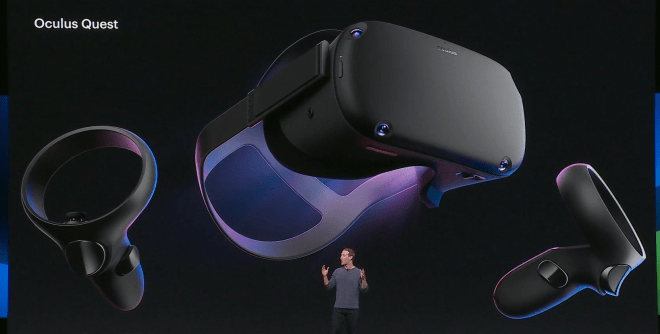

So, as you can see, I have been doing quite a bit of thinking while I have hit the pause button on this blog. I will continue to spend the rest of my summer on my self-imposed vacation from this blog, and no doubt I will have other thoughts, insights and opinions to share with you when I return, hopefully feeling more refreshed.

I feel that with this blog, after a few stumbles and setbacks, I have finally found my voice, and you will continue to hear it over the next three years, and probably far beyond that! Enjoy the rest of your summer! I will be back in September.

Photo by Jason Rosewell on Unsplash

UPDATED! Linden Lab To Be Acquired By an Investment Group Led by Randy Waterfield and Brad Oberwager

Please note that I am taking the entire month of July off as a self-imposed vacation from the blog so I can focus on my other work, except for sponsored blogposts, and major breaking news such as this. See you in August!


Randy Waterfield (left) and Brad Oberwager (right). Source: LinkedIn profiles


This evening, Linden Research (better known as Linden Lab, the makers of Second Life) dropped a bombshell press release: the small but profitable privately-held company which has been run pretty much independently since it was founded by Philip Rosedale in San Francisco in 1999, will be acquired by an investment group.

SAN FRANCISCO, July 9, 2020 — Linden Research, Inc. announced today it signed an agreement to be acquired by an investment group led by Randy Waterfield and Brad Oberwager. Closing of the acquisition is subject to regulatory approval by financial regulators in the U.S. related to Tilia Inc.’s status as a licensed money transmitter as well as other customary closing conditions. Upon closing, Mr. Waterfield and Mr. Oberwager will join the Board of Directors of Linden Research, Inc.

“We’re excited for this new chapter to begin. We see this as an opportunity to continue growth and expansion for Second Life and our money services business Tilia,” says Linden Lab CEO Ebbe Altberg. “We’re grateful for the ongoing support from our community, business partners and investors. Now more than ever, there is increased recognition of the value and utility of virtual worlds to bring people together for safe, shared, and social online experiences.”

“Both the company and its virtual world community have a unique culture and creative energy that remain important to the long-term success of Second Life,” says Brad Oberwager. “There’s a bright future for both Second Life and Tilia and we’re excited to help fuel these growth opportunities.”

“Since its inception 17 years ago, Second Life has been a pioneer in the concepts of virtual societies, land and economies,” says Second Life founder Philip Rosedale, who is now CEO of High Fidelity. “I’ve known Brad for 14 years personally and professionally, and I’m confident he will bring his passion and proven strategies to help Linden Lab achieve new heights in distribution, scale, and quality while remaining true to the original vision, creativity, and community that makes Second Life unique and special.”

Mr. Oberwager has spent his entire career in technology and consumer-focused companies. Mr. Oberwager is the founder and Chief Executive Officer of Jyve, a Silicon Valley based technology company. Prior to Jyve, Mr. Oberwager owned Bare Snacks, acquired by PepsiCo. Mr. Oberwager is an advisor to several technology start-ups and sits on the boards of several technology and CPG companies.

Mr. Waterfield is the Chairman and CEO of the Waterfield Group. The Waterfield Group has invested in over 100 technology, financial, insurance, bank and other companies.


One commenter on the news over at the RyanSchultz.com Discord server noted:

One of the new investors in the group that bought Linden Research [Linden Lab] is Randy Waterfield, the Wookey guy.

Wookey, of course, is the company that bought Sansar from Linden Lab earlier this year, after the platform went through two rounds of staff layoffs and almost folded.

What does all this mean? Damned if I know! I’m quite sure many Second Life users will be wondering what it all means as well. New owners could mean a shake-up at Linden Lab, and we all know how much some Second Life users hate changes (witness the fuss last year over Tilia).

Of course, it might also be the best thing to happen to the platform, a new opportunity (with fresh investment!) to take it to the next level of growth.

Interesting times, indeed! Stay tuned.

UPDATE 11:08 p.m.: The news took many by surprise, including the team who work on the most popular Second Life viewer program, Firestorm, who tweeted:

Please don’t ask us, this was news to us too.

Longtime SL blogger Inara Pey reported:

I reached out to linden Lab on finding out the news, but was informed the company has no further comment on the acquisition beyond the press release.

However, given that the acquisition will see Mr. Waterfield and Mr. Oberwager joining the board, I would anticipate that – given the nature of acquisitions – it is unlikely there will be any immediate visible changes to Linden Lab, Second Life or Tilia Inc., and, and the company will likely to continue to operate in a “business as usual” mode with regards to both Second Life operations and the community for the immediate future. That said, there will likely be a lot of speculation as to the future of SL, together with concerns / fears as to what the longer-term future might be.

While it is purely speculative on my part, I would hazard a guess that the acquisition will take into consideration the increased interest Second life has witnessed over the last year(ish), and particularly as a result of the SARS-CoV-2 pandemic, and will see in inflow of cash for the company that will allow it to (hopefully) meet its immediate goals with both Second Life and Tilia Inc., and allow both platforms to continue to be developed.

And (of course!) there is an ever-growing comment thread over on the Second Life Community Forums.

UPDATE July 10th, 2:08 p.m.: In response to the intense level of speculation on the above-mentioned comment thread on the SL community forums, Brett Linden, Senior Director of Marketing for Linden Lab, made the following statement:

Good day, all!

Just jumping in to respond to a few of the comments…

A few folks are speculating that this is the end of SL and nothing could be further than the truth. Any talk of dismantling or radically changing the fundamentals of SL that we know and love is inaccurate. While we can’t get into specific details about the deal itself, I want to emphasize the fact that this keeps Linden Lab as an independent venture led by two investors who have a great deal of awareness about what SL is and isn’t. They are excited to join and help us grow both SL and Tilia while also respecting and recognizing the needs and sensitivities of the existing culture and community. 

And, in response to a question about when more detailed information would be forthcoming about the acquisition, and when the new owners would address the Second Life community, Brett said:

Great question! We look forward to being able to share more as soon as we can and I know that Brad is eager to meet the community as we get closer to the closing/approval date. 

New! Sansar Launches Mobile Apps for iPhone, iPad and Android Devices

While reading through all the ways that you could watch and listen to the Lost Horizon virtual music festival in Sansar, I learned that there are now mobile apps, for both iOS and Android devices!

Here’s a link to the iPhone and iPad apps on the Apple App Store, and here is the link to the app on the Google Play App Store.

Once again, the branding is squarely on attending live events in Sansar. The events listing includes this weekend’s Lost Horizon Festival, plus a number of other live music events taking place later on this month, such as Monstercat: Call of the Wild. Because it would appear that Wookey staff need to place cameras in place before the event, not every event from the Sansar Events Calendar is available to view using these new mobile apps (perhaps Wookey charges clients extra for this service?).

The only stage I could visit on the iPhone app was the Gas Tower stage, and the only views I could get were a direct view of the DJ on stage, or a birds-eye view of the event, seeing the avatars of the people who were there in person as tiny figures below me:

The sound quality was not great, and I was unable to visit any of the other music stages. The first set of reviewers on the App Store were not that impressed:

However, it is still a significant step for Wookey-run Sansar to have mobile apps, which dramatically opens the door to a much broader potential audience. I’m also quite sure that they are using these new apps as part of their product pitch to other music industry executives, to offer more live music performers in future! Let’s hope that this new feature will help to reel in a few new customers and events.

UPDATED! The Lost World and Lost Horizon Music Festivals Take Place July 3rd and 4th, 2020 in Sansar: A First Impressions Review of the Events

Please note that I am taking a vacation from the blog for the next two to three weeks, except for sponsored blogposts (with the occasional exception, like this review).


This morning, I paid a long-overdue return visit to Sansar, to check out both of the two-day music festivals that are taking place on the platform this weekend (July 3rd and 4th, 2020):

  • The Lost World event, held by an organization called Global Music Festivals, is being held in a specially-created world called Lost World, based the Incan architecture of Machu Picchu in Peru (here’s the entry in the Sansar Atlas):
  • The Lost Horizon Festival, which is associated with the real-world Shangri-La event at the Glastonbury Festival, a five-day festival of contemporary performing arts that takes place in Pilton, Somerset, in England every year (which, like many other events, was cancelled due to the coronavirus pandemic):

According to the Lost Horizon event page:

Two days. Four stages. Fifty-plus performances from a star-studded global lineup, including Fatboy Slim, Carl Cox, Jamie Jones and more. Welcome to Lost Horizon, from the team behind Glastonbury’s Shangri-La – the world’s biggest music and arts festival in virtual reality! Join us from wherever you live, across desktop PC and VR here at Sansar.

These are extraordinary times, and we know fans everywhere are hurting. Which is why we’re thrilled to offer a FREE TICKET to any and all affected by this current crisis.

If you can contribute, we’re also offering a PREMIUM TICKET that helps benefit two important causes – Amnesty International and the Big Issue – and includes some amazing goodies: an exclusive piece of art from Lost Horizon creatives, Instruct Studio; a virtual shirt from Instruct Studio; and more.

While you have to buy a ticket (a free one, or the US$10.00 Premium ticket) to get into the Lost Horizon events, anybody can pop in to visit the Lost World event, which is smaller and feels more intimate.

Lost World (by Global Music Festivals)

The Lost World event features more than 20 live DJs performing sets over two days. The two 12-hour streams will be live broadcast on Twitch and into the Lost World in Sansar especially built for this event. Deejays will play EDM, Trance, Goa, Techno, Psy, House, and Nu Jazz.

When I dropped by this morning there was an appreciative crowd of about 20 avatars gathered, dancing in lockstep to the light show. I found that if I stopped playing my own dance animations and stood still, eventually I, too, would start dancing with the rest of the crowd! I’m not sure how comfortable I feel about a world imposing its dance moves on me, though. (I would have preferred a choice!)

Saturday Night Fever moves in front of an Inca God!

Unfortunately, there is no lineup of artists on the Global Music Festivals rather bare-bones website, but there is a poster located in the stone building to the right of your spawn point. with the day’s lineup (there’s also a quest you can do as part of the festival):

Lost World Festival Schedule and Quest Giver

Lost Horizon Festival (by Glastonbury’s Shangri-La)

It’s clear that most people in Sansar this weekend are here for this festival, as this snapshot of the attendance figures (taken from the in-world Codex) indicates:

When I visited, the Gas Tower had over 100 avatars present, while the Freedom Stage and the Landing Zone had about 60 each, and the Nomad Stage about 40.

The Landing Zone makes a great first impression

This being Sansar, I expected the visuals would be top-notch, and they certainly are! You can use your Codex to hop from stage to stage, or start off at the Landing Zone, which features teleporters to take you to the various stages and exhibits:

The Info Booth at the Lost Horizon Festival’s Landing Zone
(I think the woman in the pink fringe boots is trying to steal my wallet!)

In addition to the stages, there is an art exhibit called ShangrilART, and a television studio called SHITV, broadcasting films and videos relating to the event. Both spaces were less crowded, giving you the opportunity to take a breather from the much busier music stages.

A documentary on transgenderism at the SHITV studio

At the Freedom Stage, the performers were a flat projection onto the stage rather than embodied avatars (the organizers used a green screen to erase the background). While I was a bit disappointed (I was really hoping for some sort of full-body tracking suits on the performers, like the one that electronic violinist Lindsey Stirling wore to animate her avatar in her awesome concert in Wave last August!), I do think that this was a best choice under the circumstances, and it worked well, especially when viewing the show from the back to the middle of the room:

It was only when you got right up to the stage that the illusion was shattered, as you can see from this shot I took of the deejays behind the booth at the Nomad Stage:

The only problem I encountered was the audio quality, which was consistently choppy and extremely poor while using a VR headset, and better but still a bit choppy while in desktop. I left and revisited several Lost Horizon stages where musical performances were taking place, listening while wearing my Oculus Rift and just on desktop, and there were definitely problems with the sound quality, especially in the Rift. If you are planning to participate in this festival, you might be better off setting your VR headset aside and just using desktop.

One very odd thing that I noticed was the dozens of animated bots that were placed in various spots near the periphery of all three music stages, or under the raised platforms provided for better viewing. You could tell they weren’t other “real” avatars because when you clicked the trigger on your hand controller and looked at them, an avatar name did not appear over them. Most were uniformly dressed in drab, grey colours, and they all cycled through the same dances. It was strange, to say the least.

Lots of animated bots under a viewing platform at the Freedom Stage…but why?

In an event that was already packed full of avatars, why did the organizers feel that they needed to add dancing bots to pad the audience? Were these bots included in the user concurrency figures in the Codex listings? I found myself wondering if the poor audio quality would be improved a bit if they were shut down and removed (I mean, having to render all the real avatars in a crowded world is adding enough to the load on my computer’s graphics card as it is; why on earth would you deliberately choose to increase that load by doing something like this?).

So, if you attend either or both virtual music festivals this weekend, be advised that you might have some sound problems (which will be more likely if you are using a VR headset). These are likely not events that users on lower-end hardware, or more restricted internet bandwidth, will enjoy.

There are schedules of the performers at each of the stages, with the times in BST when they are performing, information which is unfortunately missing from the official Lost Horizon Festival website (which just lists the artists at each stage alphabetically and provides links to their Facebook pages):

The schedule of performers at the Lost Horizon Festival’s Freedom Stage

Aside from the sometimes-poor audio quality and the creepy dancing bots, I’d encourage you to pay a visit to Sansar this weekend (perhaps your first ever?) to check out the dueling music festivals and experience the platform yourself. Sansar is, still, the most beautiful social VR platform in my opinion, and it lends itself well to events such as this. I’m quite sure that Wookey (the company now running Sansar) wants these festivals to bring many more new users to Sansar—and entice them to pay return visits.

It is now somewhat out of date, but back in April 2019 I did write up a step-by-step guide for newbies to Sansar, which you might find helpful. (I do know that Wookey has updated the selection of starter avatars.)

Have fun! I will be popping in an out of these two music festivals in Sansar all weekend, so say hello if you see me!

UPDATE 1:52 p.m.: Well, I signed out of Sansar and signed back in again, and there is a crowd of 188 avatars at the Lost Horizon Festival’s Gas Tower Stage:

While it is so good to see such a large crowd in Sansar having fun (I assume they are spread among multiple instances of the stage), the audio quality is still very poor, especially in VR, but also on desktop at times. For a music festival, I consider this to be a pretty serious problem. Let’s hope that Wookey can find a way to fix this before the Lost Horizon Festival ends tomorrow!

UPDATE 2:08 p.m.: There are now a total of 287 avatars at the Gas Tower Stage, and the sound on desktop is still choppy (I have given up trying to listen in VR). And just now, my Sansar client crashed completely. It would appear that the Sansar platform is experiencing some serious scaling-up problems as more and more people join (it’s evening now in the U.K., where I would expect the bulk of the audience is from). Signing in again, crossing my fingers…

UPDATE 2:21 p.m. Back in again, and I do have one piece of advice for people experiencing audio and/or visual glitches in Sansar: make sure that the Sansar client is the only thing that is running on your computer! I just checked and it is using well over 90% of my CPU just to render the Gas Tower stage and process the sound. Normally I have WordPress open in a browser window, but even something as simple as that brings the whole experience to a crawl, and garbles the music stream.

Now at 315 avatars at the Gas Tower Stage for Fatboy Slim‘s set, and rising…

UPDATE 6:41 p.m.: Well, I decided to pay one last visit today to all three music stages at the Lost Horizon Festival, and I am very happy to report that the music stream quality is much better in my VR headset! I’m not sure what Wookey did (or even if they did anything), but for the first time, I could stand in the middle of a virtual mosh pit in the front of the stage, feel fully immersed in the colorfully and creatively-dressed crowd in my Oculus Rift, and actually enjoy the music.

However, it’s clear that other people are encountering audio problems too. One person in the crowd near me posted to the chat at the Freedom stage:

Is there a www audio stream? I’m still clipping, even in desktop mode and low render; I’ve been trying for over 2 hours now.

Once again, the minute I opened up WordPress in a browser tab to report on this, everything went bad again. (So even if that person were to open up a livestream of the concert to get better audio, his performance in Sansar would take a hit.) It would appear your sound quality is a factor of three variables: how fast your internet connection is, how powerful your computer is, and what other programs you may have running simultaneously.

Your best bet might be to catch the Lost Horizon Festival via Twitch: the Beatport Twitch channel (which gives an overview of several stages at once), or the Lost Horizon Festival channel (which was offline when I checked this evening). There are also, new mobile apps for Sansar, which I will be writing about in another blogpost.

And, as I said before, it just felt right to see so many people in Sansar. Here’s hoping that the attendance at the music festivals this weekend met Wookey’s expectations, and that there are more such events in future.