Editorial: Some Facebook Musings on a Lazy Saturday Morning

Image by Firmbee from Pixabay

It’s been ten oh-so-glorious months since I decided to boycott Facebook and trade in my Oculus Rift for a Valve Index, and I continue to celebrate (nay, revel!) my near-complete emancipation from Facebook software and hardware. (I did have one person tell me he would no longer bother reading my blog after my decision… to which I responded Bye, Felicia!)

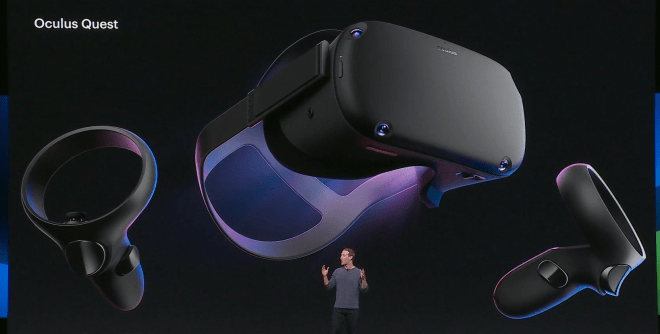
I have done a factory reset on my Oculus Quest (first edition), and it sits quietly in its box, waiting to be shipped to my sister-in-law in Alberta, where she plans to use it in her work with developmentally-challenged adults. I have completely deleted both my Facebook and Oculus accounts, and I asked Facebook to delete all my personal data. The Facebook app has never graced my relatively new iPhone. I even installed Privacy Badger and uBlock origin to block the setting and sending of tracking cookies to Facebook while I surf the Web! I think I have burned my bridges pretty effectively. (Now, I am not kidding myself, I am quite sure that Facebook has some sort of “shadow account” on me.)

In fact, the only remnant of Facebook left in my life the Oculus Rift I had purchased for my suspended research project, which sits in my office at the University of Manitoba Libraries, untouched as I continue to work from home during the pandemic. (I’m still figuring out what my new academic research project will be!) That VR headset has an Oculus account, and I have a little under two years to decide if I want to get a Facebook account for it when I am forced to do so. I can tell you one thing: if I do, it sure the hell won’t be in my name! I’m quite sure that many institutions of higher education are dealing with the thorny issues of being required to set up Facebook accounts for Oculus hardware. I’m also quite sure that Facebook/Oculus has lost some business because of that requirement!

At the same time, I am glad that the Oculus Quest 2 is selling well. “A rising tide lifts all boats,” as I like to say, and greater consumer uptake of VR will only mean good things for the entire VR/AR/XR ecosystem. People whose first taste of virtual reality is in an Oculus Quest will no doubt migrate to other hardware over time (many people are eagerly awaiting to see what Apple will do). I’ll tell you one thing: I trust Apple with my privacy way, waaay more than Facebook! I watch with amusement as the privacy battle between Facebook and Apple continues.

My experience with Facebook has informed the skepticism with which I look at all social media platforms, including the ones I use the most: Twitter and Reddit. I still derive value (and leads for potential blogposts!) from both, and I intend to continue to use them, and I still hang out on the new drop-in social audio apps Clubhouse and Spotify Greenroom (although I suspect that the Clubhouse boom has turned into a bust). However, I will never again use social media without wondering about data and privacy issues. Remember, if it’s “free”. YOU are the product!

I’ve also been watching Facebook take its first tentative steps into introducing advertising in Oculus apps. The BBC reported:

In what the social network described as an experiment, ads will begin to appear in a game called Blaston with other developers rolling out similar ads.

It said it would listen to feedback before launching virtual reality ads more widely.

It also revealed it is testing new ad formats “that are unique to VR”.

In 2014, shortly after Facebook bought Oculus, creator Palmer Luckey told concerned gamers: “We are not going to track you, flash ads at you, or do anything invasive.”

But in a blog on Oculus’s website, the firm said: “We’re exploring new ways for developers to generate revenue – this is a key part of ensuring we’re creating a self-sustaining platform that can support a variety of business models that unlock new types of content and audiences.”

Shortly after this was written, Blaston withdrew from the program after the negative press and review-bombing by unhappy players:

Barely a week has passed since Facebook started testing ads in Oculus apps and already the initiative has run into trouble. On Monday, one of the handful of developers involved in the initial ad experiment said it was pulling out of the test. Resolution Games tweeted that it had decided that in-app ads were not suitable for its multiplayer shooter game Blaston after “listening to player feedback.”

The developer had encouraged its user base to leave their thoughts on an ad feedback channel on its Discord server. As spotted by Upload VR, angry players had also review bombed Blaston on the Oculus Store and Steam shortly after its participation in the ad trial was announced.

Resolution Games’ decision marks a setback for Facebook’s burgeoning ad strategy for Oculus. After squeezing more ads into Instagram and its main platform, the company risked irking passionate gamers by bringing ads to VR. Unlike those other services, Oculus isn’t free: An Oculus Quest 2 headset alone starts from $299. While Blaston is also a paid game. 

I have been informed that, in fact, Facebook sells the Oculus Quest at a loss, hoping to earn back that money through software sales for the platform (which makes sense). In a discussion with Voices of VR podcaster Kent Bye (whom I admire greatly), I mentioned that I didn’t feel the need to subscribe to VRChat Plus, and he challenged me to consider the alternative: paid advertising in VRChat. I can tell you that the very thought made me shudder, and I changed my mind in a hurry, happily shelling out for a VRChat Plus subscription. And apparently, they are selling well:

Our community has shown their support by buying our optional subscription, VRChat Plus, which unlocks some enhancements and perks. VRC+ has been greatly successful, and has been instrumental in helping us expand via features like Regions. We plan on expanding VRC+ by enabling purchases on the Oculus platform, as well as allowing players to gift subscriptions to each other. We are so grateful to our community for their support!

I also find myself wondering about Facebook’s latest attempt at a social VR platform, Facebook Horizon, which many people expected to be launched by now, and which seems to be stuck in closed beta testing. I don’t regret not participating in Horizon by boycotting Facebook, not for one instant, but I do find the delay in launch perplexing. I have heard second-hand accounts that, while the in-world building tools are nice, there’s not a lot to do, and user moderation has been a problem area, despite Facebook’s surveillance attempts, which I mention in this blogpost. The longer it takes for Facebook to roll out Horizon, the more people wonder what’s really going on.

It just seems that Facebook can’t put a foot right these days. Even worse, the company itself doesn’t seem to know exactly what it is nowadays, as it lurches from market to market in an attempt to remain dominant. Shira Ovide of The New York Times wrote recently in an On Tech newsletter editorial:

This question might sound silly, but I’m serious: What is Facebook?

Did you know that Facebook has a dating service, online job listings, a version of Craigslist, a new collection of podcasts and live audio chat rooms, multiple copycats of Zoom, a section just for college students, two different spots for “TV” shows, a feature like TikTok (but bad) and software that office workers can use to communicate? On Tuesday, the company also outlined new developments in its efforts to get more businesses to sell merchandise directly inside Facebook and the company’s other apps.

If you knew that Facebook was doing all of this … gold star, I guess. You spend way too much time on the internet.

…The company’s constant tinkering raises the question: Is Facebook trying so hard because it’s excited about what’s next, or perhaps because, like its peers, it is no longer so adept at predicting and then leading digital revolutions?

(The entire On Tech column is well worth a read, by the way.)

Anyway, these are just some assorted musings about Facebook this lazy Saturday morning. As always, I’d love to hear your comments and perspectives! Feel free to join the burgeoning RyanSchultz.com Discord server, where well over 500 of us like-minded social VR/virtual world enthusiasts gather to discuss, debate, and argue about the ever-evolving metaverse and all the companies building it! Or just leave a comment on this blogpost, thanks!

Andrew “Boz” Bosworth and John Carmack Have a Discussion About Next-Generation Virtual Reality

When John Carmack and Andrew “Boz” Bosworth have a conversation, people tend to listen. Andrew is vice president in charge of augmented and virtual reality at Facebook, and of course John is the millionaire Chief Technical Officer of Oculus, who is currently working away on an Artificial General Intelligence project.

The two recently held a half-hour conversation on Twitter Spaces (Twitter’s version of the hot new drop-in audio app Clubhouse), which offered a fascinating glimpse into the heads of two key people who are driving Facebook’s move into virtual reality.

Right now [VR is] still largely an early adopters’ toy where a lot of people that have VR already have everything else, and we’re just adding some new spice, but we need to be a displacement device where we need to be something that somebody hard up for money decides “I’m going to buy a VR headset instead of a Chromebook or instead of a tablet.” And we need to do everything that those devices do. You know, we need to have similar app libraries. We need to be just as effective with keyboard and mouse. We need it to be something that you could put on your head and do the work that you need to do during a normal day.

—John Carmack

Anybody who uses what Philip Rosedale has pejoratively called a “marimba keyboard” (i.e. where you use a mallet-like device to awkwardly type on a virtual keyboard), can immediately relate to what John says here. Despite the many technical advances of the past five years, we are still not anywhere near the ease of use that is required for people to actually opt for a VR headset instead of a tablet!

Here’s the whole half-hour discussion, which I can highly recommend:

UPDATED! Saying Good Bye to Facebook, for Good: Taking the Final Step (Plus a Look at All the Personal Data the Oculus App Collects and Sends to Facebook)

Today, I took the final step…

Today, I took the final step in my emancipation from Facebook and Oculus. I did a factory reset on my original version Oculus Quest, de-associating my Oculus account from it, and wiping all the games and apps on it. Then, I deleted the Oculus app from my cellphone. Two simple steps, and I am now completely free of Facebook! (The Quest 1 will be going to my sister-in-law in Alberta, where she plans to use it in her work with developmentally-challenged adults. It will have a good second home.)

I’ll admit that I was sitting on the fence for a little while, as I wrote about here. While replacing my Oculus Rift with a Valve Index was an easy, painless upgrade (and I’m quite happy with it), there’s currently no competition for the wireless Oculus Quest VR headset. It’s a great headset, but I can no longer in good conscience sign on to the associated vacuuming of my personal data that comes with the deal, and I just absolutely, resolutely refuse to set up an account on the Facebook social network for my Oculus Quest.

What finally pushed me into making this final decision was a recent tweet by social VR app developer Cix Liv, who posted the following:

Just to put in perspective the corporate lies of @FBRealityLabs [Facebook Reality Labs] in perspective. @boztank [Andrew Bosworth, Vice President of Facebook Reality Labs at Facebook] says there will be a “big shift in privacy”. Meanwhile the Oculus app tracks you even more than their Facebook app. Check it yourself.

A brief fly-through of the Oculus app privacy statement, which you need to install in order to activate your Quest (you can check it out yourself in the App Store, or just scroll down to the update at the end of this blogpost to see the list in full)

Cix Liv is one of those developers whose idea for a VR app was poached by Facebook, a story you can read about in a December 3rd, 2020, Bloomberg News article titled Facebook Accused of Squeezing Rival Startups in Virtual Reality (original articlearchived link).

Now, you might tell me that I am overreacting in singling out Facebook as the target of my ire. Of course, I do know that other Big Tech companies like Amazon, Apple, Google, and Microsoft strip-mine my personal data as well. The issue is one of TRUST. And frankly, I no longer trust Facebook Inc., while I still retain at least some level of trust that Amazon, Apple, Google, and Microsoft will not abuse the data they have on me. In an editorial I wrote way back in August of 2019, I said:

More concerning to me is that, at some point, I may be forced to get an account on the Facebook social network to use apps on my Oculus VR hardware. In fact, this has already happened with the events app Oculus Venues, which I recently discovered requires you to have an account on the Facebook social network to access.

Sorry, but after all the Facebook privacy scandals of the past couple of years, that’s a big, fat “Nope!” from me. I asked Facebook to delete its 13 years of user data on me, and I quit the social network in protest as my New Year’s resolution last December, and I am never coming back. And I am quite sure that many of Facebook’s original users feel exactly the same way, scaling back on their use of the platform or, like me, opting out completely. I regret I ever started using Facebook thirteen years ago, and that experience will inform my use (and avoidance) of other social networks in the future.

Yes, I do know that I have to have an Oculus account to be able to use my Oculus Rift and Oculus Quest VR headsets, and that Facebook is collecting data on that. I also know that the Facebook social network probably has a “shadow account” on me based on things such as images uploaded to the social network and tagged with my name by friends and family, etc., but I am going to assume that Facebook has indeed done what I have asked and removed my data from their social network. Frankly, there is no way for me to actually verify this, as consumers in Canada and the U.S. have zero rights over the data companies like Facebook collects about them, as was vividly brought to life by Dr. David Carroll, whose dogged search for answers to how his personal data was misused in the Cambridge Analytica scandal played a focal role in the Netflix documentary The Great Hack (which I highly recommend you watch).

We’ve already seen how social networks such as Facebook have contributed negatively to society by contributing to the polarization and radicalization of people’s political opinions, and giving a platform to groups such as white supremacists and anti-vaxersThe Great Hack details how Cambridge Analytica used Facebook data without user knowledge or consent to swing the most recent U.S. election in Donald Trump’s favour, and look at the f***ing mess the world is in now just because of that one single, pivotal event.

Well, as it turns out, Facebook did do an about-face, change the rules, and insist that Oculus VR headset users will have to get accounts on the Facebook social network for their devices to continue to work “properly”. While I still have an Oculus account (and, at least at first glance at the Oculus website, there appears to be no way to actually delete that account*), I no longer run any Facebook or Oculus apps on my desktop computer or any of my mobile devices. Facebook may still have a “shadow account” on me, but at least I can feel comfortable that I am no longer actively sending them any data from any Facebook/Oculus apps. Good bye and good riddance!

As for this blog, I will, of course, continue to write about Facebook, Oculus, and Facebook’s own social VR platform, Facebook Horizon—just not from a first-person perspective! I do not feel that I am missing out on anything by the stance that I have taken.

Freedom from Facebook!

Free from Facebook, at last! It feels great.

*Found it! I have now asked Facebook to delete my Oculus account, too.

UPDATE Feb. 18th, 2021: I have decided to cut and paste the entire App Privacy statement from Apple’s App Store for the Oculus app below, so you can read for yourself just how much data the app shares with Facebook Inc.!


App Privacy

The developer, Facebook Technologies, LLC, indicated that the app’s privacy practices may include handling of data as described below. This information has not been verified by Apple. For more information, see the developer’s privacy policy.

To help you better understand the developer’s responses, see Privacy Definitions and Examples.

Privacy practices may vary, for example, based on the features you use or your age. Learn More

Data Linked to You

The following data, which may be collected and linked to your identity, may be used for the following purposes:

Third-Party Advertising

Purchases
  • Purchase History
Financial Info
  • Other Financial Info
Location
  • Precise Location
  • Coarse Location
Contact Info
  • Physical Address
  • Email Address
  • Name
  • Phone Number
  • Other User Contact Info
Contacts
  • Contacts
User Content
  • Photos or Videos
  • Gameplay Content
  • Other User Content
Search History
  • Search History
Browsing History
  • Browsing History
Identifiers
  • User ID
  • Device ID
Usage Data
  • Product Interaction
  • Advertising Data
  • Other Usage Data
Diagnostics
  • Crash Data
  • Performance Data
  • Other Diagnostic Data
Other Data
  • Other Data Types

Developer’s Advertising or Marketing

Purchases
  • Purchase History
Financial Info
  • Other Financial Info
Location
  • Precise Location
  • Coarse Location
Contact Info
  • Physical Address
  • Email Address
  • Name
  • Phone Number
  • Other User Contact Info
Contacts
  • Contacts
User Content
  • Photos or Videos
  • Gameplay Content
  • Other User Content
Search History
  • Search History
Browsing History
  • Browsing History
Identifiers
  • User ID
  • Device ID
Usage Data
  • Product Interaction
  • Advertising Data
  • Other Usage Data
Diagnostics
  • Crash Data
  • Performance Data
  • Other Diagnostic Data
Other Data
  • Other Data Types

Analytics

Health & Fitness
  • Health
  • Fitness
Purchases
  • Purchase History
Financial Info
  • Payment Info
  • Other Financial Info
Location
  • Precise Location
  • Coarse Location
Contact Info
  • Physical Address
  • Email Address
  • Name
  • Phone Number
  • Other User Contact Info
Contacts
  • Contacts
User Content
  • Photos or Videos
  • Audio Data
  • Gameplay Content
  • Customer Support
  • Other User Content
Search History
  • Search History
Browsing History
  • Browsing History
Identifiers
  • User ID
  • Device ID
Usage Data
  • Product Interaction
  • Advertising Data
  • Other Usage Data
Sensitive Info
  • Sensitive Info
Diagnostics
  • Crash Data
  • Performance Data
  • Other Diagnostic Data
Other Data
  • Other Data Types

Product Personalization

Purchases
  • Purchase History
Financial Info
  • Other Financial Info
Location
  • Precise Location
  • Coarse Location
Contact Info
  • Physical Address
  • Email Address
  • Name
  • Phone Number
  • Other User Contact Info
Contacts
  • Contacts
User Content
  • Photos or Videos
  • Gameplay Content
  • Other User Content
Search History
  • Search History
Browsing History
  • Browsing History
Identifiers
  • User ID
  • Device ID
Usage Data
  • Product Interaction
  • Advertising Data
  • Other Usage Data
Sensitive Info
  • Sensitive Info
Diagnostics
  • Crash Data
  • Performance Data
  • Other Diagnostic Data
Other Data
  • Other Data Types

App Functionality

Health & Fitness
  • Health
  • Fitness
Purchases
  • Purchase History
Financial Info
  • Payment Info
  • Credit Info
  • Other Financial Info
Location
  • Precise Location
  • Coarse Location
Contact Info
  • Physical Address
  • Email Address
  • Name
  • Phone Number
  • Other User Contact Info
Contacts
  • Contacts
User Content
  • Emails or Text Messages
  • Photos or Videos
  • Audio Data
  • Gameplay Content
  • Customer Support
  • Other User Content
Search History
  • Search History
Browsing History
  • Browsing History
Identifiers
  • User ID
  • Device ID
Usage Data
  • Product Interaction
  • Advertising Data
  • Other Usage Data
Sensitive Info
  • Sensitive Info
Diagnostics
  • Crash Data
  • Performance Data
  • Other Diagnostic Data
Other Data
  • Other Data Types

Other Purposes

Purchases
  • Purchase History
Financial Info
  • Other Financial Info
Location
  • Precise Location
  • Coarse Location
Contact Info
  • Physical Address
  • Email Address
  • Name
  • Phone Number
  • Other User Contact Info
Contacts
  • Contacts
User Content
  • Photos or Videos
  • Gameplay Content
  • Customer Support
  • Other User Content
Search History
  • Search History
Browsing History
  • Browsing History
Identifiers
  • User ID
  • Device ID
Usage Data
  • Product Interaction
  • Advertising Data
  • Other Usage Data
Diagnostics
  • Crash Data
  • Performance Data
  • Other Diagnostic Data
Other Data
  • Other Data Types

Wow…that’s a LOT. Why does Oculus need my search history and my browsing history, for example? Or my health and fitness data? And I’d love to know more details about this so-called “Sensitive Info”. What the hell’s that?

I understand that Facebook is currently fighting a battle with Apple over the amount and kind of privacy information being released to the consumer (according to this Harvard Business Review article and other sources).

Editorial: Preparing to Move from Oculus Rift to Valve Index (and Why the Oculus Quest Continues to Seduce Me, Despite Myself)

My well-worn Oculus Rift (left) and my yet-to-be-unpacked Valve Index VR kit (large box)

Today, I began preparing for the removal of my Oculus Rift VR headset by uninstalling all my apps in Oculus Home. (Fortunately, I didn’t spend a lot of money on games and apps in the Oculus Store over the past four years. My interest lies more with social VR platforms, which tend to be free to install, as opposed to VR games.)

I won’t actually remove the hardware until tomorrow, after which I will uninstall the Oculus software from my personal computer. Hopefully, by this time tomorrow, I will have broken that shiny multi-coloured seal on the large black box containing my brand new Valve Index VR kit, and gotten it all set up and working properly.

As part of my housecleaning today, I also recharged and updated my Oculus Quest (the original version 1, not the Quest 2). I put it on, fully intending to uninstall all the apps I had installed on it, and prepare it for shipping to my sister-in-law in Alberta…

…and damn if the Oculus Quest technology didn’t seduce me again, a full eight months after I had last picked it up! (The space in my bedroom which I had cleared for it is currently piled high with pandemic preps.) I found myself installing and testing out the controller-free option, where the Quest just tracks your hands in space, and I found that it was great fun! Which led to me playing with a few of the installed apps…and, well, a few hours later, there I was, back in love with the magic of it all. Say what you will about Facebook, but this is a awesome little device!

Which brings me to the following uncomfortable truth: while it will be relatively easy to replace my well-worn, much-loved Oculus Rift with the Valve Index, it will not be so easy to replace my wireless Oculus Quest VR headset—at least, not anytime soon. Perhaps, in a year or two, the marketplace will throw up a competitor or two, but for now, the Quest and Quest 2 are simply in a league of their own.

And that uncomfortable truth leads to an equally uncomfortable decision: do I, on point of principle, continue with my avowed, personal boycott of all things Facebook and Oculus, and give up my Quest? Or do I hold on to it until a non-Facebook alternative comes along, knowing that all the while, I am having my personal data while using the device harvested, strip-mined, and sold to the highest bidder by Mark Zuckerberg and company? It is an ethical dilemma.

I do have a two-year window in which I will not be forced to set up an account on the Facebook social network in order to use my Oculus Quest (an option which the people who purchased Quest 2 VR headsets this year do not have). And I also know that a lot can happen in two years…

But it looks as though (for now), my sister-in-law will not be receiving my Oculus Quest, just yet.

Damn you, Mark Zuckerberg! I have been seduced by the technology, yet again…