Editorial: Shifting Gears

Photo by Tim Mossholder on Unsplash

Yesterday’s blogpost (and its response) has got me thinking, in the wee hours of this morning, about other people’s expectations, and trying (or failing) to live up to them. Not to mention the expectations which I, knowingly or unknowingly, place upon myself as a blogger. Every blogger has his or her own biases and quirks; God knows I have many. And even a cursory inspection of my output shows how often I have gone off on tangents in my three-and-a-half-year blogging journey.

My writing about social VR, virtual worlds and the metaverse on this blog has been an unusual combination of broad-brush strokes about as many different platforms as possible, combined with a geeky deep-dive into specific worlds (Sansar the first couple of years, and now Second Life). One example of such a deep dive would be my recent month-long coverage of Advent calendar freebies in Second Life, something which my many faithful SL readers no doubt appreciated, but which probably left some of my regular, non-SL audience out in the cold, scratching their heads.

As I have written before, I consider Second Life to be the perfect model of a fully-evolved, mature metaverse platform, where we can see hints of what will happen to newer platforms over time (such as the implementation of an in-world economy where players can buy and sell user-generated content).

But I also expect that 2021 will be the first year where other metaverse platforms (notably VRChat and Rec Room, but also other products) will begin to consistently outpace Second Life, both in terms of monthly active users (MAU) and in terms of user concurrency figures. Over New Year’s Eve and New Year’s Day, VRChat shattered its previous user concurrency figures, reporting over 40,000 users online at the same time. Last weekend, Rec Room hosted 45,000 concurrent players. In other words, depending on the day and time, you can find more people in Rec Room and VRChat than in Second Life.

Both VRChat and Rec Room are now very well positioned to finally snatch the mantle of Second Life for the title of “most popular metaverse platform” (as hard as it is to define what that means). This might not have happened as quickly as some observers had originally predicted, least of all the PR pitch-boys at the corporations building these platforms, but it will happen nonetheless. It’s inevitable. Yesterday’s boasts become tomorrow’s reality, in some cases.

And it is not that Second Life is bleeding users, or that it is in any imminent danger of being shut down; I estimate that SL still attracts anywhere between 600,000 and 900,000 active monthly users (that is, people who sign onto SL at least once a month). It is still a highly profitable platform with a highly committed userbase, and under its new management, the Waterfield investment group, it is likely to remain a profitable cash cow for many years to come. Second Life is not going anywhere.

But, now that Linden Lab has finally shut down its physical server farms and moved Second Life entirely to the cloud, I don’t really foresee a lot of changes or improvements being made to what is already a winning formula—and I don’t see many of SL’s users clamouring for any major changes, either. Over time, competing platforms will no doubt offer advantages which the aging SL codebase cannot be tweaked to provide (the most obvious one being support for users in virtual reality).

And, over time, some of Second Life’s user base will migrate to other platforms, little by little, bit by bit. This SL diaspora will continue to enrich multiple metaverse platforms, much as it already has over the past decade. The seeds first planted by Philip Rosedale and his peers will continue to root and grow in various places, some probably quite unexpected!

All of this preamble is my very roundabout way of saying that I will be significantly reducing my coverage of Second Life in 2021. I will be putting that time and energy into writing about other metaverse products instead. Yes, I know I keep saying that, only to get pulled back by the latest fabulous freebie! Second Life is great fun, and I have enjoyed being your Freebie Queen. But frankly, SL is not where most of the interesting new stuff is happening. It’s happening in places outside of Second Life, and it’s high time I turned my attention to them.

It’s time for me to re-shift my focus to the newer platforms which are seeking to become the next Second Life. It might be an iteration of something that already exists, or it might be something brand new that seems to come out of nowhere and take everybody by storm. Whatever happens, I want to report on it!

I’m sure many of my Second Life readers will be sorry to hear this news. I will still be around, and I will still be visiting various places in-world, but I will largely leave the writing and reporting about SL to the hundreds of bloggers who do a much better job with their focused, deep-dive coverage! And I will continue to take as wide a view as possible—a big-picture perspective—of the constantly-evolving metaverse of which Second Life is a part.

Whichever camp you find yourself in, thank you for sticking along for the ride! No matter what happens, it promises to be an exciting adventure.

2021 promises to be a wild ride!

This change in focus will take effect immediately. Buckle up and keep your arms and hands inside the vehicle at all times! 😉

Send In the Cons: RecCon in Rec Room and VRCon in VRChat

Yes, the title is a dreadful pun; this is the best I could do at 3:00 a.m. (I am suffering from insomnia yet again).

Most real-world cons (fan conventions), such as Comic Con pictured here, have been cancelled due to the pandemic, but both VRChat and Rec Room are hosting virtual cons!

I have news of not one, but two different virtual cons (short for fan conventions) taking place in two of the most popular social VR platforms, Rec Room and VRChat.

Let’s start with the one that is happening first: RecCon.

RecCon is a free community event in Rec Room where players from all around the world will meet up for various activities, Q&As, exhibit halls, and panels. There will be five exhibit halls at the con:

  • Artist Alley Expo Hall
  • Portfolio Expo Hall
  • Classes Expo Hall
  • Inventors Expo Hall
  • Clubs Expo Hall

RecCon takes place November 28th and 29th, 2020. For more information, and to learn how to host a panel, event, or booth in the expo hall, please see this webpage.


VRCon takes place December 11th to 13th, 2020 in VRChat. The deadline to apply for a virtual booth is December 6th; here is the application form. For more information, and to learn how to get involved, please follow their Twitter or join their Discord server.

Here’s a short promotional video which was just posted to YouTube:

Editorial: Upon Reflection…

Taking a much-needed break from blogging has given me an opportunity to reflect a bit on my journey over the past three years, and ponder where I might go from here.

Photo by Joshua Earle on Unsplash

Frankly, I never expected to become a journalist covering the ever-evolving metaverse, with a growing audience; this blog started off as a tiny little niche blog, where I wrote about my (mis)adventures and explorations in Sansar. And everything that happened after that—writing about more and more social VR platforms, hosting the Metaverse Newscast show, focusing on freebies in my beloved Second Life—just kind of happened organically. I didn’t have any sort of plan; I just made choices along the way that led to this point.

But for me, the seeds for this journey were first planted in Second Life 14 years ago, which since its earliest days has been this strange and marvelous phoenix that keeps rising from the ashes, again and again, confounding and bewildering many casual observers who continue to predict (wrongly) its failure. Even a cursory glance at the official Second Life Community News feed (curated by the highly capable Strawberry Linden) reveals the absolute torrent of creativity that the platform has provided to so many people. Second Life is not going anywhere, honey.

Source: My Dark Fantasy

SL is a fully-evolved, vibrant, mature virtual world which has become the model which other metaverse companies have spent countless programming hours and (in some cases) millions of dollars to try and recreate, with varying degrees of success.

I think that the ones that have been the most successful (so far) are NeosVR, ENGAGE, AltspaceVR, VRChat, Rec Room and, somewhat to my surprise, three blockchain-based worlds: Cryptovoxels, Decentraland, and Somnium Space. And there are many other platforms slowly but surely building up their business, taking advantage of the unexpected opportunities presented by the coronavirus pandemic (one example is Sinespace, a company which is patiently and cannily playing the long game, and which is extremely well-poised to snatch Second Life’s mantle, if and when it is ever dropped).


And, during my break, I have been also thinking a lot about Facebook/Oculus and their impact on virtual reality in general, and social VR in particular. I have decided that, despite my new, personal boycott of Facebook products and services, I will continue to write about their upcoming social VR platform, Facebook Horizon, as it launches in public beta, probably before the end of this year.

I, like many other people, now absolutely refuse to have a Facebook account as a matter of moral principle. In August of 2019 I wrote (and yes, it bears repeating at length here):

In this evolving metaverse of social VR and virtual worlds, is too much power concentrated in the hands of a single, monolithic, profit-obsessed company? I would argue that Facebook is aiming for complete and utter domination of the VR universe, just as they already have in the social networking space, by creating a walled ecosystem…that will have a negative impact on other companies trying to create and market VR apps and experiences. The field is already tilted too much in Facebook’s favour, and the situation could get worse.

More concerning to me is that, at some point, I may be forced to get an account on the Facebook social network to use apps on my Oculus VR hardware. In fact, this has already happened with the events app Oculus Venues, which I recently discovered requires you to have an account on the Facebook social network to access.

Sorry, but after all the Facebook privacy scandals of the past couple of years, that’s a big, fat “Nope!” from me. I asked Facebook to delete its 13 years of user data on me, and I quit the social network in protest as my New Year’s resolution last December, and I am never coming back. And I am quite sure that many of Facebook’s original users feel exactly the same way, scaling back on their use of the platform or, like me, opting out completely. I regret I ever started using Facebook thirteen years ago, and that experience will inform my use (and avoidance) of other social networks in the future.

Yes, I do know that I have to have an Oculus account to be able to use my Oculus Rift and Oculus Quest VR headsets, and that Facebook is collecting data on that. I also know that the Facebook social network probably has a “shadow account” on me based on things such as images uploaded to the social network and tagged with my name by friends and family, etc., but I am going to assume that Facebook has indeed done what I have asked and removed my data from their social network. Frankly, there is no way for me to actually VERIFY this, as consumers in Canada and the U.S. have zero rights over the data companies like Facebook collects about them, as was vividly brought to life by Dr. David Carroll, whose dogged search for answers to how his personal data was misused in the Cambridge Analytica scandal played a focal role in the Netflix documentary The Great Hack (which I highly recommend you watch).

We’ve already seen how social networks such as Facebook have contributed negatively to society by contributing to the polarization and radicalization of people’s political opinions, and giving a platform to groups such as white supremacists and anti-vaxersThe Great Hack details how Cambridge Analytica used Facebook data without user knowledge or consent to swing the most recent U.S. election in Donald Trump’s favour, and look at the f***ing mess the world is in now just because of that one single, pivotal event.

We can’t trust that Facebook is going to act in any interests other than its own profit. Facebook has way too much power, and governments around the world need to act in the best interests of their citizens in demanding that the company be regulated, even broken up if necessary.

Of course, Facebook is well within its corporate rights to insist that, henceforth, Oculus Go, Quest, and Rift users have to use Facebook accounts. Just as I am well within my rights to avoid providing another smidgen of personal data for Facebook to strip-mine for profit. It will be very interesting to see how more the consumer-privacy-oriented First World countries (such as Canada, and those countries within the European Union) will respond to the Facebook juggernaut.

I also have absolutely zero doubt that Facebook will continue to use every single lawyer, lobbyist, tool and tactic at its disposal to fight to maintain its market dominance, even as the Facebook social network continues to foster divisiveness, bleed users and lose advertisers. Believe me, Facebook would not have taken the unprecedented step of forcing Oculus device users to set up Facebook accounts if they weren’t afraid of losing the younger generations of users who have, thus far, resisted joining the social network their parents and grandparents belong to. (Of course, most of them are already on Instagram, which is owned by Facebook.)

It is relatively easy to bypass the tethered Oculus Rift VR headset and its associated Oculus Store ecosystem with competing PCVR products and services (such as the Vive headsets, the Valve Index and Steam). However, it is difficult—frankly impossible at present—to find a non-Facebook alternative to the standalone Oculus Quest VR headset. I have no doubt that the market will throw up a few capable competitors to the Quest over time, but Facebook has built up a huge lead, and it will be very difficult to unseat from its dominance in that particular market segment.


So, as you can see, I have been doing quite a bit of thinking while I have hit the pause button on this blog. I will continue to spend the rest of my summer on my self-imposed vacation from this blog, and no doubt I will have other thoughts, insights and opinions to share with you when I return, hopefully feeling more refreshed.

I feel that with this blog, after a few stumbles and setbacks, I have finally found my voice, and you will continue to hear it over the next three years, and probably far beyond that! Enjoy the rest of your summer! I will be back in September.

Photo by Jason Rosewell on Unsplash

Editorial: My Social VR/Virtual World Predictions for 2020

Photo by Jen Theodore on Unsplash

Now that I am (finally!) finished my annual holiday tradition of utterly ransacking all the Advent calendars and December shopping events I can find in Second Life—the better to clothe my small army of alts with fashionable freebies!—it is time to turn my attention to predictions for the coming year.

Let’s start with a look back at my predictions for 2019, shall we? I said then:

  • That Second Life would “continue to coast along, baffling the mainstream news media and the general public with its vitality and longevity”, and that “the ability to change your first and last names in SL will prove very popular—and also very lucrative for Linden Lab”. Well, I am going to stick to that prediction. Implementing avatar name changes in SL turned out to be a thornier problem than Linden Lab anticipated, hence the delay, but they now have eight years of pent-up demand for this feature, and I anticipate that it will still prove popular—and profitable—for Linden Lab. I myself upgraded one of my alts to Premium to be able to change her legacy name of Bumbly Rumpler. (I know. I know. I don’t know what I was thinking at the time!) I also snagged her a lovely new riverside Victorian Linden Home in the process.

  • That OpenSim would move on implementing virtual reality support, but (as far as I can tell), that work has stalled or been abandoned. To be honest, I have barely set foot at all in OpenSim this past year, so I regret that I am not in any position to make predictions for 2020!

  • That “one or more blockchain-based virtual worlds are going to fold”—a prediction which has come true, at least for MATERIA.ONE, which has not officially folded, but is currently on an indefinite hiatus. The landscape is littered with various blockchain-based projects that are either dead, moribund, or stuck in pre-development hell: Aether City, Ceek, The Deep, MARK.SPACE, MegaCryptoPolis, The Sandbox, Stan World, SuperWorld, Terra Virtua, and VIBEHub. And yet, somehow, new crypto projects keep appearing, hoping to become the next Bitcoin.

    However, three blockchain-based virtual world projects appear to be doing well—Cryptovoxels, Decentraland, and Somnium Space—and I expect that they will all continue to do well in 2020. I note that both Decentraland and Cryptovoxels have tended to rank in the Top 5 in sales volume on the OpenSea marketplace (this screencap is from a tweet made Dec. 27th):

I’m already working on a predictions blogpost for the various social VR platforms and virtual worlds in 2020. Among my predictions is the following: if Linden Lab cannot find a way to increase the overall number of users in Sansar within the next 12 months, even with a pivot to (and an exclusive focus on) live events, then the company will do one of three things:

– convert the existing Sansar code to open source and let the community take it over (which I think is the least likely option);

– sell Sansar to another company and keep Second Life running (or perhaps sell off Linden Lab and all its assets entirely to another company); or

– shut down the Sansar project completely (which I think is the most likely option).

In case you haven’t been paying attention, the honeymoon period for Sansar is OVER.

I am increasingly worried (even heartsick) over the future of Sansar.

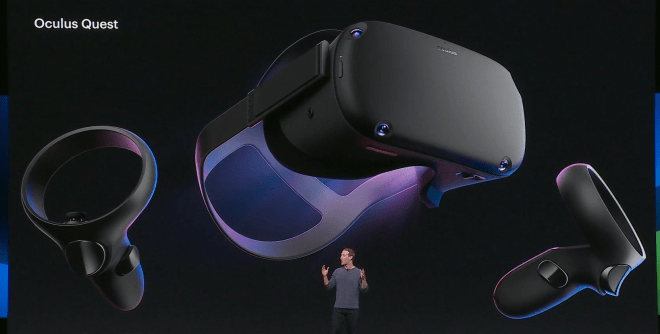
  • That “the Oculus Quest VR headset will ignite the long-awaited boom in virtual reality”. I think that we can agree that the Oculus Quest has been a runaway success. Facebook is apparently selling the units as fast as they can make them, and they are now backordered until late February 2020. (The Valve Index is also selling well, and also similarly backordered.) I do predict that this will bring many more people into those social VR platforms which can natively run on the standalone Quest headset, such as VRChat, Rec Room, and AltspaceVR.

  • That “Linden Lab’s launch of Sansar on Steam will likely have only a modest impact on overall usage of the platform”. I deeply regret that this prediction has come true in spades. I said at the time that Linden Lab ditching its SandeX and launching Sansar on Steam would be a terrible mistake, and I take no pleasure in being proven correct. Sansar has been pummeled by negative reviews by Steam gamers, adding to the general sense of malaise about the platform in the past year, especially since approximately 30 staff working on the project were laid off by Linden Lab a couple of months ago, in an attempt to trim their continued financial losses. This was a move which was probably imposed on CEO Ebbe Altberg by the Linden Lab board of directors, who are probably very worried that if Sansar tanks, it will take down Second Life with it.
Photo by Drew Beamer on Unsplash

O.K., now that we’ve looked at how well my predictions for 2019 have fared, now it’s time to peer in my crystal ball and make some new predictions for 2020.

First, all current social VR platforms and virtual worlds will struggle with a key problem: effective promotion. Getting the word out to the public about the various platforms is proving to be more and more difficult in an age of social media overload and short attention spans.

We can expect to see more partnerships between various platforms and influencers (such as Sansar’s continued partnership with the VR vloggers Cas and Chary, and my own recent sponsorship and advertising deal with Sinespace). By the way, my partnership with Sinespace is not exclusive, we can still see other people 😉 and I am still actively looking for other advertisers and sponsorships for my blog and the Metaverse Newscast show (hint hint).

Second, every single eye will be on Facebook as they launch their new social VR platform, Facebook Horizon, early in the new year. It’s disgusting to me how even the smallest Facebook announcement gets oceans of fawning mainstream press coverage, and you can certainly expect Horizon to suck up all the oxygen in the press room when it gets closer to launch date. If Facebook Horizon, backed by the almost limitless resources and reach of its ambitious parent company, fails to take hold in 2020, then that will be the clearest indication yet that the nascent social VR industry is in trouble (and that I might be out of a job!).

Third, as I have said above, I am extremely worried about Sansar. The Sansar website has recently had a complete redesign to focus almost exclusively on live events:

It would appear that Linden Lab is going all-in on Sansar as a platform for live events, to the detriment of other features such as avatar customization (I don’t expect anything new this coming year). However, competition in the live events market in 2020 is likely to be intense, with the following products also planning to focus on hosting such events:

  • Microsoft-owned AltspaceVR (which has also recently announced a pivot to live events);
  • VRChat (which is already home to popular talk shows such as ENDGAME, and many other regular live events);
  • Wave (which has already pulled off some spectacular musical events such as the recent Lindsey Stirling concert);
  • Upstarts such as Ceek and Redpill VR (which are in various stages of pre-development and may or may not launch in 2020);
  • Not to mention that Facebook will also want to muscle in on this extremely lucrative territory (with Oculus Venues, and probably Facebook Horizon, too)—and Facebook will not hesitate to ruthlessly use every tool and tactic at their disposal to achieve market dominance (including “hiding” posts about competing platforms in their Facebook, Instagram, and WhatsApp social network users’ newsfeeds). Facebook also has deep pockets to ink deals with major talent, locking them into exclusive deals to appear on their platforms.

Expect many skirmishes on the live events battlefield in 2020, and also expect some causalities to occur.

Fourth, Second Life will continue to coast along as it always does, still boasting approximately 600,000 regular monthly users in recently released statistics by Firestorm, and still making millions of dollars in profits, both for its content creators and for Linden Lab. It’s the gift that keeps on giving, and I see no sign of it stopping anytime soon. I predict that SL will still be around five years, perhaps even ten years, from now, and that people will still be logging in, and still merrily ransacking Advent calendars 😉 …and I will continue to blog about steals, deals, and freebies in Second Life!

Fifth, we can expect to see the upcoming Educators in VR International Summit as an example of an increasingly important use of social VR platforms in 2020: conferences. This is a natural fit, and one that saves precious resources (such as airline fuel) in an increasingly environmentally-conscious world. We can expect to see more conferences and meetings hosted in VR as an alternative to real-world meetings (although, as High Fidelity found out, the remote workteams support marketplace isn’t quite there yet, since the vast majority of companies still expect their employees to show up to their offices rather than work remotely from home). I think it’s going to take another generation for that shift to take effect in any widespread fashion.

Sixth: those social VR platforms which currently lack an in-world economy, currency, and a marketplace for user-created content, will be moving towards implementing those features. VRChat already has a booming off-world economy in the creation and sale of custom avatars. We already know that both VRChat and Rec Room are making plans in this area, based on job postings on their websites, but we can also expect other platforms to take this step, taking their cues from the continuing success of the mature, fully-evolved in-world economy of Second Life.

Platforms where people can make money tend to attract droves of new users, appealing to their greed and the universal desire to strike it rich (Decentraland as a more recent example; although its continued success is not 100% guaranteed, investors have sunk a lot of money into it, and it will be interesting to see how this ultimate expression of virtual, cut-throat capitalism will evolve and grow over the next year).

Finally, at some point Apple (and other companies, including Facebook) will launch the first consumer-oriented augmented reality headsets. The over-hyped Magic Leap One has turned out to be rather underwhelming (and underselling) so far, but who knows? Perhaps future AR products may ignite consumer interest, and have an as-yet-unknown impact on the current crop of social VR platforms.

Perhaps the big bet we all placed on virtual reality has been misplaced? We won’t know the answer to that hypothetical question until at least another decade has passed. Of course, some social VR platforms may decide to extend support to whatever AR/MR/XR hardware becomes available in the future, too. Anything can happen.

So these are my social VR/virtual world predictions for 2020. Please check back in a year, and we’ll see just how accurate I was!

Image by Jim Semonik from Pixabay