Editorial: Mourning The Potential Loss of a “Normal” Life During a Coronavirus Pandemic

Am I going to have to wash my hands for 20 seconds, and avoid touching my face,
for the rest of my life? (Photo by Allie Smith on Unsplash)

There is a small subReddit community (4,600 members) called r/COCID19_support. The creator states in the welcome message:

It had come to my attention that a lot of news about the epidemic had been causing spikes in anxiety and problems with people’s mental health, which really exacerbates the problem.

And with more and more cities going into in lockdown and more people forcing quarantines it seems that mental health is CRITICAL at this point in time. So hence comes this sub.

We offer non-judgemental peer support, not necessarily professional advice. You can check out rules and guidelines for more.

People have written all kinds of posts, talking about all kinds of problems they are having in trying to cope with a coronavirus pandemic, but one writer in particular made me realize something profound about this coronavirus pandemic: that we have no idea what could happen, how our lives could change, or how long that change would last.

That person wrote:

I think I’m experiencing grief over what I see to be the surety of loss of “normal” life as we know it, at least for an unknown period of time in the future.

I saw an ad on my Facebook timeline – ‘Wicked’ is going to be playing in Des Moines this July. (Well, at least it’s scheduled for then).

I don’t think I’ll get to ever see ‘Wicked,’ or if I do, it might be years from now.

IF the cast continues to tour, IF the theaters are still even open then, would I even feel safe enough to go anywhere with a crowd?

Now multiply that by any future events – even seeing a movie at the local theater. Concerts. Shopping malls. Going out to dinner. Visiting with family or friends?

How long until we’re restricted from driving around the country?

When will travel be safe again? I really enjoyed cruising, I enjoyed going by airplane, train, or even bus sometimes. I enjoyed seeing other countries and tourist spots.

Judging just by what I see other places going through, this virus isn’t only affecting if people live, get sick, or die. It will change our entire way of life.

I’m sad because I already see what I’ll be missing, and I don’t know if that will be for the rest of my life or for how long.

At age 56, signifcantly overweight, and with three underlying health conditions (hypertension, asthma, and type II diabetes), I am at risk of a severe reaction to SARS-CoV-2 infection. I’ve prepared as best I can; I’ve stocked up on all my prescription medications for three months, and stocked up on non-perishable food and even some over-the-counter medications if I should get sick. (Yes, I even stocked up on toilet paper.)

But now I realize that, according to the latest advice put out by the U.S. Centers for Disease Control, I am going to have to avoid going out—to restaurants, to movies, to pretty much anywhere where I could encounter crowds or be potentially exposed to someone with COVID-19. Basically, I’m going to be going to work, and every so often to the local grocery store and drug store…and that’s pretty much it.

Screencap from the CDC coronavirus website

I have made some bad choices in my life (notably, not taking my need to lose weight seriously, which has led to my problems with hypertension and diabetes) and I have had some bad luck with genetics (notably, my lifelong asthma and depression).

And it would appear that that particularly unlucky combination of circumstances might just lead me to stay stuck in my apartment during a coronavirus pandemic, terrified of getting severely ill, and possibly even dying, from a minuscule virus that started halfway around the world.

SARS-CoV-2 coronavirus (Wikipedia)

It is a very discomforting and depressing thought.

I might not be as emotionally or mentally prepared for this as I like to pretend I am. God, I wish I had a crystal ball, just to see what is going to happen, tonight. To me. To my friends and family and coworkers. To all of us.
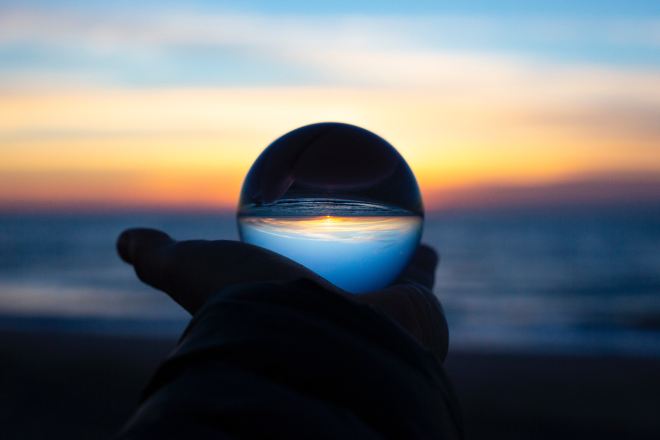
I wish I had a crystal ball…

UPDATED! SARS-CoV-2 and COVID-19 Update: March 9th, 2020 (And Why the Coronavirus Is Donald Trump’s Chernobyl)

Well, my regular go-to statistics dashboard of COVID-19 outbreaks by Johns Hopkins University suddenly decided to break down their Canadian statistics by province instead of by city (how dare they!?!!), so I have been forced to use this dashboard instead, which still indicates which communities have had outbreaks (note that on this particular map, there is no difference in the size of the circles to indicate the number of cases; each red circle indicates at least one case of COVID-19):

So, as you can see, the closest that the coronavirus has come to me in the blessed frosty hinterlands of the Canadian prairies (so far) are 7 reported cases of people infected with the SARS-CoV-2 virus in Edmonton and Calgary, and 2 cases in the Minneapolis/St. Paul area. There’s still a reassuring empty space around me on this map with no red circles, but I know full well that this situation can change abruptly.

Among the news on this truly extraordinary day:

Unable to sleep early this morning, I sent the following text messages to my brother and his family in Alberta:

(Actually, I only know of confirmed community spread in Vancouver, but the Toronto area now has so many cases that it is likely that human-to-human community spread of SARS-CoV-2 is happening there now, too. A Canadian who picked up the coronavirus in Las Vegas spent three days using TTC public transit with symptoms, before testing positive for COVID-19.)

(*have 110,00 cases, not “gave”…actually, now it’s over 113,500)

O.K. I am going to live-blog Donald Trump, who just took the podium. (God, the things I do for you people! I should be getting hazard pay.)

  • Trump announced possible help for hourly wage earners so they won’t miss a paycheque if they get sick (I’ll be extremely surprised if this gets passed in the “every man for himself” version of American capitalism.)
  • Wow, he actually kept it brief. Now VP Pence is talking. Let’s see how he responds to reporters’ question.
  • Pence said state labs are now up and running in all 50 states, and that something like a million tests will be sent out by the end of the week (yeah, right). South Korea has done over 200,000 tests, while the U.S. has only done about 6,000 so far. This is a major, undeniable fuck-up; the United States essentially wasted the six weeks that the draconian lockdowns in mainland China gave them. And you can’t say how bad things are until you implement widespread, free testing for COVID-19 in all areas of the country, to figure out how many people are infected—so stop comparing it with regular seasonal influenza!!!!

My already-high blood pressure goes up just watching Trump on CNN. He said there would be another press conference tomorrow afternoon on economic responses. He refused to take any reporters’ questions.

I feel truly sorry for you Americans saddled with this sad excuse for a president, and I dearly hope Trump pays the price for his inept, pathetic response to this growing public health crisis in the 2020 election.

UPDATE 8:20 p.m.: Today, Brian Klaas wrote a damning editorial for the Washington Post, titled The coronavirus is Trump’s Chernobyl:

During crises, ideology kills. Protecting myths, rather than people, is deadly.

The rapidly worsening coronavirus outbreak is President Trump’s Chernobyl. By putting dangerous myths above objective facts, Trump has turned the crucial early phases of government response into a disaster. Some public health experts in government have undoubtedly kept quiet, having seen repeatedly what happens to those who publicly contradict this president. And Trump himself, along with those who surround him, has tried to construct a reality that simply does not exist.

Those lies will kill.

Two weeks ago, today, Trump tweeted that “The coronavirus is very much under control in the United States … Stock market is starting to look very good to me!” At that point, there were a small number of cases, but public health experts clearly stated that the number was likely to spike. Nonetheless, Trump accused his critics of perpetrating a “hoax” and said their concerns was overblown. He said that the number of cases — 15 at the time — would soon be “close to zero.”

Today, there are more than 500 cases. There will soon be thousands. Yet every new infection was viewed through the prism of political self-interest. Every warning was dismissed as media hype. Crucial hours and days ticked by without the urgent action that was needed.

So far, Trump has been able to glide through crises of his own making because his base of support has often believed him over reality. When fact-checkers expose Trump’s lies, many of his supporters distrust the fact-checkers, not the liar.

But coronavirus is different. Spin won’t make dead bodies disappear. Recessions can’t be warded off with a blistering tweet in all-capital letters. You can’t blame Hillary Clinton for hospital overcrowding. The Trump playbook works when everything else is working. It falls apart when the world is falling apart.

He wraps up with:

With Chernobyl, as with Trump’s response to the coronavirus, efforts to protect the big lie were always doomed. It was impossible to simply lie and cover up the nuclear disaster. But that didn’t stop the Soviet Union from trying. It is impossible to pretend that people dying in increasing numbers is a “hoax” or that an inadequate supply of testing kits is part of a “perfect” government response. But that hasn’t stopped Trump from trying.

For years, it has been obvious that having as president a self-aggrandizing liar who constructs his own reality is dangerous. We’re about to find out just how deadly it can be.


I am not going to repeat the information I posted a few days ago; you know where to find it. As I wrote yesterday on this blog:

I’m not going to repeat all the instructions I’ve posted so many times before on this blog. You can find them all here (including this one). If by now you are not convinced that there will be a pandemic that will severely disrupt both your everyday life and society around the world, then nothing I say will convince you until it’s too late. The United States is doing an extraordinarily piss-poor job of risk communication to its citizens, which means many people still don’t fully realize the implications of a pandemic the likes of which we have not seen in over a century.

SARS-CoV-2 and COVID-19 Update: March 8th, 2020

Diego Verez kissed his boyfriend, Alex Gil, while holding their
9-month-old Pomeranian, Gio, inside the subway on Wednesday.
(photo by Brittainy Newman of The New York Times)

Well, here’s what that map from the Johns Hopkins University Coronavirus COVID-19 Global Cases dashboard looks like today:

A new case has popped up in Edmonton, Alberta, 1193 kilometers (741 miles) by airplane from where I am in Winnipeg, Manitoba. My brother and his family live just south of Edmonton, and I am extremely worried for their health and safety. I spent Friday and Saturday texting him reams of instructions on what to do, how to prepare, and what to buy. He assured me that he and his family are as prepared as they can be; the whole family was involved in Scouts Canada for many years, so they are better prepared than most.

By this point, everyone I contacted yesterday was already well aware of the danger of a pandemic, thanks to the excellent coverage of the outbreak by the Canadian news media. Even my unflappable, long-suffering best friend (with whom I have a $50 bet that there will be pandemic cases in Winnipeg), was up-to-speed on his hand-washing knowledge! I was suitably impressed.

Overnight, Italy has imposed quarantine on 16 million of its citizens:

Shortly after midnight, Italian Prime Minister Giuseppe Conte signed a decree affecting 16 million people in the country’s prosperous north, including the Lombardy region and at least 14 provinces in neighbouring regions, including the cities of Venice, Modena, Parma, and Rimini. The extraordinary measures will be in place until April 3.

The decree says people should “avoid any movement in and out” of those regions and also any trips within this area, barring journeys “for proven work needs or situations of necessity for health reasons.” Anyone in quarantine because they have coronavirus is forbidden from leaving home.

The decree does not mention the transport of goods in and out of these areas and does not say how the rules will be enforced. The fate of foreign visitors stuck in red zones in northern Italy was not immediately clear.

There was chaos and confusion in the hours before Conte signed the decree, as word leaked to the news media about the planned quarantine. Students at the University of Padua in northern Italy who had been out at bars on a Saturday night saw the rumours on their cellphones and rushed back to their apartments to grab their belongings and head to the train station.

Hundreds of passengers, some wearing face masks and rubber gloves, crammed onto the last local train leaving Padua at 11:30 p.m. Anxious students wrapped scarves around their heads, shared sanitizing gel, and sat on their suitcases in the aisles. No conductor came by to check tickets.

That train was stopped in Rome, and it is not yet clear how the Italian authorities will deal with all the escaping passengers on the train. This is an example of how people can start to act irrationally, and rebel against social distancing and quarantine measures. Other recent examples:

In addition, there have been reports of dozens of cancellations of conferences and events, as well as closures of gathering places:

I’m not going to repeat all the instructions I’ve posted so many times before on this blog. You can find them all here (including this one). If by now you are not convinced that there will be a pandemic that will severely disrupt both your everyday life and society around the world, then nothing I say will convince you until it’s too late. The United States is doing an extraordinarily piss-poor job of risk communication to its citizens, which means many people still don’t fully realize the implications of a pandemic the likes of which we have not seen in over a century.

For example, one person responded after I tweeted that the well-respected, experienced Dr. Richard Hatchett, who is leading U.K. efforts to develop a coronavirus vaccine, is saying that COVID-19 is “the most frightening disease I’ve ever encountered in my career”:

The person who doubted this expert said:

To which I would respond: you might not be worried about how sick you get, but what about the vulnerable people that you might infect? The elderly, and those with underlying health conditions such as heart disease, diabetes and cancer, are particularly at risk of a severe, even life-threatening, response to the SARC-CoV-2 virus. Overwhelmed Italian doctors are already telling us that 10% of COVID-19 cases require treatment in the intensive care units of their hospitals. A 15-minute radio interview with the first Florida COVID-19 patient revealed that he was so ill that “Mentally, I begged God to take me home.”

And a public liaison at the Washington state nursing home that has reported numerous deaths said:

“Our experience with this so far has shown that the virus is volatile and unpredictable,” Killian said. “We’ve had patients who, within an hour’s time, show no symptoms to going to acute symptoms and being transferred to the hospital. And we’ve had patients die relatively quickly under those circumstances…We know very little about how fast this may act.”

This is also going to have all kinds of unexpected spin-off effects. For example, I’m quite sure that the coronavirus will complicate Linden Lab’s efforts to find another company to take over the Sansar project, at a time when dozens of tech firms are more focused on managing their responses to the SARS-CoV-2 virus, and keeping their employees safe.

Fasten your seatbelts; we’re all in for a bumpy ride.

IEEE VR 2020 Conference: The Real-World Event in Atlanta Will Be Replaced By a 100% Virtual Event Because of the SARS-CoV-2 / COVID-19 Pandemic

Dozens of real-world conferences and events are being postponed or cancelled because of the SARS-CoV-2 pandemic, but the upcoming IEEE VR 2020 virtual reality conference, which was to have taken place March 22nd to 26th in Atlanta, Georgia, has done something unprecedented.

The announcement on the official conference website says:

VR 2020 – Venue Change due to COVID-19 Concerns

VR 2020 will now be an online event

Out of an abundance of caution surrounding COVID-19, the decision has been made to convert the in-person component of VR 2020 into an all-digital conference experience – VR 2020 will now be an online event. Therefore, VR 2020 will no longer take place in Atlanta, Georgia and will instead take place virtually. The conference dates remain the same – 22-26 March 2020.

We are excited to support many more attendees now that the conference is being held online, which will be provided free of charge for non-authors. More details will be available soon for online registration.

Please see my previous blogpost for information on how to register to attend this conference, for free.

A survey for those who have already registered for the in-person conference states:

IEEE VR 2020 is moving to be exclusively online, and to a very different financial model to support the publication, presentation, and sharing of your research in light of the venue cancellation. The general chairs and steering committee have chosen to use a simplified model of a flat-fee per published contribution ($450). This is to support maximum attendance at the online event, allowing non-author registration to remain free of charge.

The purpose of this form is to let us know how you want to allocate your registration payments to your associated published research contributions (e.g. poster, paper, demo abstract), and to determine any refund that you are due. Note that refunds are not guaranteed until all fees are fully covered for your contributions. Each published contribution requires a fee of $450. Please work with any of your coauthors to determine who is going to pay these fees.

By the way, the organizers are actively looking for volunteers to help pull this off, so if you’re interested, here’s the form to volunteer. I’ve already signed up, and I hope to see you online for the conference!