The BlockDown 2020 Conference Will Be Running April 16th and 17th, 2020 in a Virtual World

A sneak peek at the Exhibition Floor (image source)

BlockDown 2020 is a two-day blockchain/cryptocurrency virtual conference, running from 9:00 a.m. to 9:00 p.m. CET (Central European Time) each day on April 16th and 17th, 2020, with a rather impressive line-up of speakers:

Just a few of the big names who will be speaking at BlockDown 2020

The conference organizers say:

BlockDown is the new lockdown – and you’re invited. This digital spectacular promises to be the leading remote blockchain event of the year. Join us and take part in the new global digital revolution.

Investment

With the global economy set to experience testy times for the next few months at least, responsible investment in cryptocurrency is a topic that many will be wanting to explore in more detail.

Gaming

The gaming industry is certainly growing at an exponential rate and a look at how blockchain technology can support the new generation of game tech is sure to excite many of our audience.

DeFi

Decentralized finance is a gamechanger for businesses as more and more companies look to utilise smart contracts, protocols, and decentralized applications. Hear opinions from the biggest leaders in the space regarding what the future holds for DeFi.

Privacy

How does affect blockchain protect privacy? What’s the difference between public and private keys? How secure is blockchain really? We’re getting answers to your burning privacy questions right here, right now.

Social Impact

Blockchain technology has the power to change lives, which is why more and more projects are dedicating resources to making a difference; something many of our speakers at BlockDown are passionate about.

Trading

Trading can be intimidating, to say the least, which is why we’re bringing in experts and leaders to discuss the benefits of smart trading and what we should be mindful of in order to maximise our results.

Security

Security, blockchain and cryptocurrency – three words we often see together, and three topics that should always be spoken about together. Let all your security-related questions be answered here at BlockDown.

Enterprise

What enterprise blockchain trends can we expect to see throughout the rest of 2020, and will this year be the year that the corporate world and end-users are really ready to adopt and embrace blockchain?

The CoinTelegraph reports:

Blockchain and cryptocurrency enthusiasts have found new ways to come together amid the global coronavirus lockdown. A crypto conference called BlockDown 2020 is scheduled to take place in the virtual realm this month, with big name personalities from the blockchain community set to appear as digital 3D avatars.

Notable attendees on the docket include Binance founder and CEO Changpeng Zhao, Stellar co-founder Jed McCaleb, and NEO founder Da Hongfei. Also appearing will be Roger Ver, executive chairman of Bitcoin.com, and Erik Voorhees, CEO and founder of Shapeshift. Musician-turned-crypto-innovator Akon will headline the event…

The conference is set to last the entire day, and will include live fireside chats hosted in a virtual 3D space. Live AMAs and Q&As will take place, and attendees will be free to network with other people in virtual space. They’ll even have the opportunity to pitch business ideas to Akon directly.

The NewsBTC website reports:

Virtual crypto conference BlockDown 2020 will utilize cutting edge tech that puts its visitors inside a virtual 3D conference.

On April 16-17, BlockDown 2020 will be defying government lockdowns to keep the crypto community networking, and it will be using a bleeding edge software package to do so.

BlockDown attendees will be able to design and choose their own avatar before sending it into the virtual conference hall, which will feature booths, stands and keynote speakers from some of crypto’s most colorful characters and businesses. Attendees are also encouraged to watch the BlockDown mainstage and panels all within the 3D environment.

“Think of it like a crypto version of ‘The Sims,”” said Erhan Korhaliller, organizer and founder of crypto PR agency EAK Digital.

“ We want the networking to be as natural as it would be at a real life conference, where you met your best friend at the water cooler, at the afterparty or in the networking/lounge area. Imagine your usual crypto conference, with booths, stands, branded t-shirts, stages and networking areas. This will be exactly the same but will allow attendees to control and direct their avatars to whatever content, speakers and booths they’re interested in.”

The entire conference will be run on a white label use of the Sinespace platform. Tickets for the conference cost £20, and can be purchased online here. If you already have an existing account on Sinespace, you can attend BlockDown 2020 if you purchase your ticket using the same email address as your Sinespace avatar account.

See you there!

You’d better be at BlockDown! (image source)

Districts: A Brief Introduction

There is no there there.

—Gertrude Stein, quote from Gertrude Stein, Everybody’s Autobiography (1937), often taken to be referring to the city of her childhood, Oakland, California

I am rather bemused that, at this point of my blogging odyssey, I now get enough traffic (averaging over 1,000 blogpost views per day in the past couple of weeks) that the news sometimes comes to me, instead of me having to go out in search of it.

So it was that, about a month ago, I received the following message via my Contact Me page about yet another blockchain-based virtual reality platform currently in development, called Districts:

Hi, I read the article with great interest https://ryanschultz.com/list-of-social-vr-virtual-worlds/. I wanted to point out that the list is missing at least one project: project Districts, which is in the launch phase and consists of a 360-degree virtual world ecosystem with a proprietary and original blockchain. I leave the link of the site hoping to do what I like https://districts.io/. Thanks and good job.

There are a couple of things that set the Dubai-based Districts platform apart from other blockchain-based virtual worlds which I have already covered on this blog (here’s a handy link to all my blogposts on that topic):

  • It is apparently based on the Unreal game engine (a relative rarity); and
  • It is based on a new blockchain called 3DCoin rather than on Ethereum.

According to the FAQ located near the bottom of their homepage, which for some unfathomable reason features an executive looking out over a ruined, post-apocalyptic city overgrown with jungle:

Why create a new blockchain instead of using Ethereum blockchain?

The main reasons is that Ethereum blockchain is expensive, limited, and cannot handle interactions in VR World. So the 3DCoin blockchain was born to ensures the decentralization of the Districts platform, live action hosting, decentralized application script hosting, DAPP [Decentralized App], land ownership and the vote system. A custom script system had to be created to improve and simplify contracts and DAPP creation, both have dedicated creation visual tools. Also, a safe script module that keeps unspendable transactions, defective contracts and DAPPs out of the network, thus protecting users and saving resources. 3DCoin as new crypto currency has many features that we judge very useful for people, instant and programmable transactions, coin blending for transaction anonymisation, and external key support.

According to their website, Districts has been in development since 2016, but they don’t seem to have a lot to show for it yet. At least with the three front-runner blockchain-based virtual worlds (Cryptovoxels, Decentraland, and Somnium Space), there is an actual platform that you can visit. Districts appears to have a blockchain and cryptocurrency…aaand that’s about it so far, from what I can tell. There’s a lot of future tense in the FAQ: we will do this, we will do that.

The link to their user forums appears to be broken. Although their GitHub appears to have been started back in 2016, there’s precious little in it for what is supposedly a multi-year, ongoing project.

There is the usual blockchain babble (the power of decentralization, blah blah blah), with all the requisite use cases listed, including a few I had never encountered before:

Bored? We’ve got you coveredTired of browsing through the same sites repeatedly? Fed up with seeing the same mundane and recycled content on social media? Then come into the Districts ecosystem. Content? Where is the content here?

Investment opportunities? The Districts 3D world is an investor delight. Simply recruit content creators in the 3D world, enter a mutual agreement backed up by 3D coin smart contracts, and then develop your dream virtual solution.

A place of recluse for shy people?!?? Now that’s a new one. Are they aiming for people in self-isolation because of the coronavirus pandemic?

I’ll give the company behind Districts points for some unintentional humour.

So, bracing myself, I perused their white paper, trying to parse all the cryptojargon. Here’s a representative sample:

Project Districts is the world’s first fully capable decentralized virtual ecosystem designed to project real-world and ethereal experiences to users all over the globe. Its robust architecture and highly competent development portal (the Districts Visual Studio), makes it the perfect candidate for bootstrapping real-world ideas and solutions. Districts is dissimilar from conventional virtual realities in that it is run and governed by its thriving community. Users who power the blockchain network by functioning as nodes hold the power to create and modify rules governing the ecosystem. Quite practically, its strength is in its numbers. It is this expansive number of users interconnected by the blockchain that has made Districts a hub for social interaction and innovation.

Unlike in the classic blockchain systems (BTC, DASH…), 3DCoin transactions are not placed at the base of a Merkle root, but they are directly arranged into The real-time outputs list. The Merkle root is created only after the reception of all the transactions to be integrated into the block, but the RTOL list is hashed every time a transaction is added to it in all nodes, eliminating the need to duplicate the last transaction in case of an odd set. the final hash (3DCoin root) is what replaces the Merkle root in the block. This change adds new functionality (instant validation) while keeping the same level of safety.

You follow all this? It makes my eyes glaze over (then again, I admittedly am not the target audience here). And honestly, after reading all this, I cannot for the life of me tell what’s actual deliverable product and what’s simply vapourware and handwaving. And believe me, the promotional videos don’t help (the first one is irritatingly vague):

And, as far as I can tell, there doesn’t even seem to be a client program for Districts (what the company calls their Explorer, which is referenced in passing in this video, is basically a website that seems to list the 3DCoin blocks as they are mined).

The second video is a bit more interesting, but I ask myself: Why would anybody want to do this, when you can just set up an online web store using Shopify? Who is going to put on a VR headset to go retail shopping? This reminds me of nothing so much as Mark Space’s vapid, abandoned shopping mall concept, except it does appear to actually be based in real virtual reality this time, instead of just 360-degree photos. Again, I have no idea if this demo is actually available to visit, because I cannot find any trace of actual client software anywhere on the website or on the GitHub.

The third and final 2-minute promotional video I will show you dates from 2017, and is supposed to show you what Districts are supposed to look like, but again, there’s no way of knowing if this was just a high-end model of a house interior used to create some slick-looking visuals, or an actual virtual place you can visit (and there’s zero sign of avatars). The video ends with an exhortation to join their crowdfunding campaign, but I can find no record of this campaign on the internet, or whether or not it met its goal. Troubling.

So, if you are still interested at this point, you can go to their website, take a peek at their GitHub, or follow Districts on social media: Facebook, Twitter, Medium, Reddit, and (of course!) Telegram (because like a website with an .io domain, every blockchain/crypto project has to have a Telegram…).

What do I think about Districts? As Gertrude Stein said up top, there seems to be no there there. I am mystified as to why the company even bothered to approach me to blog about their nascent platform. I mean, they must have read some of my earlier, sharply critical blogposts about other blockchain-based virtual projects like Mark Space. There are dozens of them, and many of them appear to be failing, hard.

Then again, I could well be wrong, as I freely admit I was wrong about Cryptovoxels (which, by the way, is having their final auction of land parcels, a roaring success). My track record for predictions in this space has been lousy.

But frankly, the world does not need yet another blockchain-based virtual world in these perilous times of pandemic, when people have other, much more pressing problems on their minds, and holding firmly onto their wallets and purses. So I am going to take a hard pass on this one.

As before, I am not investing a single personal penny in any blockchain-based platforms, and I would very strongly caution you to do every single shred of your homework before investing in any crypto scheme. Caveat emptor!

Sigh…yet another mystifying, opaque image from District’s whitepaper

The Decentraland Conference Center Has Its Grand Opening This Weekend, Feb. 29th and March 1st, 2020

(“We now return you to our regularly scheduled programming…”  If you are looking for my blogposts about the Wuhan coronavirus/2019-nCoV/SARS-CoV-2/COVID-19, please click here. Thanks!)


The Decentraland Conference Center

Carl Fravel, who from the very beginning of the Decentraland project has been a tireless evangelist for the blockchain-based platform, announced today that one of his key projects, the Decentraland Conference Center, is having a grand opening celebration this weekend:

Come see the Grand Opening of the Decentraland Conference Center!

• Live Music with DJ Rosa
• Guided tours of the facilities
• Office Hours, door prizes raffle

Welcome Party, Live DJ Music at the Cafe
(Turn on your audio for the music)
Sat 10am-Noon PST =  Noon-2PM CST = 6-8PM UTC
Sun 3-5pm PST = 5=7pm CST = 11pm-1am UTC

(A tech note: we’ll be using &realm=hermes-xanthic)

Tours of the Conference Center
Saturday Noon PST = 2pm CST = 8pm UTC
Sunday 5pm PST = 7pm CST = 1am UTC

Locations:

Decentraland Conference Center
Main Entrance if you arrive here, walk north and north east to get to the Patio and Cafe
Unity Café Patio, direct link to the opening party.  Live DJ Music sessions
Conference Center Information Office
Conference Center Map and teleport links

Other locations:

Information Center
Unity Museum 
Commercial Facilities demo
Corporate Complex
Small Amphitheater
Grand Theater
Meeting and Expo Center
Meditation Garden 
Large Amphitheater
CyberMike’s Showcase
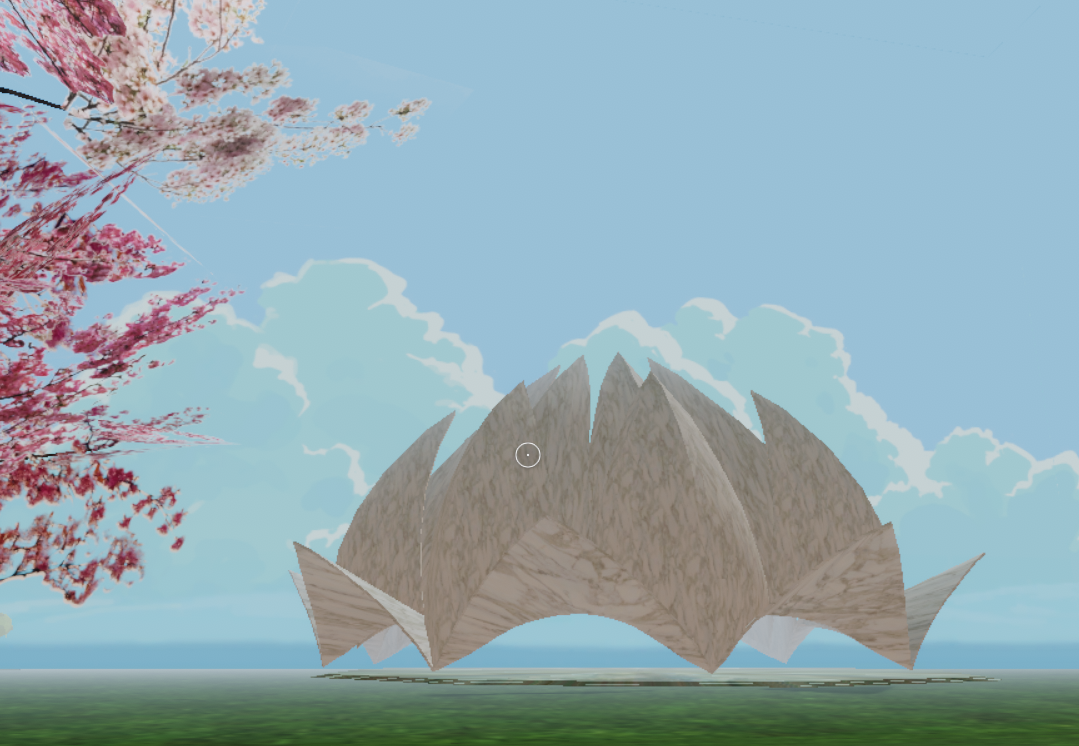
Lotus Temple
Back to the Café

 Office Hours – Facilities, Capabilities, Rentals, Q&A
At the Conference Center Information Center
Sat 2-4pm PST = 4-6pm CST = 10pm-Midnight UTC
Sun 7-9pm PST = 9-11pm CST = 3am-5am UTC Mon

If you are interested in learning more about the vision and mission of the Decentraland Conference Center, you can start here.

Decentraland opened its doors to the general public on Feb. 20th, 2020. If you need step-by-step instructions on how to get started in Decentraland, here they are. See you there this weekend!

Somnium Space Version 2.0: A First Look

Early this morning, I was finally able to stroll around version 2.0 of the blockchain-based social VR platform, Somnium Space. The company has dropped a new, 1-1/2 minute trailer to promote the official launch of version 2.0:

I’m going to break down my first impressions into several sections.

Downloading Version 2.0

You can download the client from Steam or directly from their website. The installation process involves downloading and installing a small launcher program, which then downloads the full client, which is about 3.5GB in size.

As I reported yesterday, I encountered some problems downloading the full client from the Somnium Space servers. The server went down several times yesterday and last night, and had to be reset. Also, I was getting a download speed of only 1 MB per second on average:

I ran Speedtest to check my bandwidth while downloading the client, and as you can see, I had plenty of bandwidth to spare, so the problem lay with their servers, and not with my computer:

Several times the launcher program hung, and had to be restarted. I’m not sure if the problems were because so many people were trying to download the client on the first day, but it was rather annoying. I landed up spending from about noon yesterday until 3:00 a.m. this morning, off and on, trying to download version 2.0 of the client! Let’s hope that these were just opening day technical glitches.

Two Clients: VR and PC

Once completely downloaded, you use the launcher to start the program, which automatically checks for any software updates before taking you to the main screen. There are actually two clients: one VR (3D) and one flatscreen (PC/2D), and they are used for different purposes.

The flatscreen client is used to select your avatar and to build on land you have purchased (like Second Life, there is an extensive array of in-world building tools; see the video at the end of this blogpost).

The VR client is the main Somnium Space client, which you use to navigate the social VR platform. Somnium Space works with any PCVR headset (i.e. a VR headset that requires a higher-end computer with a good graphics card), including Oculus Rift and HTC Vive. It also works with Oculus Quest and Oculus Link.

Please note that there will not be a desktop (non-VR) client for Somnium Space until next week at the earliest. The company decided to focus on VR users first. If you don’t have PCVR, then you are out of luck at present.

The Version 2.0 Avatars

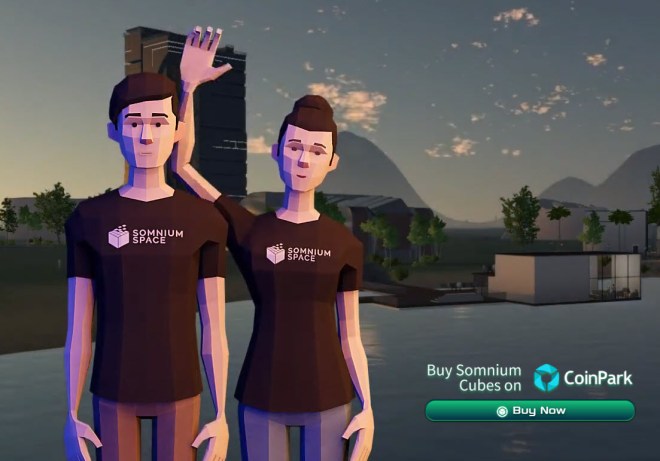
One of the biggest changes in version 2.0 of Somnium Space are the avatars, which are now complete, full-body avatars instead of the head-and-shoulders ones in version 2.0.

The starting set of default avatars is stylized and functional, but they are rather blocky-looking, and they are certainly not going to win any beauty contests.

You actually select your avatar using the flatscreen (2D) version of the client, instead of the VR (3D) version:

At present, you cannot change any aspect of these avatars, such as the hairstyle or colour, or the clothing. Artur Sychov, the CEO of Somnium Space, tells me that they are planning to release UnitySDK next week so that people can build their own custom avatars, so I am looking forward to seeing what people create!

A Wonderful Sense of Space

A “drone view” of Somnium Space at night; the glowing green borders indicate the boundaries of virtual land where nobody has built anything yet (picture courtesy of Artur Sychov, Somnium Space)

Somnium Space is among the first social VR platforms where you really do get a sense of the vast scale of the landscape. The platform is designed to be one contiguous landmass, instead of individual worlds. I have been told that there will be charge for teleporting (or perhaps, teleporting after watching an advertisement), to encourage users to walk around. And yes, you can hike all the way into the misty mountains you can see in the horizon!

The in-world camera tool on the user interface tablet isn’t functional yet, but I was able to take a few screenshots using SnagIt while in my Oculus Rift this morning. There is a pleasant central town that boasts a lighthouse, a seaside café, a shopping mall, a bowling alley, and a planetarium, among other attractions.

Dotted here and there on the gently undulating landscape outside this town are the first buildings, including some interesting and innovative constructions. The whole world has a sense of a festival being set up.

While the central town and the landscape remain in 3D, the user-built buildings load in stages as you approach them, in a sensible effort to lessen the load on the client.

Final Thoughts and Impressions

Artur Sychov and his team at Somnium Space are to be commended for pushing the envelope as to what is possible in a blockchain-based social VR platform.

While Decentraland and Cryptovoxels are currently more popular in terms of transaction volume on OpenSea, the former doesn’t support virtual reality at all, and the latter is restricted to voxel-based building. I suspect that once people begin to compare all three platforms feature-for-feature, they will begin to see the benefits of the more realistic-looking, more attractive in-world experience offered by Somnium Space, and they will choose to invest.

Opening-day glitches aside, this is an extremely promising start, and I look forward to seeing how Somnium Space develops over time!


If you want more information about Somnium Space, you can visit their website, or follow them on social media: Facebook, Instagram, Telegram, Twitter, and YouTube. You can also join their official Discord server.