Editorial: Some Random Thoughts on the Morning After the Facebook Horizon Announcement

I don’t have a lot of time today, but I wanted to write up a few more thoughts I had about yesterday’s Facebook Horizon announcement.


First: Linden Lab knew something was up. The timing of their splashy revamp of Sansar (the day before the OC6 keynote) was no accident. They wanted to get some media air time before Facebook came in and sucked all the oxygen out of the room! The new promotional video for Sansar is slick, savvy, and obviously designed to entice the curious newcomer:

The big Sansar news on Sept. 24th was the announcement of partnerships with major corporations including Sanrio, Levi’s, and Spinnin’ Records. But there was also a redo of the Sanar logo (switched from red to aqua blue), and some slick new promotional imagery designed to appeal to gamers:
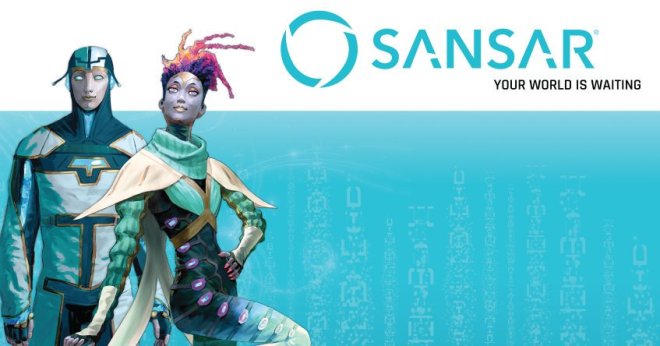
Agent Primus and Agent Forma: Your world is waiting!

Now, many of the features VentureBeat touted about Sansar in their article about the relaunch were not exactly news to long-time Sansarians, or to avid readers of my blog: the new Avatar 2.0 avatars with facial deformation features, the Nexus, etc. But we oldbies are not the target audience here; Linden Lab is now pulling out all the stops to get maximum marketshare and mindshare in a social VR marketplace that suddenly got a lot more competitive. It’s a smart move.

They’ve also got lots of branded events coming up in the next little while to entice people to come visit.

I think it is probably safe to say that many other social VR platforms and virtual worlds were completely caught off guard by yesterday’s detailed announcement of Facebook Horizon, and they will need to take some time to adjust to the new reality, the “new normal”.


Now, back to the main event: Facebook Horizon.

Screen capture from Mark Zuckerberg’s OC6 Keynote Yesterday

You will remember that I left Facebook and Instagram as my New Year’s resolution at the end of 2018, in protest over what I saw as a number of very serious data security and privacy issues with the social network:

I am fed up. I have had enough. And I am fighting back the only way I can: by shutting down my Facebook and Instagram accounts and deleting all of the data that Facebook has gathered on me.

Well, last night I came crawling back to Facebook. But the company did indeed keep its promise: it did not offer to reconnect me with 13 years of data it had on me, which I had asked them to delete. However, Facebook still knows it’s me: many of the initial friend suggestions it made were people who I had been connected to on the previous incarnation of my account. (I politely declined all of them. I am doing things totally differently this time around.)

As it happens, I have used the same email address for both my Oculus hardware account and for my deleted-and-now-reinstated Facebook social network account. I have no idea if Facebook is going to keep those two accounts separate, or try to merge them sometime in the future. In fact, there’s still no concrete evidence to support the thesis that you have to have an account on the Facebook social network in order to use Horizon.

So now I have a shiny new empty Facebook account, but I am approaching this fully forearmed with the knowledge that Facebook will strip mine the hell out of any data I provide, as well as the knowledge that my data can (and in fact, already has been) weaponized by companies such as Cambridge Analytica and used against me.

I am willing to come back, but I am damn wary. And I have essentially locked down everything I can using Facebook’s own security and privacy settings, as well as installing and setting up the excellent F.B. (Fluff Buster) Purity web browser extension. Please note that Facebook does not like F.B. Purity, and will actively block any mention of F.B. Purity on its social network; I only learned about this tool through word of mouth, from other Facebook users. You can read more about it via the link I posted above.

Also, I have registered for the closed beta test of the new Facebook Horizon platform, which starts sometime in early 2020. The application process asked for my Oculus account information I provided when I first purchased and set up my Oculus Rift headset in January 2017, followed by the purchase and set up of my Oculus Quest in May 2019. (I have read on Reddit that Facebook will accept either a Facebook social network account or an Oculus account, but I did not see any option to enter the former, only the latter. Perhaps I missed something.)

All the short registration form asked me for was my gender (male, female, or something custom), what experience I had building content for social VR and virtual worlds (and what tools I used), and whether I lead, moderate, or administer an online community (such as Reddit, Facebook Groups, Discord, Twitch, etc.). I did tell them that I was an influential blogger who writes a blog about social VR, virtual worlds, and the metaverse, which gets anywhere between 600 and 6,000 views per day. (I forgot to tell them that I also have a popular Discord discussion forum associated with my blog. Oh well.)

The worst that can happen is that Facebook decides I am not worthy to enter the closed beta test, in which case I will need to examine my options. Also, Facebook may ask beta testers to sign an NDA (non-disclosure agreement), which is fairly common in these sorts of cases. For example, even though I was accepted into the Sansar closed alpha/beta testing back in December of 2016, I was not allowed to blog about anything I saw in-world until the open beta launch on July 31, 2019—and I also had to receive explicit permission from Linden Lab to post pictures taken before that date on my blog, as a sort of history of Sansar’s early development. We may face the same situation with Facebook Horizon. We’ll see. It’s still very early days.


It wasn’t until late last night that I realized several unusual things about the veritable flurry of announcements made at OC6.

First: Facebook still does not have a single social VR platform to bring together Oculus Go, Oculus Quest, and Oculus Rift users! Facebook Horizon is only intended for the Oculus Rift and the Oculus Quest. What this means for Oculus Go users is unclear.

Second, Facebook has announced that they will be shutting down both Facebook Spaces and Oculus Rooms on October 25th, 2019, presumably to free up staff who will be deployed to work on Facebook Horizon.

I will not be sorry to see Facebook Spaces go; as I have said before on this blog when making predictions in December 2018:

…we might yet see the launch of a new social VR platform backed by Facebook, after they decide to ditch the lamentable Facebook Spaces once and for all. Maybe it will be based on Oculus Rooms; maybe it will be something completely different. But despite my negative feelings about the social networking side of Facebook, they still have the hardware (Oculus), the money, and the reach to be a game-changer in social VR. (Just not with Facebook Spaces. At this point, they should just kill the project and start over. Any improvements will be like putting lipstick on a pig.)

Yep. Take that mutt out back behind the woodshed and put it out of its misery… I really doubt anybody was using Facebook Spaces anyway, despite courageous efforts by people such as Navah Berg to promote it. And I’m quite sure that the entire episode was instructive to Facebook about what works and doesn’t work in a social VR platform.

And Oculus Rooms was only for Gear VR and the Oculus Go, which means that they will have no Facebook-branded social VR platform at all. This is, of course, an opportunity to other, third-party platforms which support Gear VR and Oculus Go, such as AltspaceVR, Rec Room, Bigscreen, and vTime XR.

Interesting times ahead!

Facebook to Launch Its Own Social VR Platform in Early 2020, Called Facebook Horizon

More details later, but Mark Zuckerberg has announced the name of Facebook’s social VR platform: Facebook Horizon, which will launch sometime next year:

The avatars seem to be upper-body only, at least from the screen captures I took directly from Mark Zuckerberg’s keynote presentation (note that these first couple of images seem to be more stylized than the later images in the update below, which I suspect are much closer to what the avatars actually look like):

So there you have it! The 900-pound gorilla of social VR has been announced. And you can bet that Facebook is going to use every single tool and tactic at its disposal to make sure that Horizon is your social VR platform. Count on it.

Sansar, High Fidelity, Sinespace, Somnium Space, VRChat, and Rec Room—and all the other existing social VR platforms—now have a new and formidable opponent.

I will try to write up another blogpost this evening when I get home from work, with details of other announcements made today at OC6.

UPDATE 12:52 p.m.: Here’s a few more screenshots of Facebook Horizon, which plans to have its closed beta launch early next year. It was announced that everybody in attendance at the keynote will receive an invitation to the closed beta.

The avatars remind me strongly of Facebook Spaces—not necessarily a good thing. It’s clear that they will be more cartoon-like than realistic-looking (at least they won’t be the extremely low-poly ones used by AltspaceVR and Rec Room):

In the following screenshot, you can just make out name tags over the avatars’ heads (which I assume you can turn on and off as required):

And it would seem that Horizon will have in-world building tools, similar to the venerable prim-building tools available in Second Life, but hopefully more powerful:

Also, it would appear that you are going to have to have an account on the Facebook social network in order to participate in Horizon. I am not happy about this, but this is hardly a surprise. I will be more surprised if you don’t have to have a Facebook account to use Horizon.

Remember, Facebook can leverage off the estimated 2.7 billion people around the world who use Facebook, Instagram, WhatsApp, or Messenger each month. An estimated 2.1 billion people use at least one of the Facebook family of services every day. Stop and think about the huge competitive advantage that gives Facebook.

And… well, OK, I want to get my hot little hands on an invitation to the closed beta of Facebook Horizon early next year, which apparently all the attendees at today’s keynote will receive. I need to know: is there anybody at OC6 willing to give me their invite? I want to get into that closed beta!

UPDATE 1:35 p.m.: Here’s an update directly from Facebook about Facebook Horizon:

VR is already a great place to hang out with friends, play games, and watch movies. It’s also a fantastic way to learn new skills and explore our world. Human curiosity and connection are central to each of these experiences, and they’re also at the heart of Horizon. Starting with a bustling town square where people will meet and mingle, the Horizon experience then expands to an interconnected world where people can explore new places, play games, build communities, and even create their own new experiences.

Before stepping into Horizon for the first time, people will design their own avatars from an array of style and body options to ensure everyone can fully express their individuality. From there, magic-like portals—called telepods—will transport people from public spaces to new worlds filled with adventure and exploration. At first, people will hop into games and experiences built by Facebook, like Wing Strikers, a multiplayer aerial experience.

But that’s just the beginning. People will also jump into various other Horizon worlds, built using the World Builder, a collection of easy-to-use creator tools. Everyone will have the power to build new worlds and activities, from tropical hangout spots to interactive action arenas, all from scratch—no previous coding experience needed. Whether people choose to build, play, or simply hang out, Horizon will ensure a welcoming environment through new safety tools and human guides—Horizon Locals—to answer questions and provide assistance, if needed.

As we focus our efforts on launching Facebook Horizon in 2020, we’ll be closing down Facebook Spaces and Oculus Rooms on October 25. We’re grateful to each and every one of you who joined us in those experiences and have followed us on this journey—and we look forward to having you join us in Facebook Horizon in 2020.

The Horizon beta will open early next year. Sign up at oculus.com/facebookhorizon/sign-up to be notified when the beta opens in 2020. We can’t wait to see all of the new experiences, communities, and worlds people will build together.

UPDATED! Caveat Emptor: Social VR “Market Research Reports”

Have you joined the RyanSchultz.com Discord yet? Discuss and debate anything and everything related to social VR and virtual worlds, on the first cross-worlds Discord server! More details here


Caveat emptor is Latin for “Let the buyer beware”.

This evening on Twitter, somebody I followed posted a link to the following social VR market research report, covering the period 2019-2024. At first glance, it looks okay:

My first clue that something was “off” was the image used to illustrate this report: it’s a very poor quality image of AltspaceVR that had clearly been resized much too large.

My second clue that something was wrong was the rather robotic text used to describe the contents of the report, which I have quoted here verbatim (except for the URLs, which I have removed for obvious reasons):

Global Social VR Market 2019 analyzes important characteristics in major developing markets in depth. The assessment involves the size of the industry, the recent trends, drivers, threats, possibilities and main sections. The research shows Social VR market dynamics for the present environment and future scenario over the forecast period in several geographic sections along with Social VR market analysis. In addition to a SWOT analysis of main players, the study also includes an extensive supplier landscape. The industry experts project Social VR market to grow at a CAGR of XX% during the period 2018-2024. It also discusses the market size and growth aspects of different segments.

Get Sample PDF (including full TOC, Tables and Figures) of Social VR Market: [URL removed]

Global Social VR market competition by top manufacturers, with production, price, revenue (value) and market share for each manufacturer: Altspace VR, High Fidelity, Padraft, WearVR, Vrideo, Emergent VR

On the basis of product, we research the production:
– Sightseeing and Chatting Type
– Interactive Games
– Interactive Music and Movie Type
– Others

This report focuses on the status and outlook for major applications/end users:
– Men
– Women

Each geographic segment of the market was independently examined with pricing and analysis, distribution, and demand data for geographic market notably:
Americas, United States, Canada, Mexico, Brazil, APAC, China, Japan, Korea, Southeast Asia, India, Australia, Europe, Germany, France, UK, Italy, Russia, Spain, Middle East & Africa, Egypt, South Africa, Israel, Turkey, GCC Countries

Check the best discount on this report at [URL removed]

The first URL link in this text was to a standard form for you to fill in all your contact details to get a “sample” of the full report (and for the company to spam you forever afterward, no doubt). And the second link to the “best discount” pricing page for this report revealed some astronomically high prices, in the range of thousands of dollars: US$3,660 for a “single user” version of the market research report, US$5,490 for a “multi user” version, and US$7,320 for the “enterprise user” version!

Now, the rather strangely worded text describing this market research report sounded almost like boilerplate to me, something that someone had simply cut and pasted into a webpage, merely changing the product names (and you also might have noticed that they didn’t even bother to fill in the CAGR percentage, leaving it as XX%!). For example, I had never heard of AltspaceVR or High Fidelity being referred to as “manufacturers” before! Yet another red flag.

Furthermore, I had never heard of four of the companies listed (which, given how exhaustively and obsessively I have covered various social VR platforms on this blog for over two years, was also rather odd):

Padraft, WearVR, Vrideo, Emergent VR

So I did a little investigating and here is what I found: WearVR seems to be some sort of virtual reality app store (kind of like Steam). Vrideo is an immersive video showcase platform, while Emergent VR is an Android app for capturing 3D photos. And Padraft doesn’t seem to exist at all! To call these four disparate products “social VR” simply didn’t make sense.

So I did a Google search on that exact phrase—and BINGO! I pulled up dozens of almost identically-worded social VR market research reports, page after page after page of them in the Google search results! How very interesting that all of them had the exact same four products listed that I had never heard of before—and not only that, every report had them listed in exactly the same word order!

So by this point, all my alarm bells were ringing. What the hell was going on here?

A little more searching uncovered a possible answer: companies (many based in India) who do nothing but churn out these dubious “market research reports” for various industries, using the same template over and over again. The workers repackage Google search results and other easily-gathered data, and then sell the simplistic reports for thousands of dollars to unsuspecting businesses, using various SEO tricks to guarantee that their products will appear high in the Google search results.

One website reported on the problem of fake market research:

I’m working in one of Big Four accounting/consulting firms. We do a lot of in-house market research and regularly buy/subscribe outside market reports. Lately, I see a number of old and established boutique market research firms to close their offices in the face of increased competition from fake market research cottage industry sprouted mostly for the Indian city of Pune. 

Freshly baked Indian MBA’s are churning out thousands of new market reports weekly, playing [the] SEO [Search Engine Optimization] game on any meaningful word combination. The “analysts” in the Indian [offices] have never left their city or village in their life, less so worked in the industry they write about. In SEO, game quality does not matter, only quantity.

The small US or European market research boutiques that rely on analysts with extensive industry experience, do time-consuming surveys and interviews, dig in corporate reports and publish or maintain a few dozen report topics on annual basis are losing in this brutal spam onslaught. It’s like going old Western style with 6-loaded Colt against hydraulically driven seven-barrel Gatling-type aircraft gun spitting 3,000 round per minute.

So, caveat emptor! While this is unethical, it’s not illegal to do this. And you could view this relatively recent development as a sign that social VR has truly arrived; otherwise, why would anybody bother to try and make a quick buck off it? I mean, nobody generates market research reports for buggy whips or butter churns.

To find legitimate, professionally curated collections of market research, head to the library of your nearest university that offers a business program, and ask the library staff there to help you.

Oh, and the person who posted that link to Twitter in the first place? I immediately unfollowed him. Anybody who posts that sort of link without first checking it, is not somebody worth following. (Sorry, but it offends this research librarian.)

UPDATE Sept. 15th: Joey1058 posted the following comment on the RyanSchultz.com Discord server (I have his permission to post it here):

I just read your post about Market Research Reports. Permit me to direct you to a publication that’s been around since the early days of VRML. They’re very simply called Journal of Virtual Worlds Research. I’ve been subscribed to them for years. They publish quarterly, if I remember correctly. They take perhaps a handful of topics per publication, and their content is curated. I HIGHLY recommend them, considering the work you do. Their website is https://jvwr.net/category/home/

Half + Half: A Brief Introduction

Not very long ago, I wrote about a company called Normal, who is marketing a multiplayer networking plugin for Unity-based games called Normcore.

Well, yesterday Normal released a new social VR experience called Half + Half, based on Normcore, which is available for the Oculus Rift and Rift S wired VR headsets, and the new Oculus Quest wireless VR headset.

Half + Half supports cross-play between devices (that is, Quest and Rift users can meet up and play together in-world). It is also a cross-buy title; if you purchase Half + Half on the Oculus Rift, you’ll be able to play it on your Oculus Quest (or vice versa) without needing to buy another copy. Half + Half is available on the Oculus Store for CAD$16.99 (Oculus Quest page, Oculus Rift page).

According to their press kit:

Launching September 12th on Oculus Quest and Rift, Half + Half is a multiplayer game developed by Normal. The culmination of four years of Normal’s research into the VR space, Half + Half features five multiplayer experiences for players to play with friends or strangers.

Half + Half is designed with a focus on creating fun and meaningful connections between players by using real-time voice chat, expressive avatars to communicate with body language, and game mechanics designed to make you look as ridiculous as possible in real life, Half + Half is Normal’s hand-crafted world built for you and your friends to hang out and have fun together.

In Half + Half, you and your friends can swim with the fishes, glide through the clouds, play hide and seek, or just… wiggle! The avatars are simply designed but absolutely charming. (They remind me of a mixture of owls, nuns, and Teletubbies!)

Here’s a one-minute promotional video for Half + Half, which gives you a real flavour of the project. It looks like fun!

Alex Coulombe has posted a Twitter thread with mini videos showing you all the parts of the hide and seek game in Half + Half he just loves! And this is just one of the many things you can experience in Half + Half.

If you want more information on Half + Half, you can follow Normal on Twitter and Instagram, or just visit the Half + Half website. (Normal also has a separate website and a blog.)

And Half + Half has been added to my comprehensive list of social VR/virtual worlds.