1029Chris’ bird sanctuary: feed the wonderfully animated ducks!
…I was invited to experience a special world built by someone I know well from the RyanSchultz.com Discord, 1029Chris, who had spent two weeks creating an amazing bird sanctuary with animated ducks, who milled about, and responded eagerly when I selected food items from a nearby picnic table to feed them! It was wonderfully done, and I hope to return soon for another visit.
Chris’s world is called the Udon Bird Sanctuary, if you are searching for it in VRChat. A visit is highly recommended, especially if you are feeling stressed out!
Chris’ signature duck avatar in VRChatAnother shot of Chris in VRChat
But 1029Chris is active in so many more virtual worlds than VRChat! She has decided to bring her signature duck and opossum avatars into as many virtual worlds and online games as she can. Here are some pictures which Chris kindly shared with me:
1029Chris is only one of many people I know who delight in bringing their avatars from one virtual world to another. All of them possess skills I wish I had!
Following a big spike in usage in the midst of the coronavirus pandemic, social VR app VRChat has reached a new record of 24,000 concurrent users. Its creators say the surge was driven in part by the launch of Quest 2 and virtual Halloween festivities.
…
Indeed, with more users joining VRChat from Quest and now Quest 2, the app reached a new record of 24,000 concurrent users over the Halloween weekend, CEO Graham Gaylor tells Road to VR. This eclipses the previous record of 20,000 concurrent users in early 2018 when the app went viral on Twitch.
It would appear that a great many people, who would normally socialize in person at parties and bars at Hallowe’en, chose instead to stay home and strap on their VR headsets, due to social gathering restrictions imposed by the pandemic. One poster on the Coronavirus subReddit commented:
Extrovert here and struggling. Thankfully buying a Quest 2 has ACTUALLY been quite the pleasantly surprisingly alternative for me. Especially the VRChat clubs which remind me of my nightlife. I know not everyone can do it but I wish my friends still travelling and partying would give it a shot too.
This new user concurrency figure smashed a two-year-old record, when VRChat suddenly and unexpectedly went viral back in 2018 (largely due to the influence of livestreamers and YouTubers such as PewDiePie), reaching a peak of 20,000 concurrent users on Steam.
You might be surprised to learn that only half of VRChat’s current users access the app via VR headset. Road to VR reported:
Of course it’s worth noting that VRChat is not exclusively a VR game; it supports VR and non-VR modes. Interestingly, Gaylor indicates the app’s share of VR users has actually grown significantly in the last few months. Earlier this year in April around 30% of VRChat users were using VR; in October the share of VR users was up to 43%.
Among the 24,000 concurrent users specifically, Gaylor confirmed that an even larger share of users—52% or 12,500—were in VR.
Adeon isn’t surprised: “Confirms a lot what I see too. I have lots of friends that have an Oculus Rift, but still choose to run the Steam version on it, just because of Steam’s social features, and Oculus requires Facebook to have Oculus friends. That’s one major oversight for Facebook. People don’t want to use the platform if its social features aren’t cross-play with their friends’ setups.”
It’s an oversight—and a paradoxical one: The main point for requiring Facebook log-in, an Oculus developer recently told me, was to encourage users to interact more in VR with their Facebook friends. (Data harvesting for ads being a secondary goal.) But because so many gamers have strong social connections apart from Zuckerberg’s social network, the Facebook log-in requirement can actually disconnect them from many of their friends.
That to one side, VRChat’s usage growth is impressive. I would not be surprised if its monthly active user numbers have also surpassed that of Second Life as well.
Today’s Melatopia Festival in Sansar: Less than 45 Avatars Total?
This afternoon, I paid a visit to Sansar to attend the virtual version of the Melatopia South Asian festival. I had a chance to catch up with some old friends and listen to some great music. Sansar is still (to my mind) the most beautiful virtual world, with a vibrant marketplace (44,582 items and counting) providing endless avatar customization options (there was even a mini velociraptor avatar running around amidst the crowd at the concert stage!).
But all the while, I had this nagging little voice in the back of my head, asking: Where is everybody?
To the best of my knowledge (and Wookey may correct me if I am mistaken), the Melatopia event never went above a single instance, and there were never more than 45 avatars total present at the festival (and most of the time that I was there, the figure from the Codex was in the low-to-middle thirties). (UPDATE: There was briefly one time in the afternoon where the festival hit a high if 51 avatars, spawning a second instance.)
Even granted that most people would be watching the show via Twitch, Facebook, Instagram, or YouTube, I find that to be a shockingly, abysmally low attendance figure, especially compared to the multitudes that would have attended the real-life version of this festival, were it not for the coronavirus pandemic.
Frankly, this blogger has long ago given up trying to chastise Wookey for their puzzling lack of promotion of events on the Sansar platform. There’s only so many times I can write the same editorial: YOU NEED TO PAY FOR PROMOTION. YOU CANNOT EXPECT PEOPLE TO COME TO SANSAR IF YOU DO NOT PROMOTE THE PLATFORM. But my pleas (and those of many other observers) seem to have fallen on deaf ears. Whatever Wookey is doing to promote Sansar, it’s clearly not enough.
But it does raise a bigger question that I have only addressed in passing in earlier editorials discussing and dissecting the demise of the old High Fidelity and the near-death experience and resurrection of Sansar. And that question is: was it a mistake to build social VR platforms that would only run on tethered, high-end virtual reality headsets like the Oculus Rift, the HTC Vive, and the Valve Index? The collective term I and many other people use when talking about these VR headsets, all of which require a high-end Windows gaming computer with a powerful graphics card to run, is PCVR.
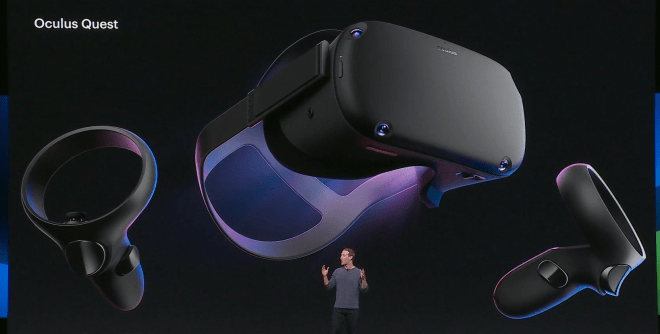
Let’s face facts: both now and for the foreseeable future, the clear VR headset of choice by consumers will be the wireless, standalone Oculus Quest, especially now that Facebook has released the newer, cheaper Oculus Quest 2. And Facebook will stop selling its Oculus Rift S tethered, PCVR headset (the successor to the original Oculus Rift) this coming spring. Business Insider reported:
“We’re going to focus on standalone VR headsets moving forward,” the company said in a blog post on Wednesday. “We’ll no longer pursue PC-only hardware, with sales of Rift S ending in 2021.”
The Rift line of headsets required a powerful gaming PC to power virtual reality experiences. The headset connected to the PC with a set of wires, but the latest Oculus Quest headsets are able to replicate this experience with a single detachable USB cable in addition to operating without a dedicated PC.
As such, Facebook isn’t outright killing its PC-driven virtual reality efforts. It will continue supporting higher-end, PC-powered virtual reality on the Quest line of headsets.
“We’ve seen significant growth in PC VR via Oculus Link,” the blog post said, “and the Rift Platform will continue to grow while offering high-end PC VR experiences like ‘Lone Echo II’ and ‘Medal of Honor: Above and Beyond’ well into the future.”
If Facebook is leaving the high-end PCVR market, what does that mean for the future of social VR platforms which either do not run on the Quest, like Sansar, or do not run at their full technical capacity, like VRChat? (I wrote about my earlier experiences running VRChat on my Oculus Quest here. Although I’m sure the situation has improved somewhat since then, the fact remains that you still need PCVR to really experience everything that VRChat has to offer.) Are those platforms that run best (or only) on PCVR doomed?
No. So relax. (Yeah, all right, I admit that was a click-bait blogpost title. Sue me.)
While the market for high-end PCVR might mature more slowly than that of wireless VR headsets (and definitely more slowly than most overconfident observers had originally predicted), eventually it will come. Devices may come and go in popularity, but the overall trend is clear: ever more data being pushed to your headset, creating ever more detailed environments. Eventually, that screen door effect that can sometimes make it difficult to read text in a VR headset will vanish. Visual fidelity will only improve from here on in. Consumers and businesses will demand it, and they will buy it. It’s inevitable.
While we do not yet know what future headsets various tech companies have on their drawing boards, we can be assured that other companies will definitely step into the PCVR market while Facebook is stepping out, and up the VR/AR/XR game (many eyes are watching to see what Apple will do, for example). As I like to say, a rising tide lifts all boats. I believe that many people who get their first taste of VR from an Oculus Quest will no doubt graduate to more powerful, tethered devices. (Even Facebook may decide to change their minds at some point in the future, particularly if they should see any potential competitors do well.)
I myself have already placed my order for a Valve Index kit to replace my trusty, four-year-old Oculus Rift, as part of my personal boycott of Facebook/Oculus products and services (more info here). I have heard through the grapevine that they are selling well since Facebook’s decision to force Oculus device users to get Facebook accounts, which is not sitting well with many early VR adopters at all.
And I very much look forward to visiting future virtual festivals in Sansar in my shiny new Valve Index!
Taking a much-needed break from blogging has given me an opportunity to reflect a bit on my journey over the past three years, and ponder where I might go from here.
Frankly, I never expected to become a journalist covering the ever-evolving metaverse, with a growing audience; this blog started off as a tiny little niche blog, where I wrote about my (mis)adventures and explorations in Sansar. And everything that happened after that—writing about more and more social VR platforms, hosting the Metaverse Newscast show, focusing on freebies in my beloved Second Life—just kind of happened organically. I didn’t have any sort of plan; I just made choices along the way that led to this point.
But for me, the seeds for this journey were first planted in Second Life 14 years ago, which since its earliest days has been this strange and marvelous phoenix that keeps rising from the ashes, again and again, confounding and bewildering many casual observers who continue to predict (wrongly) its failure. Even a cursory glance at the official Second Life Community News feed (curated by the highly capable Strawberry Linden) reveals the absolute torrent of creativity that the platform has provided to so many people. Second Life is not going anywhere, honey.
SL is a fully-evolved, vibrant, mature virtual world which has become the model which other metaverse companies have spent countless programming hours and (in some cases) millions of dollars to try and recreate, with varying degrees of success.
I think that the ones that have been the most successful (so far) are NeosVR, ENGAGE, AltspaceVR, VRChat, Rec Room and, somewhat to my surprise, three blockchain-based worlds: Cryptovoxels, Decentraland, and Somnium Space. And there are many other platforms slowly but surely building up their business, taking advantage of the unexpected opportunities presented by the coronavirus pandemic (one example is Sinespace, a company which is patiently and cannily playing the long game, and which is extremely well-poised to snatch Second Life’s mantle, if and when it is ever dropped).
And, during my break, I have been also thinking a lot about Facebook/Oculus and their impact on virtual reality in general, and social VR in particular. I have decided that, despite my new, personal boycott of Facebook products and services, I will continue to write about their upcoming social VR platform, Facebook Horizon, as it launches in public beta, probably before the end of this year.
I, like many other people, now absolutely refuse to have a Facebook account as a matter of moral principle. In August of 2019 I wrote (and yes, it bears repeating at length here):
In this evolving metaverse of social VR and virtual worlds, is too much power concentrated in the hands of a single, monolithic, profit-obsessed company? I would argue that Facebook is aiming for complete and utter domination of the VR universe, just as they already have in the social networking space, by creating a walled ecosystem…that will have a negative impact on other companies trying to create and market VR apps and experiences. The field is already tilted too much in Facebook’s favour, and the situation could get worse.
…
More concerning to me is that, at some point, I may be forced to get an account on the Facebook social network to use apps on my Oculus VR hardware. In fact, this has already happened with the events app Oculus Venues, which I recently discovered requires you to have an account on the Facebook social network to access.
Sorry, but after all the Facebook privacy scandals of the past couple of years, that’s a big, fat “Nope!” from me. I asked Facebook to delete its 13 years of user data on me, and I quit the social network in protest as my New Year’s resolution last December, and I am never coming back. And I am quite sure that many of Facebook’s original users feel exactly the same way, scaling back on their use of the platform or, like me, opting out completely. I regret I ever started using Facebook thirteen years ago, and that experience will inform my use (and avoidance) of other social networks in the future.
Yes, I do know that I have to have an Oculus account to be able to use my Oculus Rift and Oculus Quest VR headsets, and that Facebook is collecting data on that. I also know that the Facebook social network probably has a “shadow account” on me based on things such as images uploaded to the social network and tagged with my name by friends and family, etc., but I am going to assume that Facebook has indeed done what I have asked and removed my data from their social network. Frankly, there is no way for me to actually VERIFY this, as consumers in Canada and the U.S. have zero rights over the data companies like Facebook collects about them, as was vividly brought to life by Dr. David Carroll, whose dogged search for answers to how his personal data was misused in the Cambridge Analytica scandal played a focal role in the Netflix documentary The Great Hack (which I highly recommend you watch).
We’ve already seen how social networks such as Facebook have contributed negatively to society by contributing to the polarization and radicalization of people’s political opinions, and giving a platform to groups such as white supremacists and anti-vaxers. The Great Hack details how Cambridge Analytica used Facebook data without user knowledge or consent to swing the most recent U.S. election in Donald Trump’s favour, and look at the f***ing mess the world is in now just because of that one single, pivotal event.
We can’t trust that Facebook is going to act in any interests other than its own profit. Facebook has way too much power, and governments around the world need to act in the best interests of their citizens in demanding that the company be regulated, even broken up if necessary.
Of course, Facebook is well within its corporate rights to insist that, henceforth, Oculus Go, Quest, and Rift users have to use Facebook accounts. Just as I am well within my rights to avoid providing another smidgen of personal data for Facebook to strip-mine for profit. It will be very interesting to see how more the consumer-privacy-oriented First World countries (such as Canada, and those countries within the European Union) will respond to the Facebook juggernaut.
I also have absolutely zero doubt that Facebook will continue to use every single lawyer, lobbyist, tool and tactic at its disposal to fight to maintain its market dominance, even as the Facebook social network continues to foster divisiveness, bleed users and lose advertisers. Believe me, Facebook would not have taken the unprecedented step of forcing Oculus device users to set up Facebook accounts if they weren’t afraid of losing the younger generations of users who have, thus far, resisted joining the social network their parents and grandparents belong to. (Of course, most of them are already on Instagram, which is owned by Facebook.)
It is relatively easy to bypass the tethered Oculus Rift VR headset and its associated Oculus Store ecosystem with competing PCVR products and services (such as the Vive headsets, the Valve Index and Steam). However, it is difficult—frankly impossible at present—to find a non-Facebook alternative to the standalone Oculus Quest VR headset. I have no doubt that the market will throw up a few capable competitors to the Quest over time, but Facebook has built up a huge lead, and it will be very difficult to unseat from its dominance in that particular market segment.
So, as you can see, I have been doing quite a bit of thinking while I have hit the pause button on this blog. I will continue to spend the rest of my summer on my self-imposed vacation from this blog, and no doubt I will have other thoughts, insights and opinions to share with you when I return, hopefully feeling more refreshed.
I feel that with this blog, after a few stumbles and setbacks, I have finally found my voice, and you will continue to hear it over the next three years, and probably far beyond that! Enjoy the rest of your summer! I will be back in September.