Yesterday, Labour Day, marks the traditional end of summer here in Canada. While my research and study leave commenced July 1st, 2026, almost all of my first two months were taken up with two monumental tasks: grieving the loss of my mother in late June, and decluttering and cleaning up my apartment. I needed to take my time and energy to work through the pain, and (literally) to throw out the crap in my life.
Now that that necessary work is (mostly) done, I can focus on my research and study leave. I know that I am a fortunate man, to be able to take the next ten months and do a deep-dive on a topic that already interests and excites me: virtual worlds, social VR/AR, and the metaverse.
Here’s just a teaser:
(And no, I am not going to commit to anything until I have settled a few key issues, such as what publishing platform I am going to use for my Open Educational Resource textbook; it would appear that the province-wide consortium using Pressbooks has shut down while I was grieving my mother, so for now all my writing is in Microsoft Word. Wish me luck!)
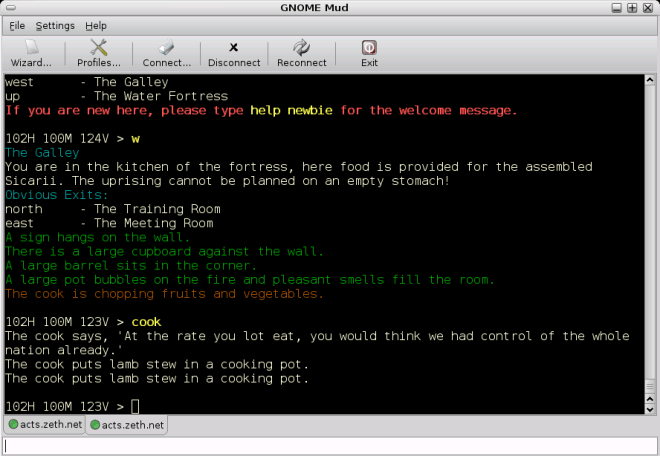
For those of you using screen readers, the text in the above image reads as follows:
CHAPTER 1: Before the Headsets: Text Worlds, MUDs, and the Dream of Cyberspace
While countless popular articles, books, and websites, and hundreds of academic papers, have been published about the metaverse (including those published before Neal Stephenson coined the term metaverse in his 1992 science-fiction novel Snow Crash, works which described the concept under other names), the nebulous and ever-evolving usage of the term has muddied rather than clarified things. What is the metaverse?
I think it’s best that we start with some back story. A little history lesson, explaining where this compelling but elusive idea(l) came from. Key components of the metaverse—avatars, virtual communities, and virtual economies—date back further than you might think.
(Please note; while I will be liberally sprinkling this text with my own experiences and opinions, this first chapter relies more on my research and reading, instead than my own personal experience. The real world/virtual world duality I mentioned in my preface to this book only began in March of 2007, when I first encountered Second Life, which will be the focus of the next chapter.)
In the Beginning Was the Word: Text-Based Virtual Worlds
Yep, you got it; I will doing a deep dive into MUDs and MOOs and other pre-graphical virtual worlds of the 1980s and 1990s! You gotta know where you came from before you know where you are now, and figure out where you’re going. So, I have a lot of reading ahead of me (not that I’ve ever minded that).
After that, I will be looking at the very first graphical virtual worlds that pre-dated Second Life (which will be the focus of chapter 2 of my book). Among these almost-forgotten early virtual worlds was Lucasfilms Habitat, which demonstrated a working avatar economy 17 years before Second Life came along.
Lucasfilms Habitat walked so Second Life could run!
Check out this eight-minute ad for Habitat from 1986, the year the platform launched in beta test, connecting users on their Commodore 64 microcomputers:
I figure all this research is probably going to take me most of the month, but I plan to have fun doing it!
UPDATE 7:00 p.m.: While searching my university library system’s online catalogue for an old 2003 book on virtual world design, I was overjoyed to discover that the author, Dr. Richard A. Bartle, has recently published a brand-new, completely revised and updated second edition of Designing Virtual Worlds! I’ve just started reading it and it is well-written, witty, and absolutely bang on for my research (he even includes several chapters on virtual world history). Perfect timing!
Here’s the citation if you want to buy it or obtain it from your local library:
I suspect that I will be quoting Bartle’s book often in my own work, and making good use of his extensive bibliography. Here’s a particularly pertinent quote from the aforementioned history of virtual worlds:
Another reason that virtual world designers should appreciate the history of their art and profession is to counter the misguided belief that everything done in the past must be irrelevant because today’s virtual worlds are “different”. This is a surprisingly frequent but predictably monumental error. Brash designers coming in “to shake things up” may indeed shake things up – but not until they’ve repeated all the well‐known‐for‐decades errors that they didn’t think applied to their ideas because they gave virtual worlds a different label (“the Metaverse”) or a different interface (“VR”) or a different purpose (“education”).
—Bartle, R. A. (2026). Designing Virtual Worlds: Volume I (Second edition), p. 14
Marie Vans (left) introduces me (right) as a keynote speaker at the 19th annual Virtual Worlds Best Practices in Education conference, held in the pioneering virtual world of Second Life (screen capture from the video at the end of this blog post)
NOTE ON MY GENERATIVE AI USAGE: While most of the writing of this blogpost is me, Ryan Schultz, unassisted by GenAI tools, I should note that, in the attached PowerPoint presentation, I did make extensive use of Google NotebookLM by feeding my entire blog into a notebook, and asking it questions (as described in a blogpost here). I used many of the answers I received back in creating both the slides and the speaking notes attached to the slides, in parts two and three of my presentation. That includes the quoted speaker notes below the pictures of specific slides in this blog post!
UPDATE March 30th, 2026: you can scroll to the very bottom of this long blogpost to see the video of my presentation. Thanks again to the organizers for throwing such a successful virtual conference!
As some of you might know, a while back I was asked by my librarian colleague (and fellow Second Life aficianado) Marie Vans if I would be willing to be one of the three keynote speakers during the 2026 Virtual Worlds Best Practices in Education (VWBPE) Conference, which is held every year in the pioneering virtual world of Second Life. I said yes (of course!). I never turn down an opportunity to give a presentation in my beloved Second Life. (I was asked to speak at the 2021 Virtual Ability Mental Health Symposium, giving a presentation on the topic of this blogpost on acedia during the pandemic, and in 2024, I gave a presentation on virtual world building in Second Life, in Second Life, to a graduate class in virtual world building and design, which was team-taught by a computer science professor and an interior design professor.) So, as you can see, this was not my first rodeo. 😉
Quotes from Andy Fidel’s talk which I found inspiring and wanted to share (7 slides);
My initial, general observations about the metaverse (4 slides); and finally
A section titled Your Metaverse Is Too Small, where I discuss various ways our biases and preconceptions about virtual worlds and social VR/AR actually hinder their effective use in educational settings (with reference to Andy’s comments; 14 slides).
Yes, it’s a lot to cover in 45 minutes, but I did it! I’m just going to share my slides as-is, without any Creative Commons-type license this time around, since a lot of it is referring back to Andy Fidel’s ideas, which I found so inspirational in the first place. And yes, while the topics of these 14 slides in part 3 all sprang out of one particularly fevered brain dump of my ideas one evening, rather than relying on GenAI, I do freely admit that I fed my entire blog into a Google NotebookLM and asked it questions in order to create the content based on thirteen (yes, 13!) different ways that, quote: “your metaverse is too small!”
Your metaverse is too small because…
it has too steep a learning curve for new users
your platform has a poor fit-to-purpose
it lacks accessibility features (e.g. speech-to-text for the Deaf/HoH community)
it is poorly designed and/or Quality Assurance tested, and it causes VR sickness/nausea (more common among women than men)
it is soulless/designed by committee (hello Meta Horizon Worlds and Workrooms! Proof positive that you cannot will metaverse platforms into existence by executive fiat and the spending of billions of dollars.)
it requires a VR/AR/XR headset (I used two slides to discuss this controversial take; see below for more detail)
it relies on cryptocurrencies, NFTs, or some other form of blockchain (do I really have to explain this at this point?)
it has poor (or non-existent) safety and trust features and policies
it focuses on the product rather than the community
it has user data privacy issues/is based on surveillance capitalism (once again, hello Meta Horizon Worlds and Workrooms!)
you fail to market it properly (or, in many cases, fail to market it at all)
it is unfriendly to different cultures and subcultures (e.g. trans people, furries, etc.)
(another controversial one, explained further below) it refuses adult content
Now, before all you social VR adherents rise up with torches and pitchforks and tar and feather me for even daring to say “your metaverse is too small because it requires users to have a VR/AR/XR headset,” here are the two slides, plus speaker notes:
Your metaverse is too small because it requires you to use a virtual reality headset.
It is not a surprise that many of the most popular social VR platforms (e.g. Rec Room, VRChat) also allow for non-VR users to participate. The VR headset market still has not taken off. Even the best-selling Meta Quest line of wireless virtual reality headsets (which make up an estimated 70% of the global VR headset market) has sold only approximately 30 million units around the world, and many of those devices land up collecting dust after the initial novelty of the product wears off. Apple’s Vision Pro, launched to enormous fanfare, does not publish sales figures, but industry reporters said that the company shipped approximately 390,000 units in 2024 and approximately 90,000 units in 2025. VR hardware remains bulky, heavy, and uncomfortable for extended wear. Nausea continues to affect a significant proportion of users. A VR headset isolates the wearer from their physical surroundings and from the facial expressions of the people around them—an anti-social device, in practice, even when its purpose is socialization via social VR.
The PC-tethered VR headset market—the high-end, high-fidelity segment that many early social VR platforms had built toward—proved especially stagnant. The dream of millions of consumers owning gaming-grade PCs with tethered Oculus Rift or HTC Vive headsets never materialized. Even the shift to standalone headsets like the Meta Quest series failed to generate the consumer mass-market that had been anticipated. Sansar is perhaps the most instructive case study in the danger of building a platform around assumed headset adoption. Developed by Linden Lab—the company behind Second Life—Sansar was announced in 2014 and launched in beta in 2017, timed almost precisely to coincide with what seemed like the dawning of the VR era following Facebook’s acquisition of Oculus. But the bet on tethered PCVR headsets never paid off. In March 2020, Linden Lab sold Sansar to a little-known startup called Wookey and pivoted to focus on live music events and virtual concerts, attempting to find a more sustainable niche. That hasn’t worked, either. Sansar still exists, but it is only being kept alive by volunteers at this point.
Research on technology adoption consistently shows that devices requiring behavioral change—for example, for VR, wearing something on your face, isolating yourself from physical surroundings—face much higher adoption friction than technologies that integrate into existing habits. The iPhone and Android phones succeeded partly because they fit into already-established phone-carrying behavior. VR headsets require building a new behavior from scratch.
The failure of the last metaverse hype cycle does not mean that immersive technology has no future. What failed was the specific prediction that millions of people would soon be spending significant time in virtual worlds accessed primarily through VR headsets; that this would create platform-scale opportunities comparable to social media or mobile devices.
Don’t hate me for speaking facts. No VR/AR headset (even the Meta Quest line of headsets) has taken off in the way that iPhones/Android phones and tablets and smartwatches have. In particular, the developers of those platforms who bet the farm on widespread adoption of high-end tethered PCVR headsets (hello, Sansar and High Fidelity!) lost that bet badly; Sansar is essentially moribund, and High Fidelity is now closed (although it does live on in its successor social VR platforms Vircadia and Overte, which were based on HiFi’s open-source codebase, but are also not heavily used). This failure is one of the reasons why Second Life is still going strong (or strong enough) to endure and still be profitable for Linden Lab, for over 22 years now.
And speaking of SL…
I want to make one thing very clear: in some educational applications of the metaverse (especially those intended for children and teenagers, i.e. K-12 education), a ban on adult content is absolutely necessary.
However. As my speaker notes for this last slide in my presentation state:
However, in any institution of higher learning (e.g. a university). you will find faculty, staff, and students teaching about, learning about, and doing research on topics which may include controversial or adult topics. I have argued that one of the most significant strategic errors a metaverse platform can make is the outright refusal to host adult content (or do some other sort of heavy-handed sanitization of adult content, like imposing baked-on underwear on the base male and female adult avatars).
In my blog, I’ve pointed out that for some successful virtual worlds, adult communities are not just a niche—they are the economic and social engine that keeps the lights on. I have frequently cited Second Life as the prime example of a platform that understands the value of adult content. On my blog, I’ve noted that the adult-rated regions of Second Life generate a good portion of the platform’s revenue through land tier fees and the sale of virtual goods (clothing, skins, animations). In contrast, I wrote about Sansar’s early decision to strictly moderate content and its struggle to establish a clear policy on adult material. I argued that by trying to keep the platform “brand-safe” for corporate partners, they essentially “cut off their nose to spite their face,” alienating a potential demographic of creators and consumers who were ready to spend money on higher-fidelity adult experiences. And the corporate clients never came anyway!!
I believe that the ability to explore one’s identity—including its sexual or adult aspects—is fundamental to the metaverse experience. For example, both Second Life and VRChat tend to attract the trans community, giving them a way to experiment with how they represent themselves in a way that might be difficult or impossible to do in real life (particularly at a time when trans people are increasingly under attack in certain jurisdictions). Platforms that ban adult content often end up banning people by extension. If a platform’s moderation is too aggressive, it can lead to the marginalization of subcultures (like the furry community or the trans community) who use virtual worlds as a safe space for exploration. This aligns with Andy’s focus on “presence” and “feeling seen”. Andy argues that gathering spaces should be “smaller, weirder,” and more human. I have argued that by refusing to host adult content, platforms are choosing “corporate safety” over “human authenticity.” They are creating “noise” for brands rather than “spaces that matter” to real people.
One of my core arguments is that you cannot impose a culture on a virtual world; the users bring the culture with them. I’ve pointed out that in almost every successful social VR platform (like VRChat), “NSFW” content and communities exist regardless of official policies. Trying to ban these things is like trying to stop the tide with a broom. Platforms that fight their own communities on this issue usually lose the “heart and soul” that Andy Fidel says is required for a space to be successful. Andy speaks about “architecting belonging” and building spaces like cities. A real-life city has red-light districts, gay bathhouses, private clubs, and adult stores. By refusing to allow these “niche micro-communities” to exist, platform owners are failing to be the architects of a real society and are instead acting as corporate landlords of a sanitized shopping mall.
Okay, enough ranting. Here’s my slide presentation, which you can download to read the rest of my slides and my speaking notes:
UPDATE March 30th, 2026: The video of my presentation in Second Life has now been uploaded to the VWBPE YouTube channel! Here it is (and I haven’t even watched it myself yet):
I have used (and reported on) my use of generative AI tools extensively in this blogpost, but my writing is all my own, and I have not edited it or polished it using any GenAI tools.
UPDATE March 7th, 2026: I have updated this blogpost a bit, and included some more images and screen captures of the reports generated by Gemin, Claude, and ChatGPT in the head-to-head comparison section (the third part).
I am (as you can clearly tell by this absurdly long blogpost title) trying to do three related things here. If you want, you can skip to the very end, where there will be an executive summary, where I have some thoughts to share about (waves hands) all this.
Keeping on top of developments in generative AI is like herding cats, where the cats are multiplying and mutating!
One of the updated comparison charts in my PowerPoint slide deck (see link below to download)
Below is my updated PowerPoint slide presentation, complete with my speaker notes, for you to download and use as you wish, with some stipulations. I am using the Creative Commons licence CC BY-NC-SA 4.0, which gives the following rights and restrictions):
Creative Commons Attribution-NonCommercial-ShareAlike 4.0 International
This license requires that reusers give credit to the creator. It allows reusers to distribute, remix, adapt, and build upon the material in any medium or format, for noncommercial purposes only. If others modify or adapt the material, they must license the modified material under identical terms.
BY: Credit must be given to you, the creator.
NC: Only noncommercial use of your work is permitted. Noncommercial means not primarily intended for or directed towards commercial advantage or monetary compensation.
SA: Adaptations must be shared under the same terms.
So, with all that said, here is my PowerPoint presentation (please click on the text link or the black Download button under the picture, not the pictureitself):
NEW: Claude a just released add-ins for Microsoft Office
Second, today I installed a brand-new add-in from Anthropic’s Claude GenAI tool, which is supposed to work with Microsoft PowerPoint. This is an initial review of a very beta product.
And I have an actual real-world use case against which I will be trying out this new add-in: the design of an actual keynote presentation which I will be giving in a couple of weeks. (I am also using it in the third section, but in a different test of all three of ChatGPT, Claude, and Gemini.)
Now, before I get into this, I should explain that I have tried in the past with all three GenAI tools on which I currently have paid accounts (OpenAI’s ChatGPT, Anthropic’s Claude, and Google’s Gemini) to create a PowerPoint slide deck presentation design—only to get highly disappointing and completely unusable results back. So I was not expecting much here, particularly as this is a still a research beta version of the PowerPoint add-in.
My initial prompt to the Claude add-in to Microsoft PowerPoint was:
Please create a new PowerPoint slide presentation design with the title of the presentation being: “Your Metaverse Is Too Small: How the Biases and Preconceptions of Virtual Worlds Hinder Their Use in Education.” The theme of the talk is educational uses of virtual worlds, social VR, and the metaverse in general. I want to have some nice background images to use in some of my slides, as well as a visually pleasing title slide. I’d prefer blue as a colour in the slide deck theme, thanks!
And Claude chugged away on my request, keeping my posted on what it was doing:
And it even prompted me to be sure I wanted to delete the Claude add-in help slide!
The set-up for the title slide took a long, loooong time, much longer than I would taken to click on the Designer button in the PowerPoint toolbar and just select one of the default options, and a colour scheme. Eventually, I just gave up on waiting and went off to work on another task, leaving Claude to beaver away. After fifteen minutes, I realized that I still had to explicitly okay the clearing of the original slide design (inset Homer Simpson “D’oh!“), which I did, so that the work could continue.
I mean, I could easily do better than this myself. And two dots do not make, as I asked for, “some nice background images to use in some of my slides, as well as a visually pleasing title slide.” Here’s my section title slide:
Again, extremely underwhelming, and frankly, not an improvement at all over my previous failed attempts to generate a PowerPoint slide presentation design using any of the GenAI tools (Claude, ChatGPT, or Gemini). Mind you, I have deliberately stayed away from using the image-generation tools in these products; I can spot a GenAI-produced image from a mile away by this point, having been playing around with these tools, off and on, since they first came out in 2022.
Claude continued to generate all the standard versions of PowerPoint slides in this theme, ending with a final slide that, I must confess, I kind of liked the look of (although, again, I would have preferred some sort of background image):
This is where the process got interesting, as I finally decided to stop having to manually okay each individual step, and just gave Claude carte blanche to do whatever it felt was best. (I mean, the worst that could happen was that it come up with something I hated so much that I threw it away and started over.)
Claude was still working away while I took my lunch break, giving feedback along the lines of “Build stunning title slide design.” 🙄 (I’ll be the judge of what’s considered stunning, Claude. Calm the fuck down.)
The addition of three pieces of clip art in the upper right corner of the slide, plus a few more bubbles/dots. So, yes, this is, once again, a complete fail. I will probably still use this as a basic slide design, but obviously I will be locating and using my own images to illustrate it. This is now the second new tool in a week (first Claude Cowork and now Claude PowerPoint add-in) which has utterly failed at the tasks given it. I am not impressed.
Third, and finally, thank God, I had much better luck was in issuing all three general-purpose GenAI tools the exact same text prompt, a technique I had used before here (and one which I found very useful in comparing and contrasting the responses):
I am writing a keynote presentation on the mistakes companies make when creating, designing, and marketing the following product category: virtual worlds, social VR/AR, and metaverse platforms in general. Please give me a list of failed or shut down metaverse platforms, along with reasons why they might have failed. Please cite both academic and industry sources of information in your answer.
ChatGPT’s GPT 5.2 Thinking with the Extended Thinking option;
Claude Opus 4.2 Extended Thinking with the Research option; and
Gemini 3 Thinking with the Deep Research option.
Unlike the last comparison, I’m not going to go into great detail on the results (because I will be using some of these results, once they are double-checked against more authoritative sources, in an actual keynote presentation I will be delivering later this month). Instead, I will my general overall impression of each report (and all three did provide a detailed report with citations).
Please note that I deliberately left it up to the specific GenAI tool to define what “failed” or “shut down” means, how far back and how thoroughly to search for failed platforms, and what metaverse platforms to include or exclude from its final report. As always, I find the differences between the reports to be an interesting way to compare and contrast the results, so below I will give some basic statistics:
GenAI Tool
# Failed Platforms Listed
Time Range of Failed Platforms
# Citations in Final Report
ChatGPT
15
2003 to 2026
23
Claude
13
(start dates not given) to 2023/”effectively failed, still limping along”
30
Gemini
9
2009 to 2024 (but some platforms had no timeline information given)
33
While ChatGPT was the most thorough in listing failed metaverse platforms, and seems to have gone the furthest back in time (including There.com, which launched back in 2003!), it also had the fewest number of citations, and most of them were historical, platform-related announcements (e.g. a 2020 announcement of the shutdown of the then-social-VR platform High Fidelity by its CEO) rather than peer-reviewed academic journal articles (although there were a couple of those, too). While Claude had more citations, a review of those showed mostly blogs and news websites, with fewer references to actual academic research papers (probably because much of that content is locked behind academic publisher paywalls, although there were still quite a few academic references to free sources such as ResearchGate and PubMed Central/PMC; see the Claude report image below for one section which did focus on academic sources). Of the three, Gemini’s 33 citations used included the most resources which I would consider academic, from a good range of different publishers (as well as more informal websites). Interestingly, Gemini also included a list of resources which it looked at, but chose not to include in the final report, something which neither ChatGPT nor Claude offered! I thought that was particularly valuable, in case something else caught my eye to follow up on. Gemini for the win here.
Gemini was also notable for the strong, overarching narrative structure to its report, something which I had also noticed in previous queries using this GenAI tool. Gemini has clearly been trained well in telling a cohesive story! However, Claude was also notable for listing, in a separate section of its report, what it called “cross-cutting failure themes” in its 13 examined metaverse failures (which is definitely a phrase I will be stealing for my final keynote presentation!). By comparison, the final report from ChatGPT, while thorough, was jargon-heavy, poorly-formatted, and seemed to lack the final polish of its competitors. For example, there were three separate sections titled “failure themes and comparative analysis,” “theme-to-platform mapping,” (?!??) and “top 10 failures by primary cause.” It was, in my opinion, the poorest of the three reports generated, just in terms of sheer (lack of) organization and narrative. Again, Gemini for the win!
Gemini’s report had a strong, overarching narrative structure—something which I have noticed seems to be a particular strength of this GenAI tool, a sort of final overall polish to the text that ChatGPT, in particular, was lacking in its report (see below).Claude’s report had a summary section titled “cross-cutting failure themes,” which I am definitely stealing for my keynote presentation!Compared to the Gemini report, the ChatGPT report was jargon-heavy and poorly-formatted.
EXECUTIVE SUMMARY: So, here are my final thoughts.
It is getting harder and harder (in fact, almost a full-time job) to keep on top of what is fast becoming an arms race between the top three general-purpose generative AI tools (ChatGPT, Claude, Gemini), not to mention an ever-growing legion of more narrowly-focused applications, which might be better at certain specific tasks, such as writing programming code or generating music.
While Claude seems to be good at putting new agentic (e.g. Claude Cowork) and add-in tools (Claude for PowerPoint) into the hands of its users first, my personal experience with these new tools has been very disappointing, even comically bad. However, Claude’s chatbot interface works well for generating detailed answers with citations (although slightly edged out by Gemini).
I am impressed by Gemini’s consistent ability to create a strong narrative structure within its generated reports, something in which ChatGPT in particular is noticeably lacking. It also came first in a key metric: actual citations to academic literature, not just freely-accessible websites (blogs and news articles).
If I were forced to rank the three GenAI tools by just this one head-to-head-to-head comparison (i.e. the third part of my blogpost), I would rank them as follows:
1st: Google Gemini.
2nd: Anthropic Claude.
3rd. OpenAI ChatGPT.
Again, when these GenAI tools work, they work well (sometimes very well!), but they they fail, they fail spectacularly. Which, in my mind, is another reason why it is good to put these tools to the test regularly, and use them in real-life situations, so that you can learn what they are good and bad at!
Open Educational Resources (OER) are teaching, learning and research materials in any medium—digital or otherwise—that either reside in the public domain or have been released under an open license that permits no-cost access, use, adaptation and redistribution by others with no or limited restrictions. While many think of OER as referring predominantly to open textbooks, OER includes a vast variety of resources, such as videos, images, lesson plans, coding and software, and even entire courses. In order for a resource to be considered open, it must fulfill the following criteria:
• Modifiable: The resource must be made available under an open license that allows for editing. Ideally, it should also be available in an editable format.
• Openly-licensed: The resource must explicitly state that it is available for remixing and redistribution by others. Some open licences may include restrictions on how others may use the resource (see: Creative Commons).
• Freely Available: The resources must be available online at zero cost.
…although it is not official official (and I really should wait until I get the official letter from university administration, which I was told should happen about the end of March), the University of Manitoba Libraries has approved my application to take a one-year Research and Study Leave (at full salary) to start later this year, where I am relieved of my regular academic librarian duties, and can work on a special project. Academic librarians at the University of Manitoba are members of the faculty union, and just like the professors, we have the right (and the opportunity) to pursue research. Again, more details later. I’ve only mentioned this to a couple of people so far, but I think I can share that much detail at this time.
Well, I am very happy to announce that it is now official official: I have formally been approved to take a one-year research and study leave, at full salary, from my employer, the University of Manitoba Libraries, to pursue a special project.
What is that special project, you may ask? Well, I’m just going to quote from my approved application form:
During my Research Leave, I will create a comprehensive Open Educational Resource (OER) addressing a critical gap in scholarly literature: a rigorous, pedagogically-sound introduction to virtual worlds, social virtual reality, and the metaverse, with particular emphasis on applications in higher education. This project builds directly on my expertise as the writer of a popular blog on the topic over the past eight years (https://ryanschultz.com), as well as the owner and moderator of an associated Discord server, representing over 700 members who are actively using various metaverse platforms. The research phase will involve a literature review, plus case study analysis of specific metaverse platforms. The OER will consist of several modules, including topics such as: the history of the concept of the metaverse; how the current wave of generative AI will impact the metaverse, etc. This project requires a dedicated research leave because the rapidly-evolving nature of the field requires intensive, concentrated research and focus. Released under a Creative Commons license, this resource will serve UM faculty and the global educational community, providing a freely-adaptable foundation for teaching, learning, and research.
Yep, that’s right folks, I am taking a full year off from my regular academic librarian duties to write a book about what I know best, and have been blogging about for many years now: virtual worlds, social VR, and the metaverse! (Throwing in a little bit about artificial intelligence and generative AI, as it applies to those topics.)
My leave runs from July 1st, 2026 through to June 30th, 2027, and the best part of it is, since it’s about the metaverse, I can literally work from anywhere: at home in Winnipeg, while visiting the rest of my family in Alberta, on the beach at Bora Bora (highly unlikely, although the Apple Vision Pro provides a suitable substitute in a pinch!), etc. The only rule is you have to vacate your current office at the university for whoever is filling in for you while you’re away on research leave, which seems pretty reasonable to me. However, I will be borrowing some of the VR/AR equipment which I had purchased on previous years’ travel and expense funds (T&E funds for short; essentially, extra money allocated to faculty and librarians for things like conference travel, books, computers, etc.):
Because part of this research work will involve social VR, I will have to move some virtual reality equipment purchased on previous years’ T&E funds from my office in Elizabeth Dafoe to my home. This equipment will be returned to my office after my Leave ends.
Oh, and I also have to promise that I will come back to my job at the University of Manitoba Libraries after my leave ends, which is fine, since I am planning to stay until I retire at age 65, in January 2029. This will, of course, be the last research leave I take before I do retire.
Best of all, after my OER is complete, anybody can use it for teaching, learning, and research purposes, including editing. remixing, and repurposing it (the exact rights will depend on which Creative Commons license I choose to publish it under).
Watch for updates on this project as I get closer to July 1st. Stay tuned!